How Does a Recirculating Aquaculture System (RAS) Work?
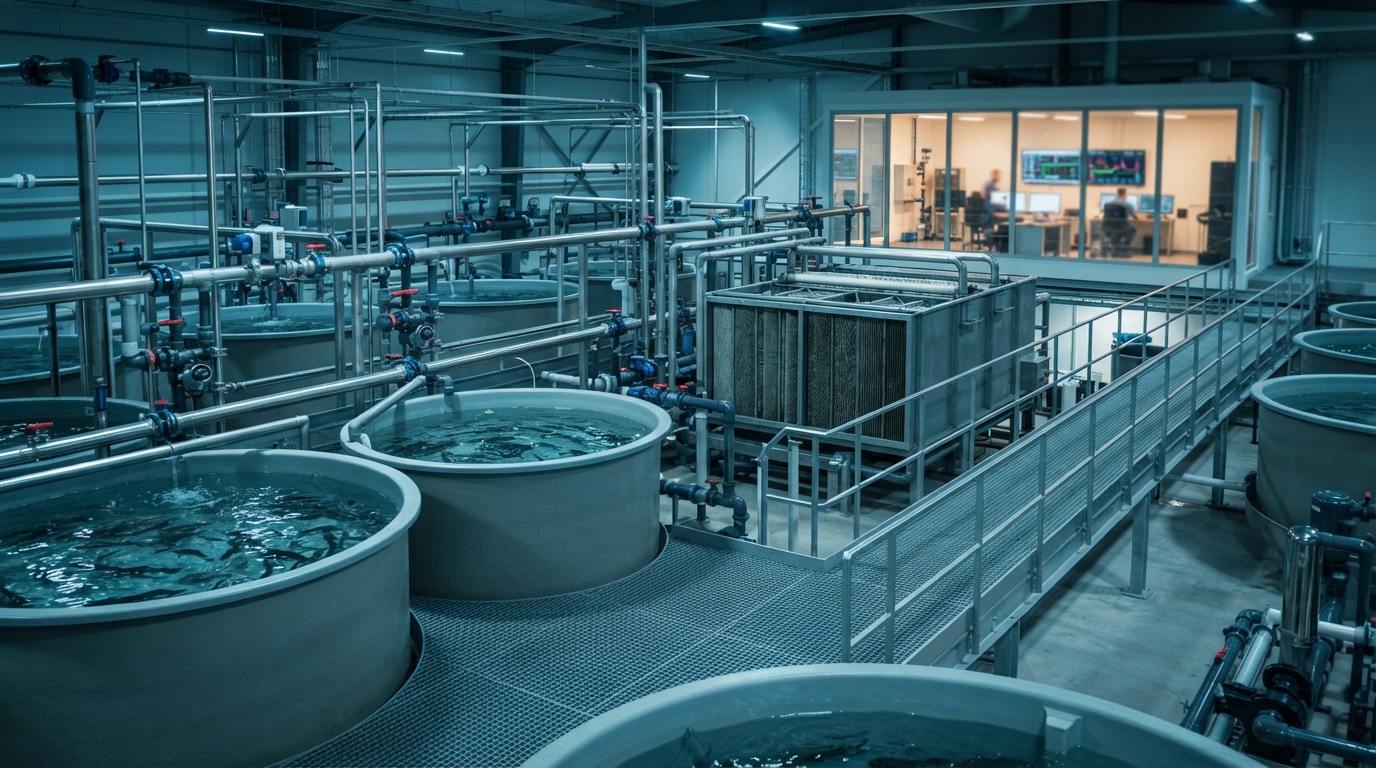
A Recirculating Aquaculture System (RAS) is a land-based fish farming method that continuously cleans and reuses the same water rather than drawing fresh water in and discharging it out, as conventional flow-through or pond farms do. Instead of relying on a river, sea, or aquifer to constantly replace water, a RAS pushes culture water through a closed loop of mechanical, biological, and chemical treatment stages before returning it to the fish. According to the FAO's technical review of recirculating systems, well-designed RAS facilities can operate with daily water exchange rates as low as 5–10% of total system volume, compared to the near-total exchange required in flow-through systems (FAO, Recirculating Systems and Re-use of Water in Aquaculture).
This single design difference is what makes RAS attractive for arid, water-constrained regions: it allows commercial fish production to be sited far from the coast, closer to urban markets, while using a fraction of the water of traditional aquaculture.
The Core Treatment Loop
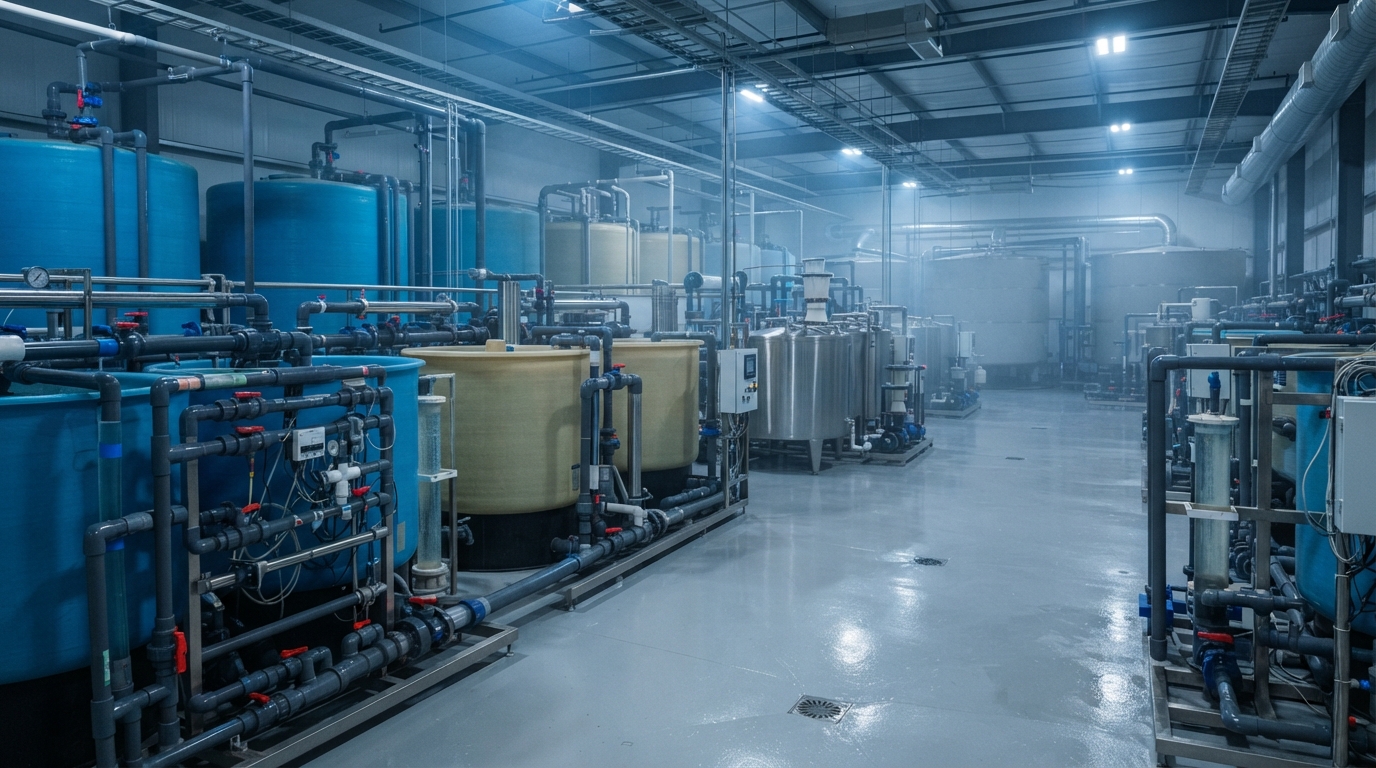
Every RAS, regardless of species or scale, is built around the same sequence of unit processes. Water leaves the culture tank carrying uneaten feed, fish waste, and dissolved metabolic byproducts, and passes through:
- Mechanical filtration — screens, drum filters, or settling basins remove suspended solids before they break down and degrade water quality.
- Biological filtration (biofiltration) — the water passes over a large surface area of filter media colonized by naturally occurring bacteria that convert dissolved fish waste into less toxic compounds (detailed below).
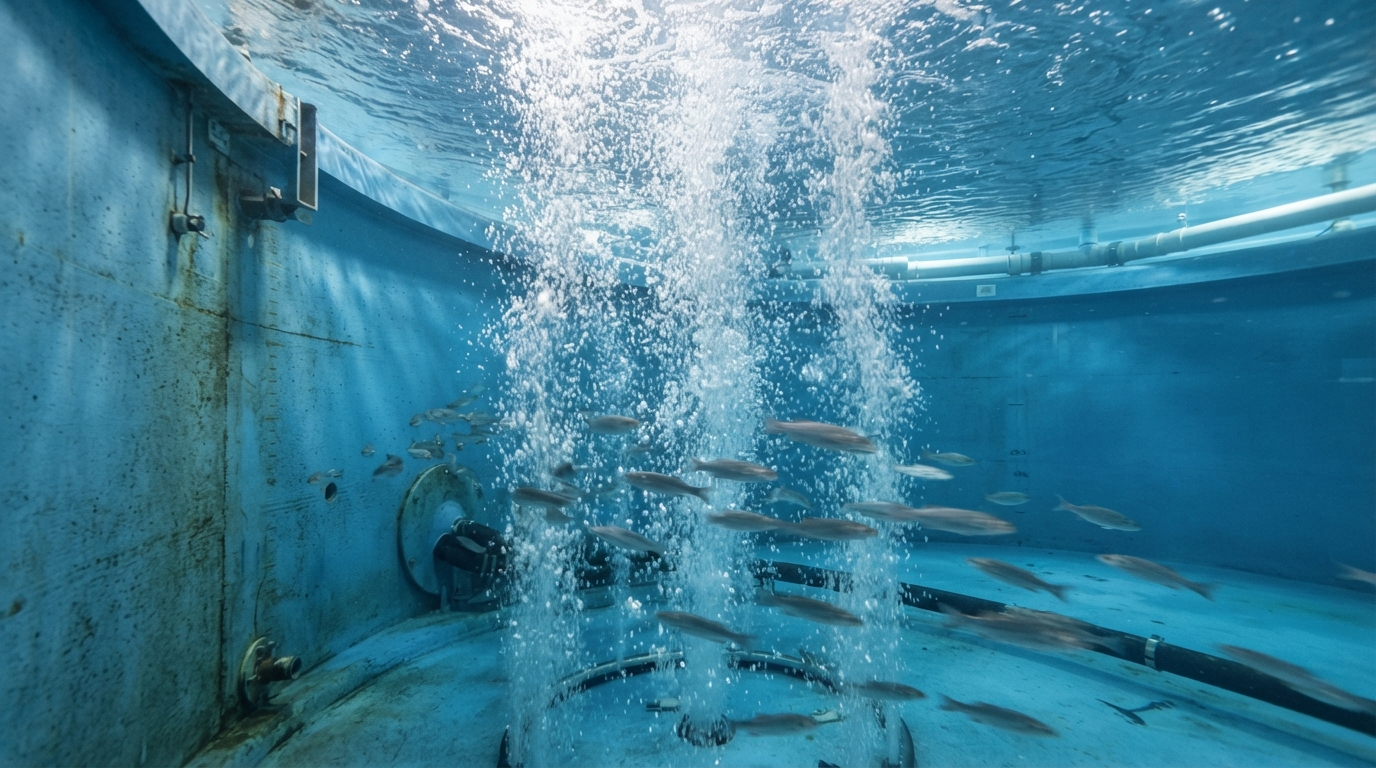
- Degassing and oxygenation — dissolved carbon dioxide is stripped out and dissolved oxygen is restored, typically via low-head oxygenators, diffusers, or pure oxygen injection.
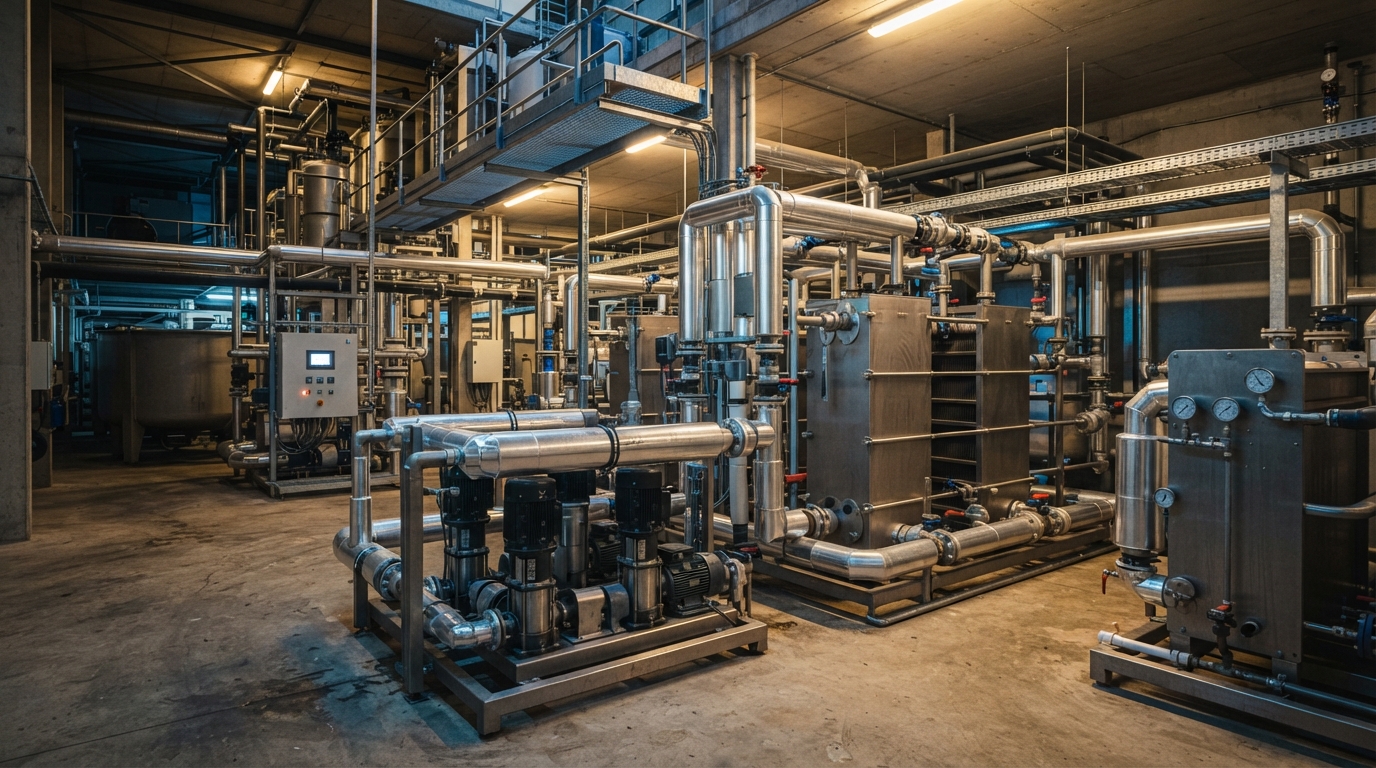
- Disinfection — ultraviolet (UV) light or ozone is commonly used to control pathogen and parasite loads before water re-enters the tank.
- Return to culture tank — treated, oxygenated water flows back to the fish, and the cycle repeats continuously.
A recent systematic review of RAS engineering for salmonid production confirms this same core architecture across commercial-scale facilities, while noting that the specific combination and sizing of these stages is tailored to species, stocking density, and target water quality (MDPI Sustainability, 2025).
The Nitrogen Cycle: The Science Behind Biofiltration
Biofiltration is the process that makes water reuse biologically possible, and it depends on the same nitrogen cycle that governs any aquatic ecosystem. Fish excrete ammonia directly through their gills as a byproduct of protein metabolism (Springer, Journal of Comparative Physiology B, "Ammonia excretion by the fish gill: discoveries and ideas that shaped our current understanding"); uneaten feed and solid waste, if not promptly removed, mainly add to the biofilter and system's biochemical oxygen demand (BOD) as they decompose, rather than to the ammonia load.
Ammonia is toxic to fish even at low concentrations, and its toxicity is pH- and temperature-dependent: the unionized form (NH₃) is far more toxic than the ionized ammonium ion (NH₄⁺), and the proportion of NH₃ rises sharply as pH and temperature increase (University of Florida IFAS Extension, Ammonia in Aquatic Systems, FA031). Left unmanaged, ammonia buildup is one of the fastest ways to lose a stocked culture tank.
Biofilters solve this through a two-step microbial process known as nitrification:
- Ammonia oxidation: Ammonia-oxidizing bacteria and archaea (AOB/AOA) convert ammonia (NH₃/NH₄⁺) into nitrite (NO₂⁻).
- Nitrite oxidation: Nitrite-oxidizing bacteria (NOB) convert that nitrite into nitrate (NO₃⁻), which is far less toxic and can be managed through partial water exchange or, in more advanced systems, removed via denitrification.
A 2021 review in Reviews in Aquaculture adds an important nuance: some biofilters also host comammox Nitrospira, a bacterial group discovered in 2015 that can complete both oxidation steps — ammonia directly to nitrate — within a single organism, which is reshaping how researchers model nitrification performance in RAS biofilters (Preena et al., 2021, Reviews in Aquaculture). In practice, this means a mature, healthy RAS biofilter is a living microbial ecosystem, not a static piece of equipment — it needs to be seeded, matured, and protected from disinfectant residues or oxygen crashes just like any biological system.
Why It Matters: Water, Biosecurity, and Siting
The engineering exists to serve a production goal. Because RAS recycles the vast majority of its water, published estimates put water savings at up to 90–99% compared to conventional pond or flow-through aquaculture, depending on system design and species (MDPI Water, 2026, Sustainable Recirculating Aquaculture Systems). This has three practical consequences that a recent sustainability-focused review highlights:
- Water efficiency in regions where freshwater is scarce or expensive.
- Biosecurity: a closed system is far easier to isolate from external pathogens than an open pond or sea cage, reducing disease risk and antibiotic reliance.
- Site flexibility: because RAS does not depend on proximity to a natural water body, facilities can be built inland, closer to processing plants, ports, or consumer markets — shortening the farm-to-plate supply chain (ScienceDirect, 2025, Recirculating aquaculture systems: Advances, impacts, and integrated pathways for sustainable growth).
ADEC designs and engineers turnkey RAS facilities for the GCC — from biofilter sizing to full commissioning. See our RAS technology approach →
Learn moreIs RAS water changed at all?+
Yes. Even the most efficient RAS still requires a small daily makeup water exchange — commonly cited in the 5–10% range — to dilute nitrate and other dissolved compounds that biofiltration alone does not remove (FAO).
Why does RAS need oxygen injection if water is being filtered?+
Filtration removes waste; it does not add oxygen. Fish respiration and bacterial activity in the biofilter both consume dissolved oxygen continuously, so it must be actively replenished at every pass through the loop.
Can any fish species be farmed in RAS?+
RAS has been demonstrated across a wide range of species, from salmonids to marine finfish and shrimp, though tank design, water chemistry targets, and biofilter sizing must be engineered around each species' specific tolerances.
- FAO. Recirculating Systems and Re-use of Water in Aquaculture, Chapter 15.
- Preena, P.G., et al. (2021). Nitrification and denitrification in recirculating aquaculture systems: the processes and players. Reviews in Aquaculture, Wiley Online Library.
- University of Florida IFAS Extension. FA031: Ammonia in Aquatic Systems.
- Recirculating Aquaculture Systems (RAS) for Cultivating Oncorhynchus mykiss and the Potential for IoT Integration: A Systematic Review and Bibliometric Analysis (2025). Sustainability, MDPI.
- Sustainable Recirculating Aquaculture Systems (RAS): Development and Challenges (2026). Water, MDPI.
- Recirculating aquaculture systems: Advances, impacts, and integrated pathways for sustainable growth (2025). ScienceDirect.
- Ammonia excretion by the fish gill: discoveries and ideas that shaped our current understanding. Journal of Comparative Physiology B, Springer.
Written and reviewed by ADEC's in-house aquarium life support and recirculating aquaculture engineers. ADEC designs, builds and operates turnkey aquarium and RAS facilities across the GCC, and is a member of the European Union of Aquarium Curators (EUAC), EUOTA and the European Aquaculture Society (AquaEAS), with CE-certified OCEANTECH™ equipment.
Get new articles in your inbox
Occasional, science-based insights on aquarium LSS and RAS aquaculture. No spam.