Energy Efficiency and Heat Recovery in RAS
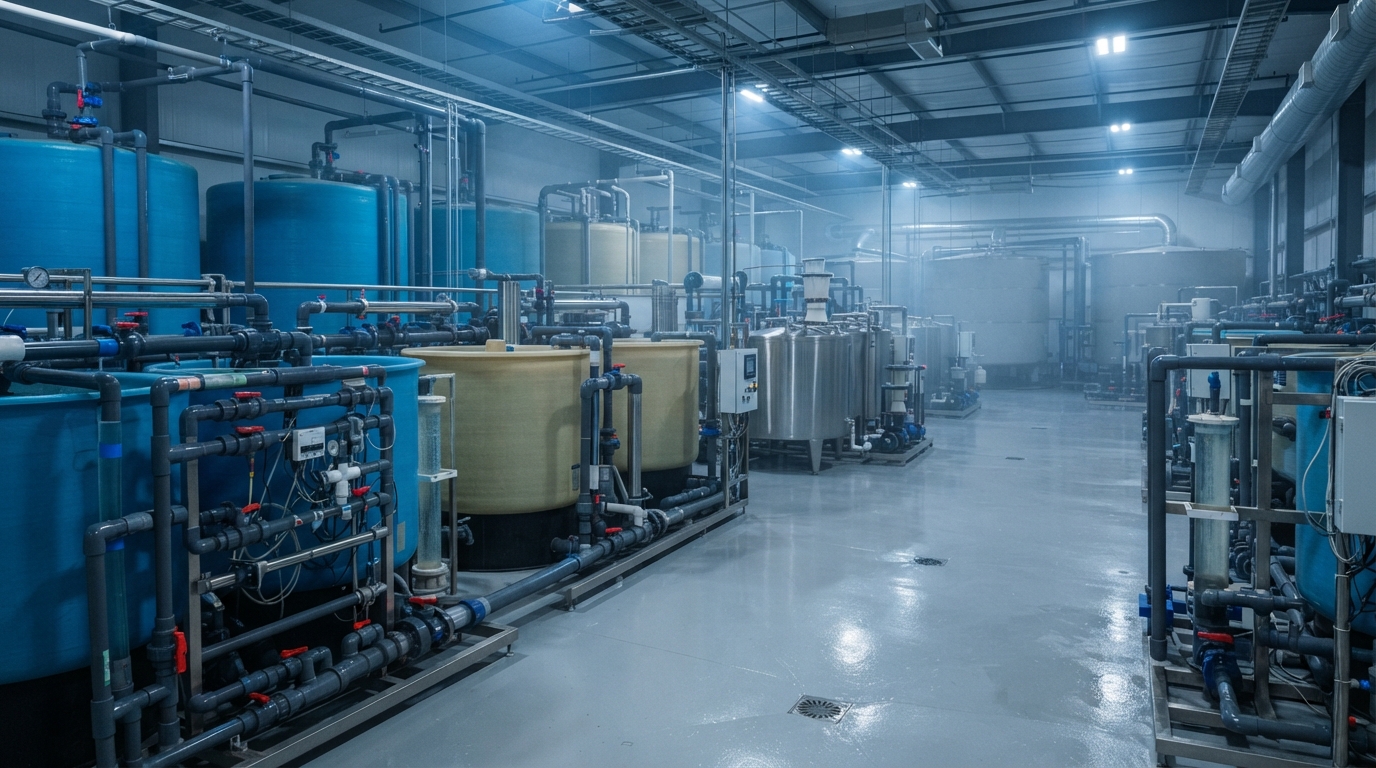
Water efficiency is RAS's best-known advantage, but it comes with a trade-off: RAS is significantly more energy-intensive than pond or flow-through aquaculture, because pumping, aeration, and temperature control all require continuous power input.
Where RAS Energy Demand Comes From
A comprehensive review of energy use in RAS breaks total energy demand down by function, finding that pumping, aeration/oxygenation, and temperature control together account for the large majority of operating energy (ScienceDirect, "Energy use in Recirculating Aquaculture Systems (RAS): A review"). Research quantifying heat requirements in an indoor RAS found that maintaining species-appropriate water temperature can represent one of the largest single energy line items (ScienceDirect, "Heat requirement in an indoor recirculating aquaculture system").
Heat Recovery: Capturing Energy Already in the System
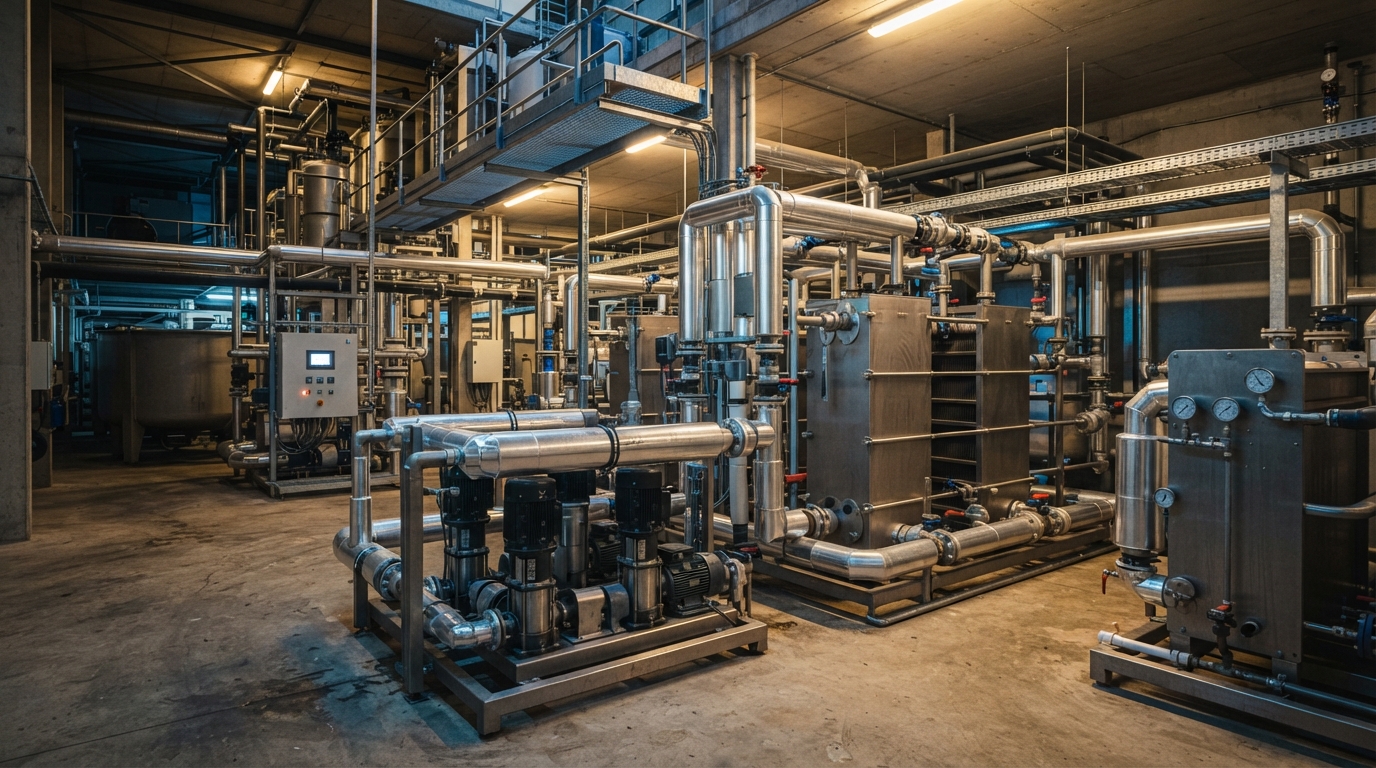
Because RAS continuously discharges a small volume of warm water, and equipment generates waste heat, there is a meaningful opportunity to recover energy that would otherwise be lost. Thermodynamic analysis of a near-zero-discharge RAS built for turbot production modeled exactly this kind of system-level energy accounting (ScienceDirect, "Thermodynamics assessment of a near-zero discharged recirculating aquaculture system for turbot grow-out").
Integrating Renewable and Hybrid Energy Systems
Because RAS energy demand is continuous and predictable, it is well suited to integration with renewable and hybrid energy systems. Research on optimizing RAS design and operation for integration with sustainable hybrid energy systems found that aligning system operation with renewable generation patterns can meaningfully reduce both cost and carbon intensity (ScienceDirect, "An optimisation approach for the design and operation of recirculating aquaculture systems integrated with sustainable hybrid energy systems").
Efficiency Is a Design Decision, Not Just an Operating One
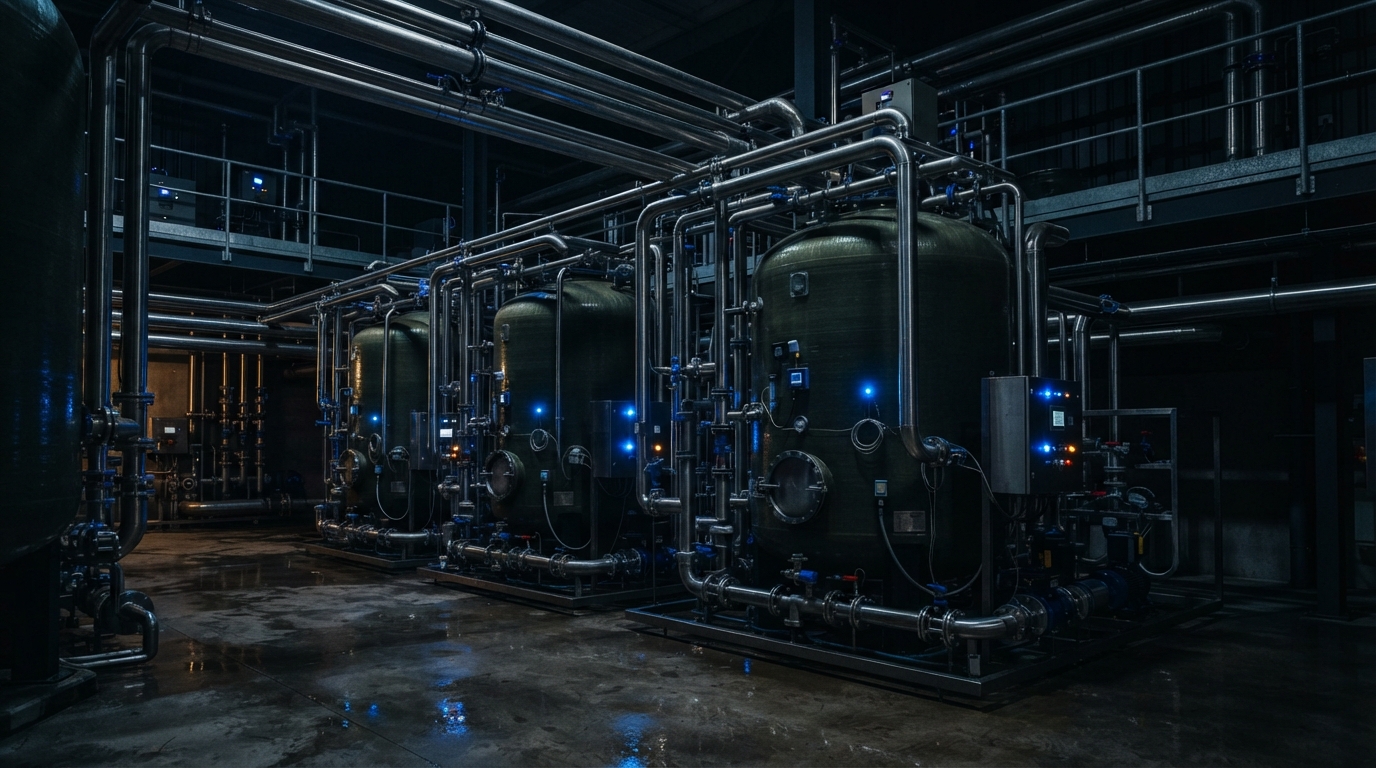
The biggest efficiency gains come from decisions made at the design stage — pipe sizing and layout, oxygenation technology selection, and insulation — rather than operational tweaks made after a facility is already built (MDPI Water, 2026, "Sustainable Recirculating Aquaculture Systems (RAS): Development and Challenges").
ADEC engineers RAS layouts and equipment selection around long-term energy efficiency, not just upfront cost. Talk to our RAS engineering team →
Learn moreIs RAS always more expensive to run than pond aquaculture?+
Energy costs are typically higher, but this is weighed against RAS's water savings, land-use flexibility, and biosecurity advantages.
Does heat recovery eliminate the need for a heating system entirely?+
No. Heat recovery reduces the additional energy needed to reach target temperature but supplements rather than replaces primary temperature control equipment.
Can RAS run on renewable energy alone?+
Research on hybrid energy integration shows this is increasingly feasible when system operation is deliberately aligned with generation patterns.
- Energy use in Recirculating Aquaculture Systems (RAS): A review. ScienceDirect.
- Heat requirement in an indoor recirculating aquaculture system. ScienceDirect.
- Thermodynamics assessment of a near-zero discharged recirculating aquaculture system for turbot grow-out. ScienceDirect.
- An optimisation approach for the design and operation of recirculating aquaculture systems integrated with sustainable hybrid energy systems. ScienceDirect.
- Sustainable Recirculating Aquaculture Systems (RAS): Development and Challenges. Water, MDPI.
Written and reviewed by ADEC's in-house aquarium life support and recirculating aquaculture engineers. ADEC designs, builds and operates turnkey aquarium and RAS facilities across the GCC, and is a member of the European Union of Aquarium Curators (EUAC), EUOTA and the European Aquaculture Society (AquaEAS), with CE-certified OCEANTECH™ equipment.
Get new articles in your inbox
Occasional, science-based insights on aquarium LSS and RAS aquaculture. No spam.