Off-Flavor in RAS Fish: The Science of Geosmin and MIB
A RAS can hit every water quality target on paper — ammonia, nitrite, dissolved oxygen, pH — and still produce fish that taste musty or earthy at harvest. This is off-flavor, and it is one of the most commercially disruptive quality issues in recirculating aquaculture, precisely because it has nothing to do with fish health or food safety and everything to do with two specific microbial metabolites: geosmin and 2-methylisoborneol (2-MIB).
What Geosmin and MIB Actually Are — and Where They Come From
Geosmin and 2-MIB are volatile organic compounds produced by specific microorganisms — most notably certain actinomycetes (including Streptomyces species) and some cyanobacteria — as normal metabolic byproducts, not as contaminants or toxins. Foundational microbiology research isolated geosmin-producing Streptomyces and Lyngbya strains directly from aquaculture pond environments, establishing decades ago that these compounds originate from ordinary, ubiquitous microbial populations rather than any unusual or abnormal condition (Canadian Journal of Microbiology, "Geosmin-producing species of Streptomyces and Lyngbya from aquaculture ponds"). More recent work applying molecular quantification methods has specifically identified and quantified novel geosmin-producing bacterial populations living within operating aquaculture system water and biofilm, confirming that these organisms are a standing, quantifiable part of the system's microbial ecology rather than an occasional contaminant (ScienceDirect, "Quantification of novel geosmin-producing bacteria in aquaculture systems").
Why This Is Especially a RAS Problem
Fish absorb geosmin and MIB across their gills directly from the surrounding water, and the compounds accumulate in fatty tissue — meaning any system where these metabolites build up in the water column puts the whole crop at risk of tainting. A comprehensive review dedicated specifically to off-flavor compounds in recirculating aquaculture systems frames this as a structural feature of RAS design: because water is continuously reused rather than exchanged at flow-through or open-net-pen rates, any ongoing background production of geosmin or MIB by biofilter or system biofilm has far more opportunity to accumulate to fish-tainting concentrations than in systems with high water turnover (ScienceDirect, "Off-flavor compounds in recirculating aquaculture systems (RAS): Production and removal processes"). A broader review in Reviews in Aquaculture extends this picture further, noting that geosmin and 2-MIB are not necessarily the only off-flavor-causing compounds relevant to RAS, and that the full chemical picture of RAS-associated off-flavors is still an active area of research (Wiley, Reviews in Aquaculture, "More than just geosmin and 2-methylisoborneol? Off-flavours associated with recirculating aquaculture systems").
Depuration: The Established Mitigation Strategy
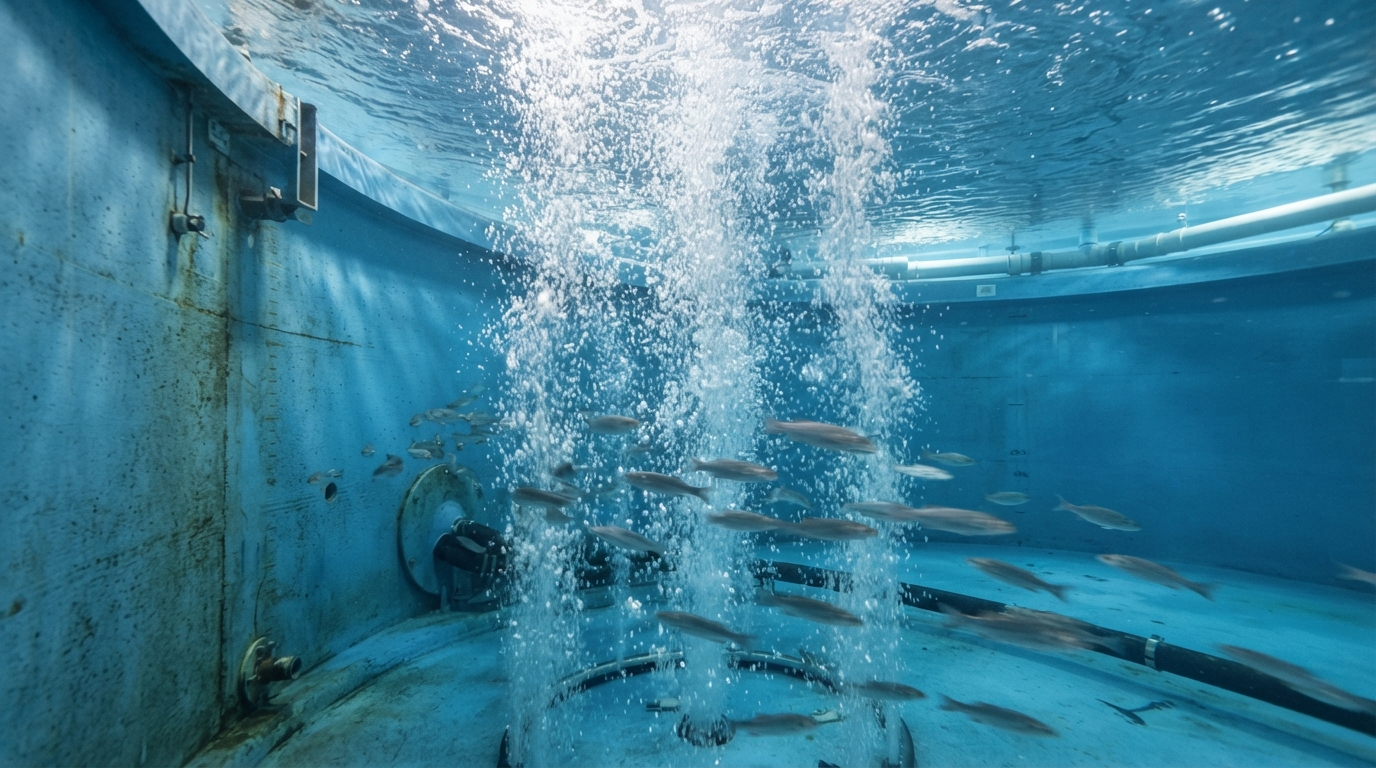
Because geosmin and MIB are absorbed from water rather than being a permanent tissue change, they can be purged: holding market-ready fish in clean, off-flavor-free water for a period before harvest allows the compounds to diffuse back out across the gills. Research directly evaluating depuration procedures for market-size Atlantic salmon raised in RAS confirmed that structured depuration can effectively reduce geosmin and MIB to acceptable sensory levels, while also establishing that depuration duration and effectiveness are specific, measurable engineering variables rather than a fixed default period (ScienceDirect, "Evaluation of depuration procedures to mitigate the off-flavor compounds geosmin and 2-methylisoborneol from Atlantic salmon Salmo salar raised to market-size in recirculating aquaculture systems"). Follow-up research specifically testing depuration system flushing rate found that increasing water exchange during the depuration phase measurably accelerated geosmin removal from market-size salmon, directly linking depuration tank hydraulic design to how long fish need to be held before harvest (ScienceDirect, "Depuration system flushing rate affects geosmin removal from market-size Atlantic salmon Salmo salar").
Faster Removal: Oxidation and Cavitation Technologies
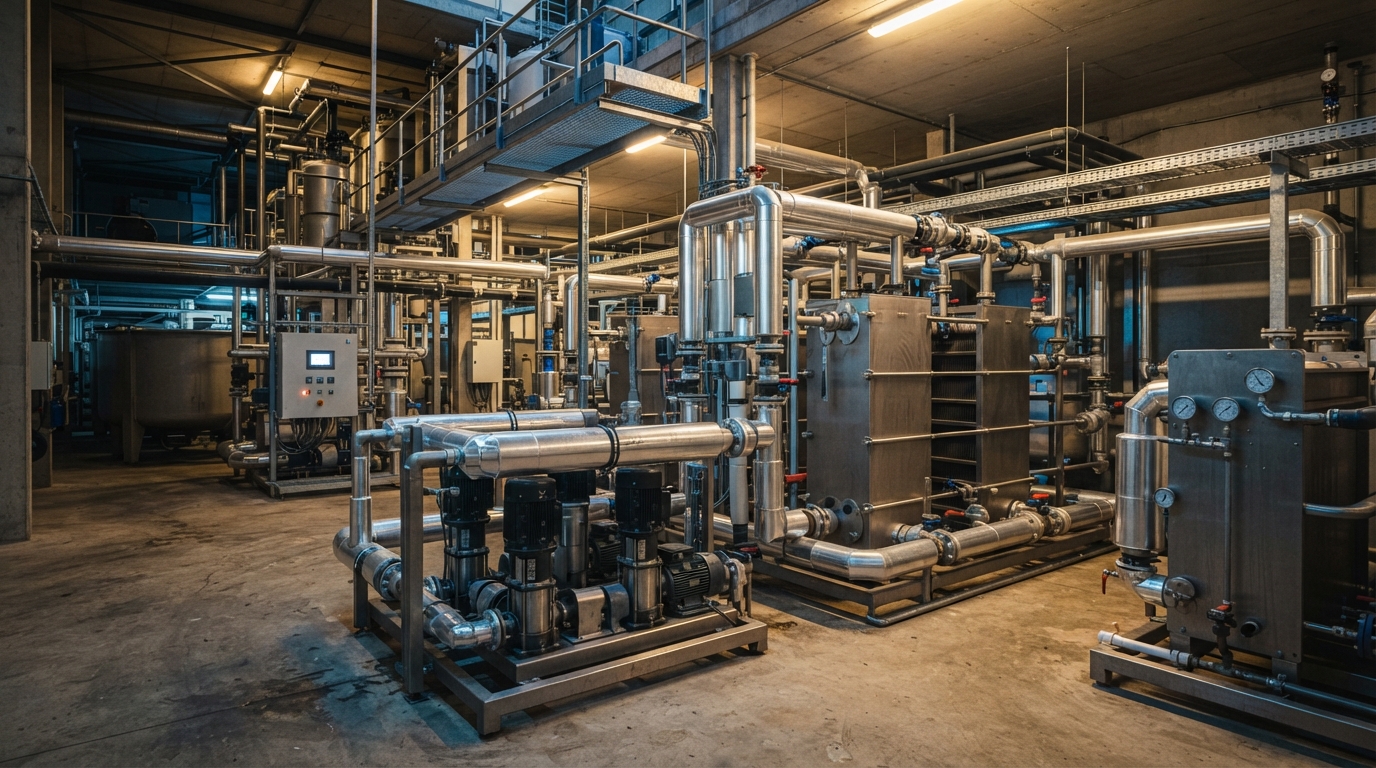
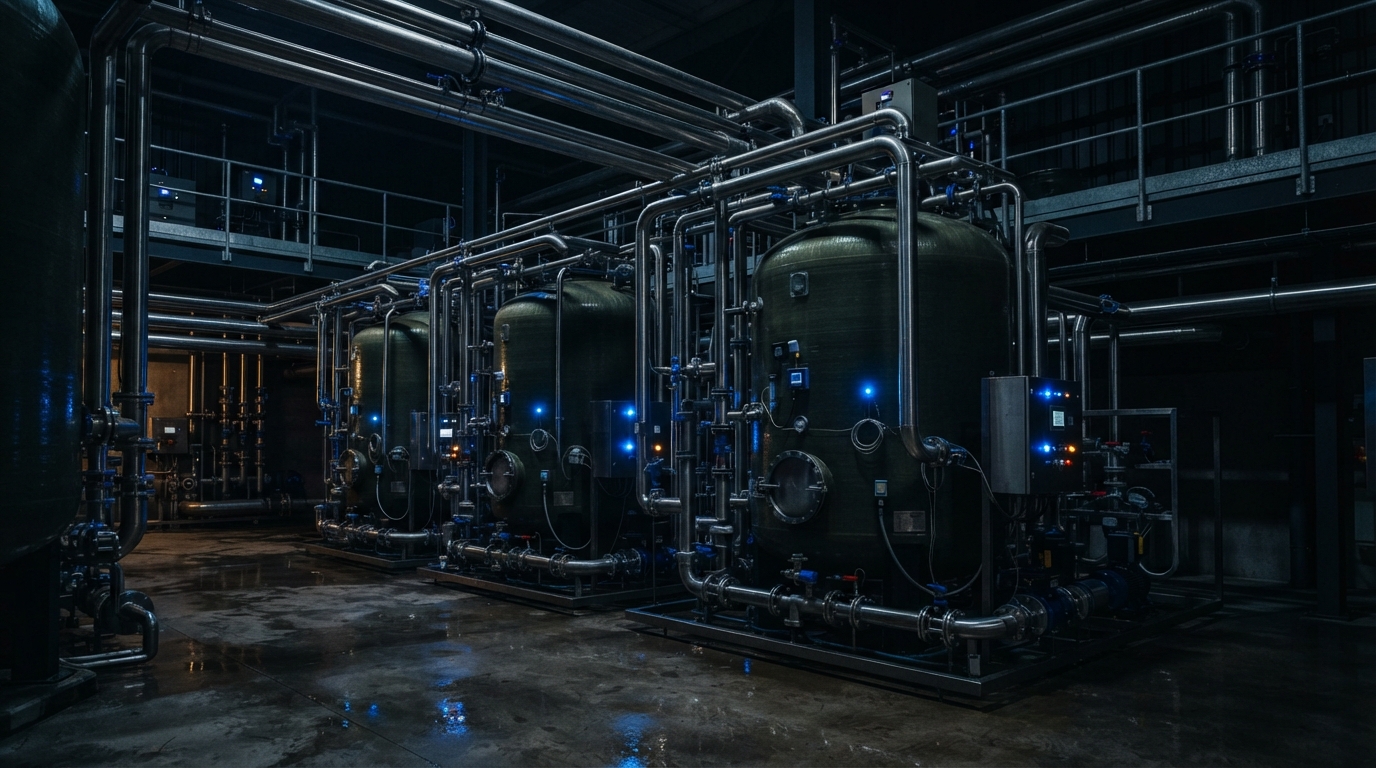
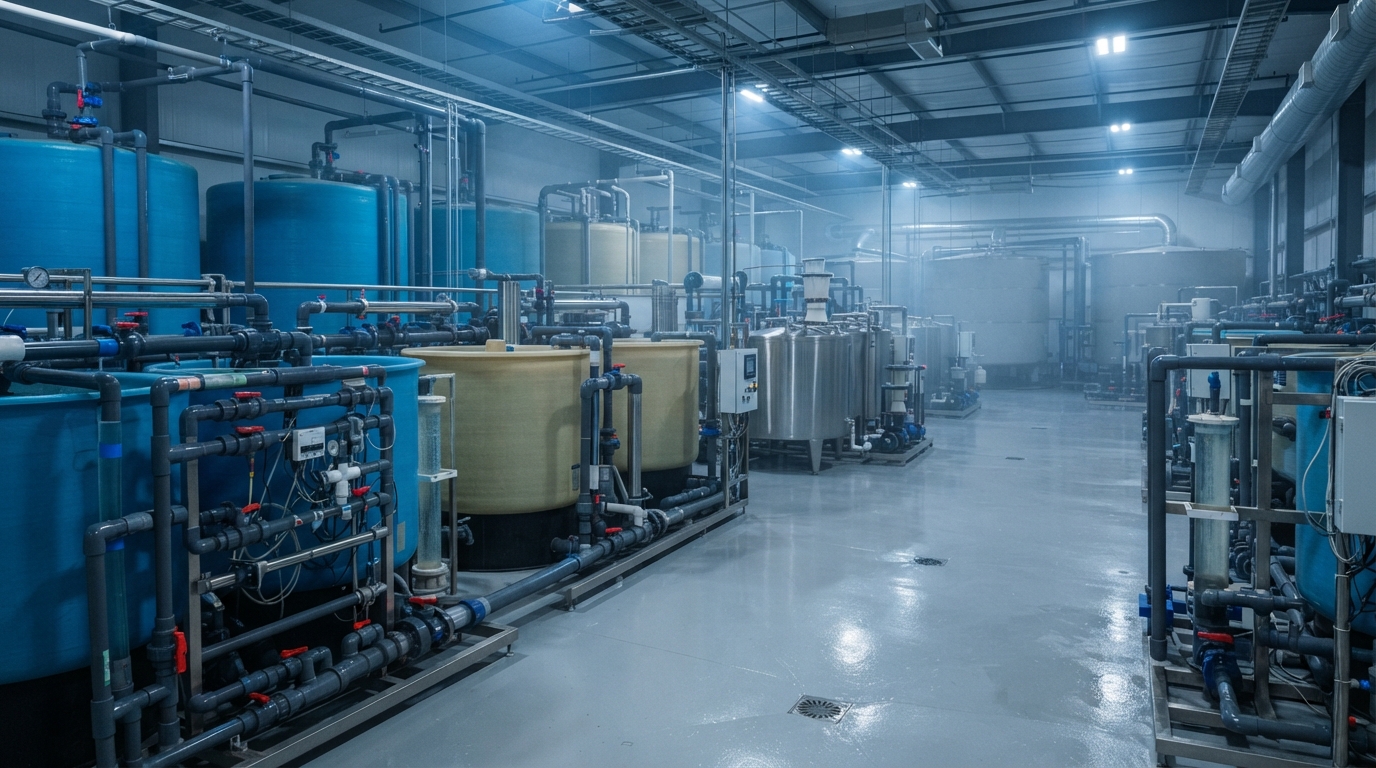
Because depuration periods represent lost production time and added feed or fasting management, researchers have also targeted the water treatment side of the problem directly rather than relying on fish-side purging alone. Research on ultrasonically induced cavitation demonstrated that this physical treatment method can actively remove geosmin and 2-MIB directly from RAS water, offering a route to lowering background concentrations rather than only diluting them through depuration (ScienceDirect, "Removal of the off-flavor compounds geosmin and 2-methylisoborneol from recirculating aquaculture system water by ultrasonically induced cavitation"). More recent research on a novel advanced oxidation process (AOP) found that this water treatment approach rapidly removed both geosmin and MIB from Atlantic salmon RAS water and significantly reduced the depuration time fish subsequently required — evidence that off-flavor mitigation is increasingly being engineered as a combined water-treatment-plus-depuration strategy rather than depuration alone (ScienceDirect, "A novel advanced oxidation process (AOP) that rapidly removes geosmin and 2-methylisoborneol (MIB) from water and significantly reduces depuration times in Atlantic salmon Salmo salar RAS aquaculture").
Detecting Off-Flavor Before It Reaches the Customer
Because geosmin and MIB are detectable by the human palate at extremely low concentrations, sensory evaluation remains a core quality control tool, but it is not the only one. Research reviewing the sensory aspects of geosmin and MIB tainting in farmed fish documents both the specific perceptual character of the taint and the analytical challenge of evaluating it consistently across tasting panels (ScienceDirect, "Tainting of farmed fish by geosmin and 2-methyl-iso-borneol: a review of sensory aspects and of uptake/depuration"). Complementing sensory panels, recent analytical chemistry research has developed faster, more sensitive instrumental methods for measuring off-flavor compounds directly in RAS water, giving operators a way to monitor geosmin and MIB levels quantitatively rather than relying solely on taste-testing fish after the fact (Wiley, Rapid Communications in Mass Spectrometry, "Fast and Sensitive Measurement of Off-Flavors in Recirculating Aquaculture Systems").
ADEC engineers RAS water treatment and depuration systems designed around real off-flavor science, not guesswork. Talk to our RAS engineering team →
Learn moreIs fish with geosmin or MIB off-flavor unsafe to eat?+
No. Geosmin and 2-MIB are a sensory quality issue, not a food safety or toxicity concern — the compounds affect taste and smell, not safety, which is why the mitigation research focuses on flavor remediation (depuration, water treatment) rather than any health-based intervention.
Can off-flavor be prevented entirely rather than corrected before harvest?+
Because geosmin- and MIB-producing microorganisms are a normal, persistent part of aquaculture system microbial ecology, complete prevention is not the standard target in the research literature; instead, the focus is on managing background concentrations through water treatment and confirming fish are taint-free through depuration and testing before harvest.
How long does depuration typically need to run?+
Published research shows depuration duration is not fixed — it depends on factors including flushing/flow rate and background off-flavor concentration, which is why studies specifically measure and optimize depuration system hydraulics rather than applying a single default holding period across all systems.
- Geosmin-producing species of Streptomyces and Lyngbya from aquaculture ponds. Canadian Journal of Microbiology, NRC Research Press.
- Quantification of novel geosmin-producing bacteria in aquaculture systems. ScienceDirect.
- Off-flavor compounds in recirculating aquaculture systems (RAS): Production and removal processes. ScienceDirect.
- More than just geosmin and 2-methylisoborneol? Off-flavours associated with recirculating aquaculture systems. Reviews in Aquaculture, Wiley Online Library.
- Evaluation of depuration procedures to mitigate the off-flavor compounds geosmin and 2-methylisoborneol from Atlantic salmon Salmo salar raised to market-size in recirculating aquaculture systems. ScienceDirect.
- Depuration system flushing rate affects geosmin removal from market-size Atlantic salmon Salmo salar. ScienceDirect.
- Removal of the off-flavor compounds geosmin and 2-methylisoborneol from recirculating aquaculture system water by ultrasonically induced cavitation. ScienceDirect.
- A novel advanced oxidation process (AOP) that rapidly removes geosmin and 2-methylisoborneol (MIB) from water and significantly reduces depuration times in Atlantic salmon Salmo salar RAS aquaculture. ScienceDirect.
- Tainting of farmed fish by geosmin and 2-methyl-iso-borneol: a review of sensory aspects and of uptake/depuration. ScienceDirect.
- Fast and Sensitive Measurement of Off-Flavors in Recirculating Aquaculture Systems. Rapid Communications in Mass Spectrometry, Wiley Online Library.
Written and reviewed by ADEC's in-house aquarium life support and recirculating aquaculture engineers. ADEC designs, builds and operates turnkey aquarium and RAS facilities across the GCC, and is a member of the European Union of Aquarium Curators (EUAC), EUOTA and the European Aquaculture Society (AquaEAS), with CE-certified OCEANTECH™ equipment.
Get new articles in your inbox
Occasional, science-based insights on aquarium LSS and RAS aquaculture. No spam.