Denitrification in RAS: Toward Zero-Discharge Aquaculture
Standard RAS biofiltration solves the ammonia and nitrite problem but leaves nitrate behind — and conventional practice manages nitrate simply by diluting it through daily makeup water exchange. For facilities pursuing more aggressive water conservation, or operating where water exchange itself is costly or restricted, that is no longer good enough. Denitrification — a fourth biological treatment stage that converts nitrate into inert nitrogen gas — is the technology that makes near-zero water exchange RAS possible.
Why Nitrate Dilution Has Limits
Nitrate is far less acutely toxic than ammonia or nitrite, which is why standard RAS design treats it as a manageable endpoint rather than an emergency. But research into nitrate's chronic effects shows it is not entirely benign at high sustained concentrations, creating pressure to manage it actively rather than simply accept accumulation between water exchanges (ResearchGate, "Nitrate Toxicity: A Potential Problem of Recirculating Systems"). More practically, relying purely on dilution caps how far a facility can reduce its water exchange rate.
How Denitrification Bioreactors Work
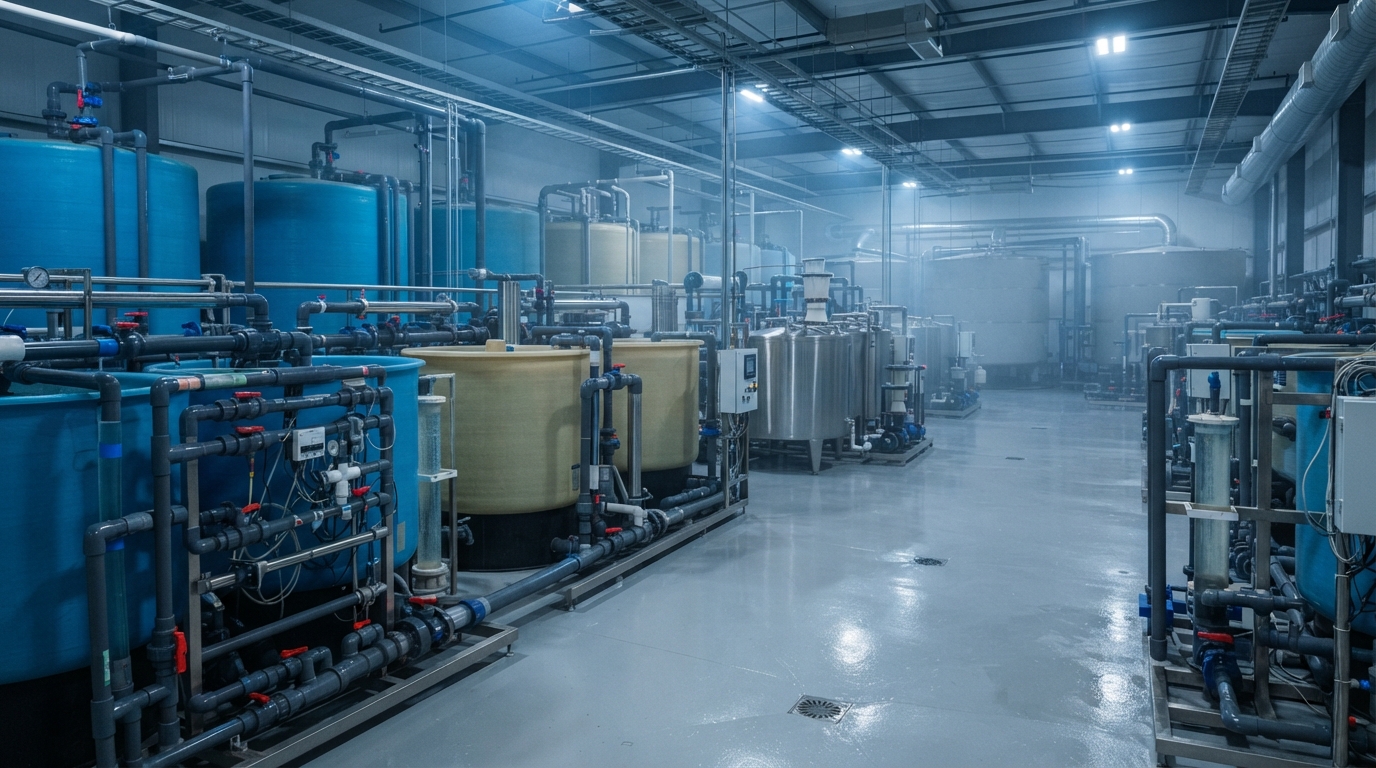
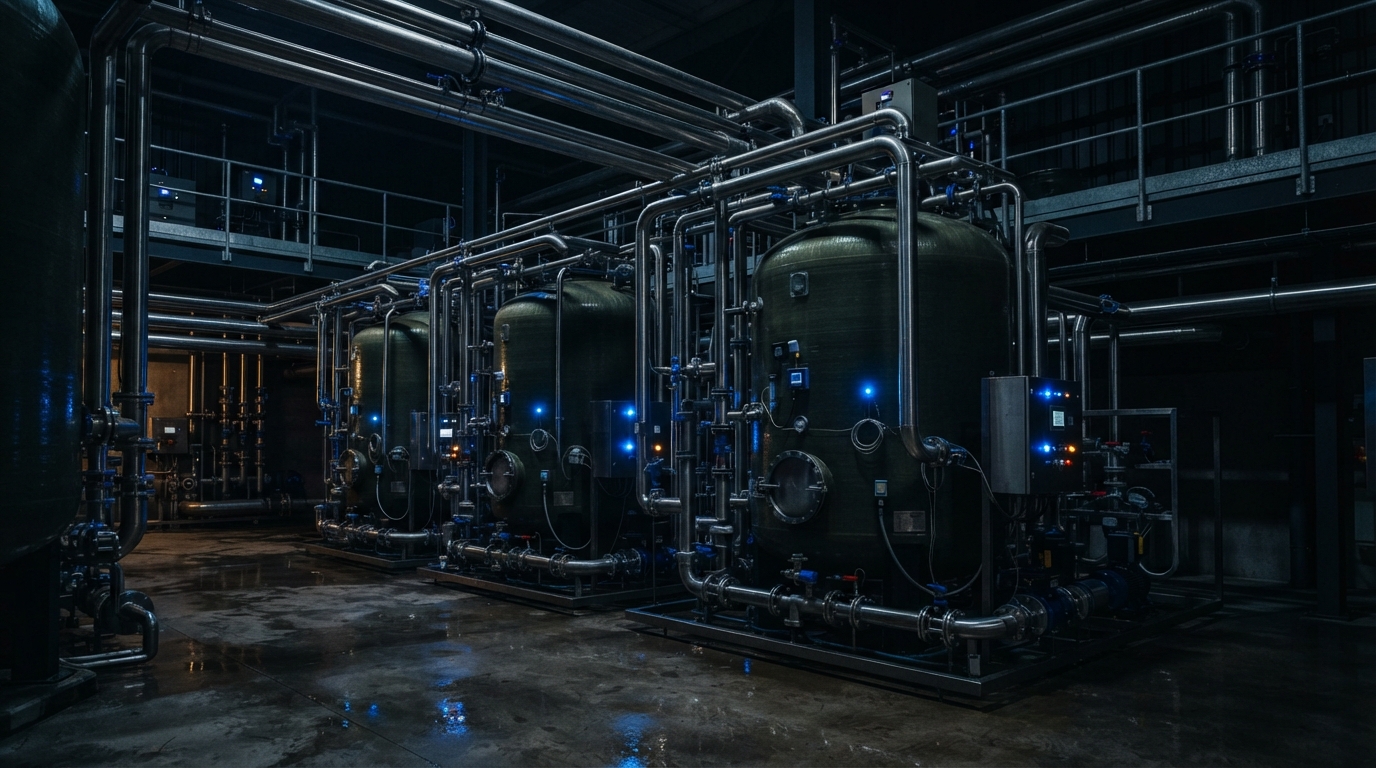
Denitrification relies on a different group of bacteria than nitrification — heterotrophic organisms that, under low-oxygen (anoxic) conditions, use nitrate as an alternative electron acceptor in place of oxygen, converting it stepwise into nitrogen gas that simply off-gasses from the system. Because this process requires anoxic conditions, denitrification reactors are engineered as physically separate zones from the oxygen-rich nitrifying biofilter. Research characterizing the microbial community in moving bed bioreactors within a closed recirculated mariculture system confirmed that a distinct, functionally specialized bacterial community establishes itself under these anoxic conditions (ScienceDirect, "Characterization of the microbial community and nitrogen transformation processes associated with moving bed bioreactors in a closed recirculated mariculture system").
Carbon Source: The Practical Engineering Challenge
Denitrifying bacteria need an organic carbon source to drive the reaction, which introduces the central engineering challenge of denitrification system design. Research on a bottom-substrate denitrification tank demonstrated that a solid-substrate approach can be optimized specifically for nitrate removal without external carbon dosing (ScienceDirect, "Optimization and evaluation of a bottom substrate denitrification tank for nitrate removal from a recirculating aquaculture system"). Other approaches use packed cellulosic carriers as a slow-release carbon source, with research finding strong nitrogen removal performance alongside a diverse microbial community (ScienceDirect, "Nitrogen removal performance and microbial diversity of bioreactor packed with cellulosic carriers in recirculating aquaculture system").
Beyond Conventional Denitrification
More recent research demonstrated nitrogen removal in RAS water under high dissolved oxygen conditions using simultaneous partial nitrification, anammox, and denitrification — a more compact process pathway (ScienceDirect, "Nitrogen removal in recirculating aquaculture water with high dissolved oxygen conditions"). Other emerging approaches use engineered media such as a calcined iron-sulfide-packed bioreactor shown to achieve strong nitrogen removal under low-carbon conditions (ACS Omega, "Enhanced Nitrogen Removal from a Recirculating Aquaculture System Using a Calcined FeSx-Packed Denitrification Bioreactor").
ADEC engineers denitrification stages for RAS facilities pursuing near-zero water discharge. See our RAS technology approach →
Learn moreDoes every RAS need a denitrification system?+
No. Many commercial RAS operate successfully managing nitrate through routine water exchange alone. Denitrification becomes valuable specifically when a facility needs to push water exchange rates very low.
Is denitrification the same bacteria as the nitrifying biofilter?+
No — nitrification and denitrification are performed by different bacterial communities operating under opposite oxygen conditions, which is why they require physically separate reactor zones.
What happens to the nitrogen after denitrification?+
It is converted into nitrogen gas (N₂), the same inert gas that makes up roughly 78% of the atmosphere, and simply leaves the system.
- Nitrate Toxicity: A Potential Problem of Recirculating Systems. ResearchGate.
- Characterization of the microbial community and nitrogen transformation processes associated with moving bed bioreactors in a closed recirculated mariculture system. ScienceDirect.
- Optimization and evaluation of a bottom substrate denitrification tank for nitrate removal from a recirculating aquaculture system. ScienceDirect.
- Nitrogen removal performance and microbial diversity of bioreactor packed with cellulosic carriers in recirculating aquaculture system. ScienceDirect.
- Nitrogen removal in recirculating aquaculture water with high dissolved oxygen conditions using the simultaneous partial nitrification, anammox and denitrification system. ScienceDirect.
- Enhanced Nitrogen Removal from a Recirculating Aquaculture System Using a Calcined FeSx-Packed Denitrification Bioreactor. ACS Omega.
Written and reviewed by ADEC's in-house aquarium life support and recirculating aquaculture engineers. ADEC designs, builds and operates turnkey aquarium and RAS facilities across the GCC, and is a member of the European Union of Aquarium Curators (EUAC), EUOTA and the European Aquaculture Society (AquaEAS), with CE-certified OCEANTECH™ equipment.
Get new articles in your inbox
Occasional, science-based insights on aquarium LSS and RAS aquaculture. No spam.