Aquarium Lighting Science: Spectrum, PAR and Photosynthesis
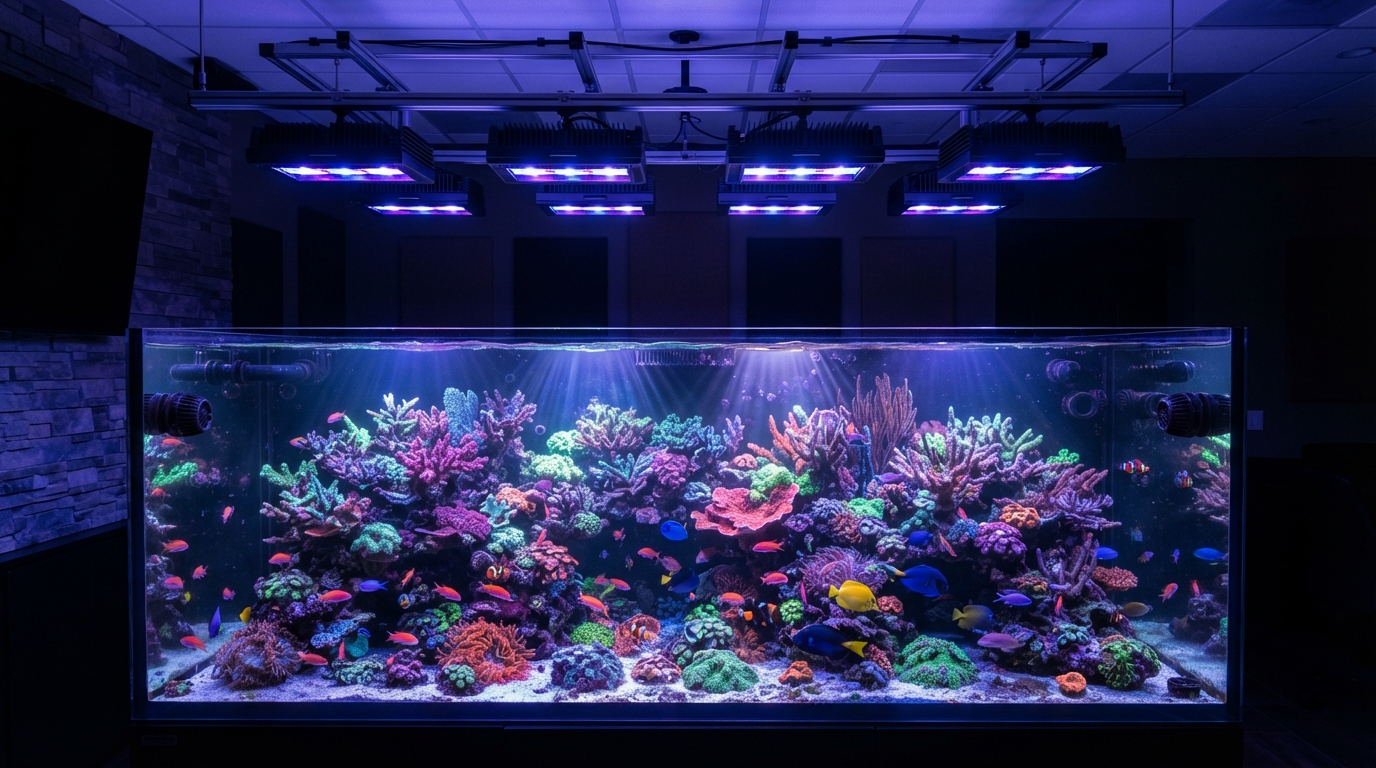
Lighting in a reef exhibit does far more than illuminate the display for visitors — it drives the photosynthesis of zooxanthellae, the symbiotic algae living within coral tissue that supply corals with a significant portion of their energy. Getting exhibit lighting right is a photobiology problem as much as a visual design one.
PAR: Measuring Light the Way Corals Use It
Photosynthetically Active Radiation (PAR) measures the intensity of light within the wavelength range plants and algae can actually use for photosynthesis, and it is the standard metric reef lighting is engineered around rather than simple visual brightness. But intensity alone does not determine photosynthetic performance — spectral quality matters independently. Research published in the Journal of Experimental Biology examining Stylophora pistillata coral colonies from different depths in the Red Sea found that the spectral quality of light — not just PAR intensity — is a key driver of both photosynthesis and photoadaptation, with coral photosynthetic machinery adjusting differently depending on which wavelengths of light are available. This research is particularly relevant to GCC-region aquariums given its direct Red Sea coral focus.
How Corals Adapt to Changing Light Conditions
Corals and their close reef-dwelling relatives are not passive recipients of whatever light reaches them — they actively acclimate. Research on photoacclimation mechanisms in corallimorpharians (soft-bodied, coral-relative cnidarians that also host zooxanthellae) found that both the symbiont's photosynthetic parameters and the host's cellular responses shift measurably in response to changes in irradiance, indicating a coordinated host-symbiont adaptation process (ScienceDirect, "Photoacclimation mechanisms of corallimorpharians on coral reefs: Photosynthetic parameters of zooxanthellae and host cellular responses to variation in irradiance"). Because true reef-building corals host the same zooxanthellae symbionts and face the same photoacclimation demands, a similar coordinated adaptation process is expected in corals as well, and this has practical implications for exhibit lighting design: sudden, large changes in light intensity or spectrum can outpace a coral's acclimation capacity, while gradual transitions allow this kind of physiological adjustment to occur safely.
Spectral Diversity Across Depth and Habitat
Research examining spectral diversity and coral fluorescence in a mesophotic (deeper, lower-light) Red Sea reef habitat found substantial variation in how coral pigments and fluorescent proteins respond to the specific light spectrum available at different depths, reflecting adaptation to naturally varying spectral environments across a reef. Classic research on the effects of altered spectral composition on coral-zooxanthellae associations demonstrated this spectral sensitivity experimentally, establishing decades ago that spectral composition — not just total light quantity — measurably affects the coral-algae symbiosis.
Photosynthesis Extends Beyond Coral Tissue
Zooxanthellae are not the only photosynthetic contributors on a reef, and research on phytoplankton and zooxanthellae photosynthesis on coral reefs found that both contribute meaningfully to the reef's overall primary productivity — a reminder that reef exhibit lighting design also influences the broader planktonic and algal community within the display, not corals in isolation.
ADEC designs exhibit lighting around real coral photobiology, not just visual appearance. Explore our aquarium theming and LSS work →
Learn moreIs more light always better for coral health?+
No — research on photoacclimation shows corals adapt to a specific light environment, and both under- and over-lighting relative to a species' natural depth and habitat can cause stress; matching spectrum and intensity to species-appropriate targets matters more than simply maximizing brightness.
Why does light spectrum matter separately from total intensity (PAR)?+
Because photosynthetic pigments in zooxanthellae respond differently to different wavelengths, research shows spectral quality independently affects photosynthetic performance and photoadaptation — two exhibits with identical PAR readings but different spectra can produce different coral physiological responses.
Can changing exhibit lighting too quickly harm corals?+
Yes — because coral photoacclimation research describes a gradual physiological adjustment process, abrupt large changes in intensity or spectrum can outpace that adaptation capacity, which is why lighting transitions in reef exhibits are typically implemented gradually.
- The spectral quality of light is a key driver of photosynthesis and photoadaptation in Stylophora pistillata colonies from different depths in the Red Sea. Journal of Experimental Biology.
- Photoacclimation mechanisms of corallimorpharians on coral reefs. ScienceDirect.
- Spectral Diversity and Regulation of Coral Fluorescence in a Mesophotic Reef Habitat in the Red Sea. PLOS One.
- Effects of light of altered spectral composition on coral zooxanthellae associations and on zooxanthellae in vitro. Marine Biology, Springer.
- Photosynthesis of phytoplankton and zooxanthellae on a coral reef. Marine Biology, Springer.
Written and reviewed by ADEC's in-house aquarium life support and recirculating aquaculture engineers. ADEC designs, builds and operates turnkey aquarium and RAS facilities across the GCC, and is a member of the European Union of Aquarium Curators (EUAC), EUOTA and the European Aquaculture Society (AquaEAS), with CE-certified OCEANTECH™ equipment.
Get new articles in your inbox
Occasional, science-based insights on aquarium LSS and RAS aquaculture. No spam.