Biofilter Sizing: Nitrification Kinetics in Commercial RAS
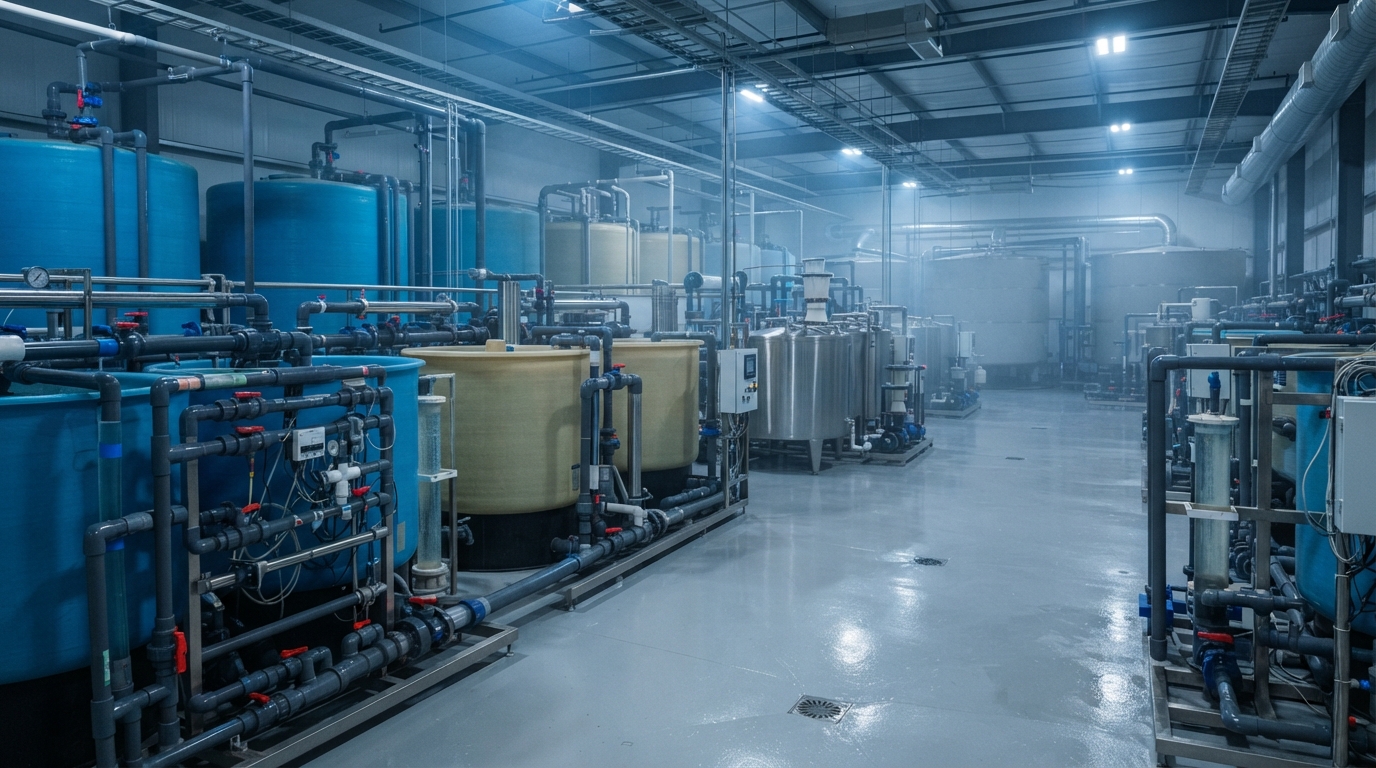
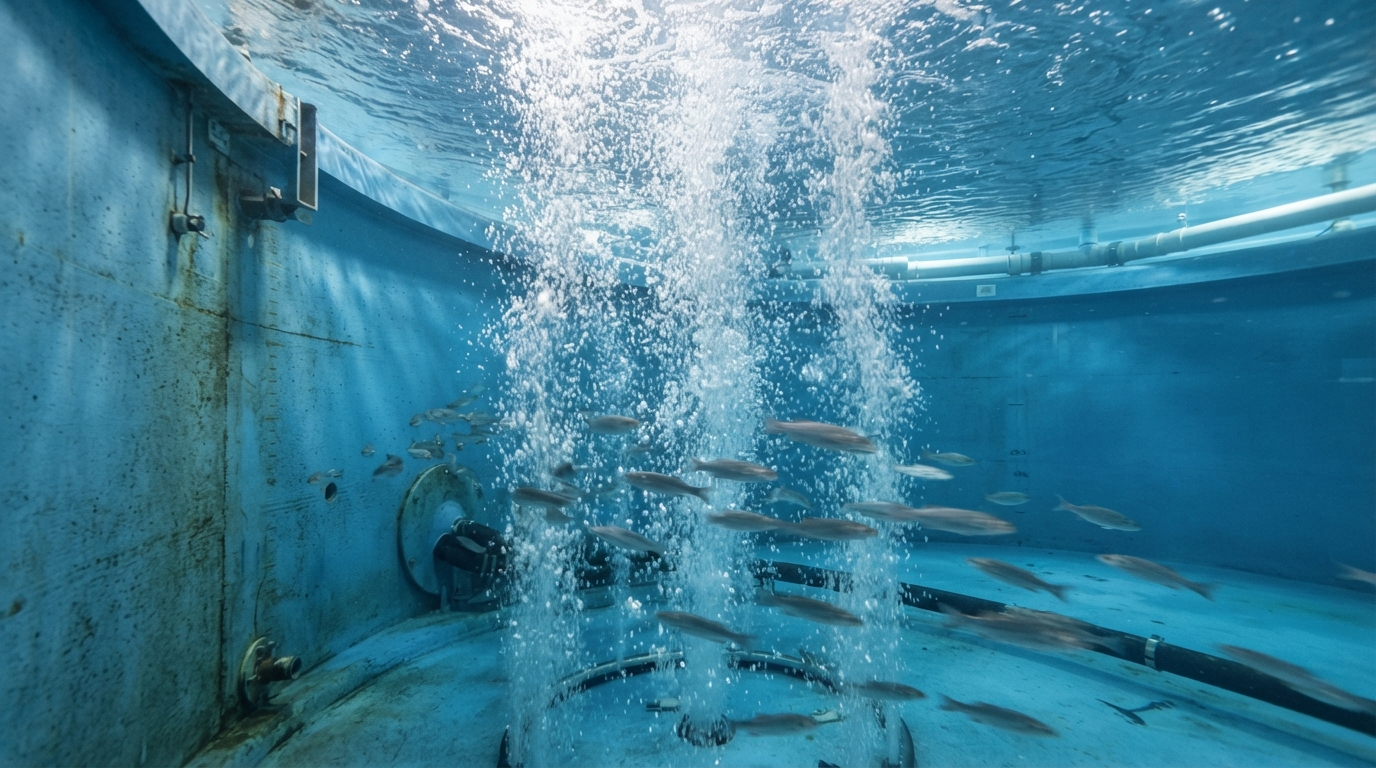
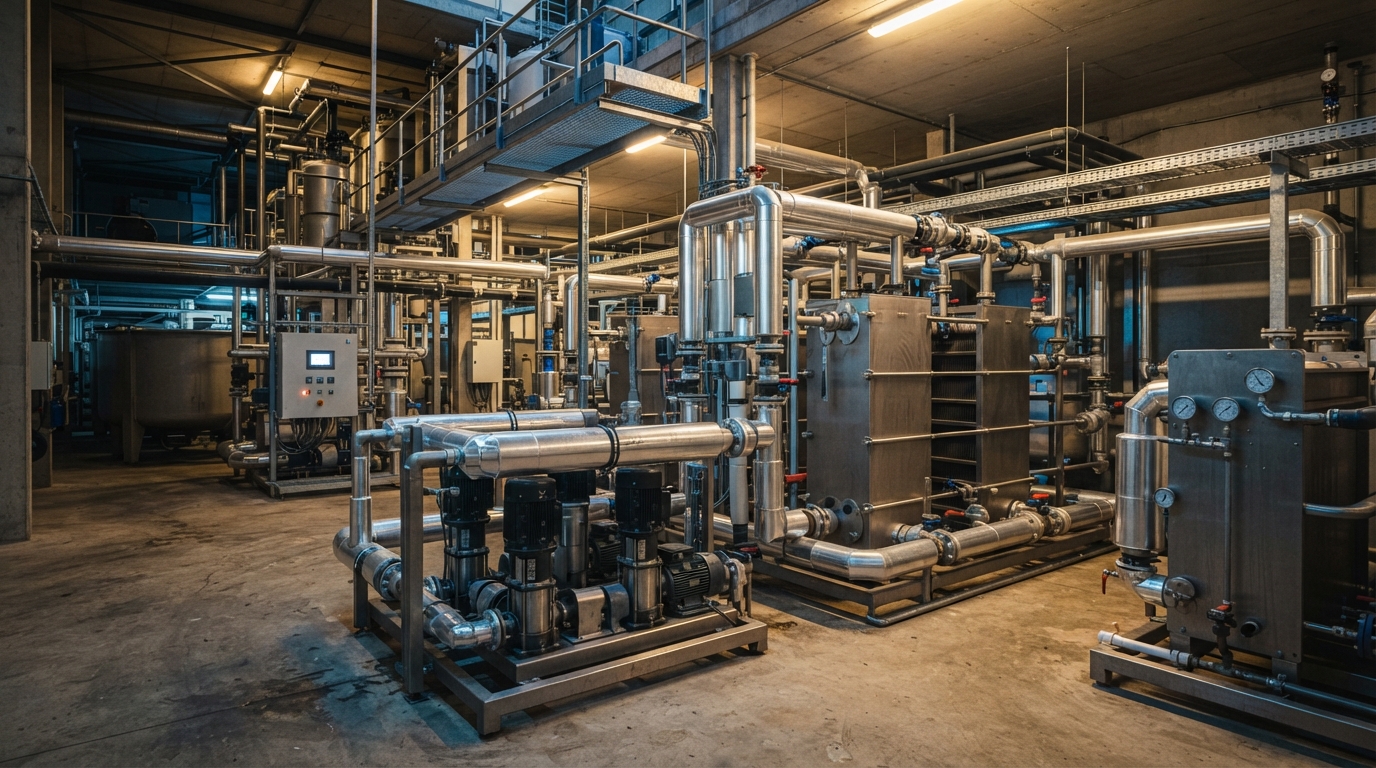
Undersizing a RAS biofilter is one of the most common — and most expensive — engineering mistakes in commercial aquaculture. A biofilter that cannot keep pace with the ammonia load produced by a fully stocked system will not fail gradually; it fails as a water quality crisis. Correct sizing depends on understanding nitrification kinetics: the rate at which nitrifying bacteria can actually convert Total Ammonia Nitrogen (TAN) under real operating conditions, not theoretical maximums.
TAN Removal Rate: The Core Design Variable
Biofilter sizing calculations center on a single practical question: how many grams of TAN can a given volume or surface area of biofilter media convert per day? This is typically expressed as an areal TAN removal rate, and it is far from a fixed constant. Research rating fixed-film nitrifying biofilters used in commercial RAS found that measured removal rates vary substantially with influent TAN concentration, temperature, dissolved oxygen, and media type (ScienceDirect, "Rating fixed film nitrifying biofilters used in recirculating aquaculture systems"). A companion study found removal rate is directly sensitive to pH, alkalinity, and dissolved oxygen concentration, all of which must be specified as design assumptions before a biofilter can be sized correctly (ScienceDirect, "Nitrification kinetics of biofilm as affected by water quality factors").
Media Choice and Start-Up Performance
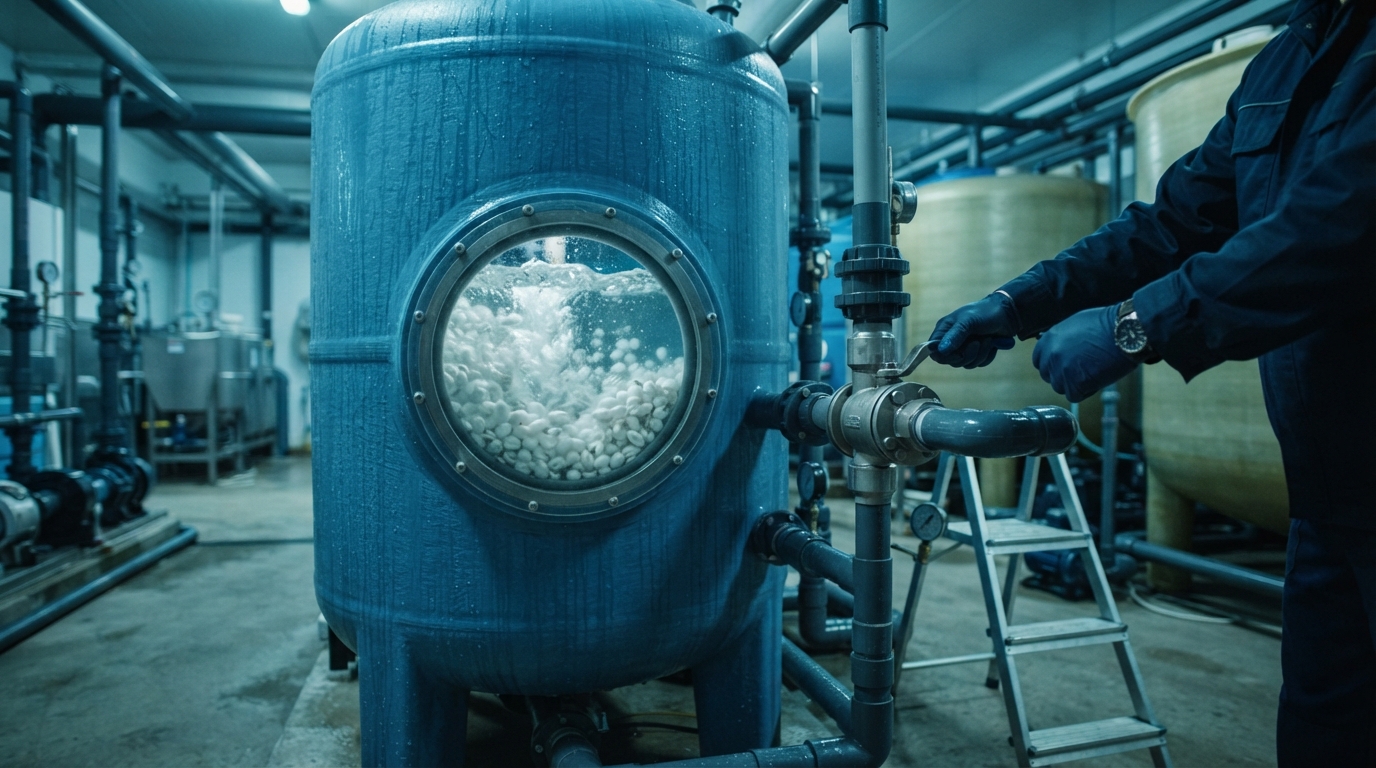
The physical media a biofilter uses — moving bed carriers, fixed bed media, floating beads — affects both surface area per unit volume and how quickly a new biofilter reaches full nitrifying capacity. A study on biocarrier material selection during start-up in freshwater RAS found meaningful differences in how fast nitrification performance ramped up depending on carrier type (ScienceDirect, "Effect of biocarrier material on nitrification performance during start-up in freshwater RAS"). Separate research comparing moving bed and fixed bed biofilters treating effluent from a large commercial outdoor rainbow trout RAS found both configurations viable, but with different practical trade-offs (ScienceDirect, "Nitrification in moving bed and fixed bed biofilters treating effluent water from a large commercial outdoor rainbow trout RAS").
Why "Rule of Thumb" Sizing Fails at Scale
Biofilter performance measured under laboratory or pilot-scale conditions frequently does not translate linearly to full commercial scale. A widely cited review notes that removal rate models must account for mass-transfer limitations, biofilm thickness effects, and competition between ammonia-oxidizing and nitrite-oxidizing organisms (ResearchGate, "A Study of Nitrification Kinetics in the Biofilter Process for Aquaculture Water Treatment: A Review"). This is echoed in research evaluating commercially available biological filters for RAS, which found significant performance variation between filter types under standardized test conditions (ResearchGate, "An evaluation of commercially available biological filters for recirculating aquaculture systems").
The Practical Sizing Sequence
In practice, engineers size a RAS biofilter by working backward from three inputs: the projected daily feed rate, the target maximum TAN concentration the species can tolerate, and the measured or conservatively estimated areal TAN removal rate for the chosen media under the system's actual temperature and pH. Because removal rate is condition-dependent rather than fixed, responsible design practice applies safety margins rather than nameplate maximums.
ADEC sizes RAS biofilters around site-specific TAN loads and water chemistry, not generic rules of thumb. See how we engineer RAS technology →
Learn moreDoes a bigger biofilter always mean better water quality?+
Not necessarily. Oversizing wastes capital and, in some configurations, can create dead zones with poor flow distribution. The goal is matching biofilter capacity to the specific TAN load with an appropriate safety margin — not maximizing size.
How long does a new biofilter take to reach full capacity?+
This varies by media type, temperature, and seeding method, but published start-up studies consistently show a ramp-up period rather than instant performance, which is why commercial facilities stock gradually.
Why do two biofilters with the same media volume perform differently?+
Because TAN removal rate depends on operating conditions — temperature, pH, dissolved oxygen, and influent TAN concentration — not media volume alone.
- Rating fixed film nitrifying biofilters used in recirculating aquaculture systems. ScienceDirect.
- Nitrification kinetics of biofilm as affected by water quality factors. ScienceDirect.
- Effect of biocarrier material on nitrification performance during start-up in freshwater RAS. ScienceDirect.
- Nitrification in moving bed and fixed bed biofilters treating effluent water from a large commercial outdoor rainbow trout RAS. ScienceDirect.
- A Study of Nitrification Kinetics in the Biofilter Process for Aquaculture Water Treatment: A Review. ResearchGate.
- An evaluation of commercially available biological filters for recirculating aquaculture systems. ResearchGate.
Written and reviewed by ADEC's in-house aquarium life support and recirculating aquaculture engineers. ADEC designs, builds and operates turnkey aquarium and RAS facilities across the GCC, and is a member of the European Union of Aquarium Curators (EUAC), EUOTA and the European Aquaculture Society (AquaEAS), with CE-certified OCEANTECH™ equipment.
Get new articles in your inbox
Occasional, science-based insights on aquarium LSS and RAS aquaculture. No spam.