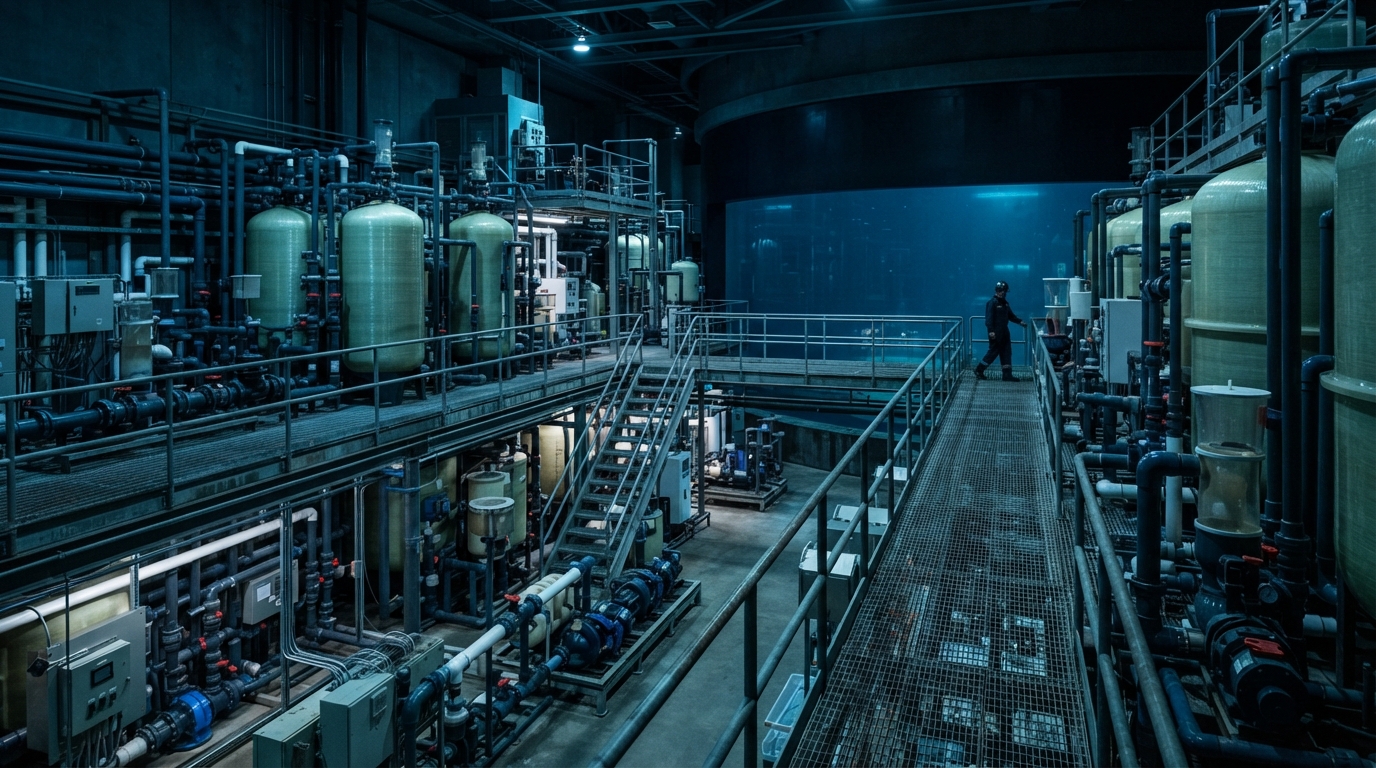
Designing a Life Support System: Turnover and Redundancy
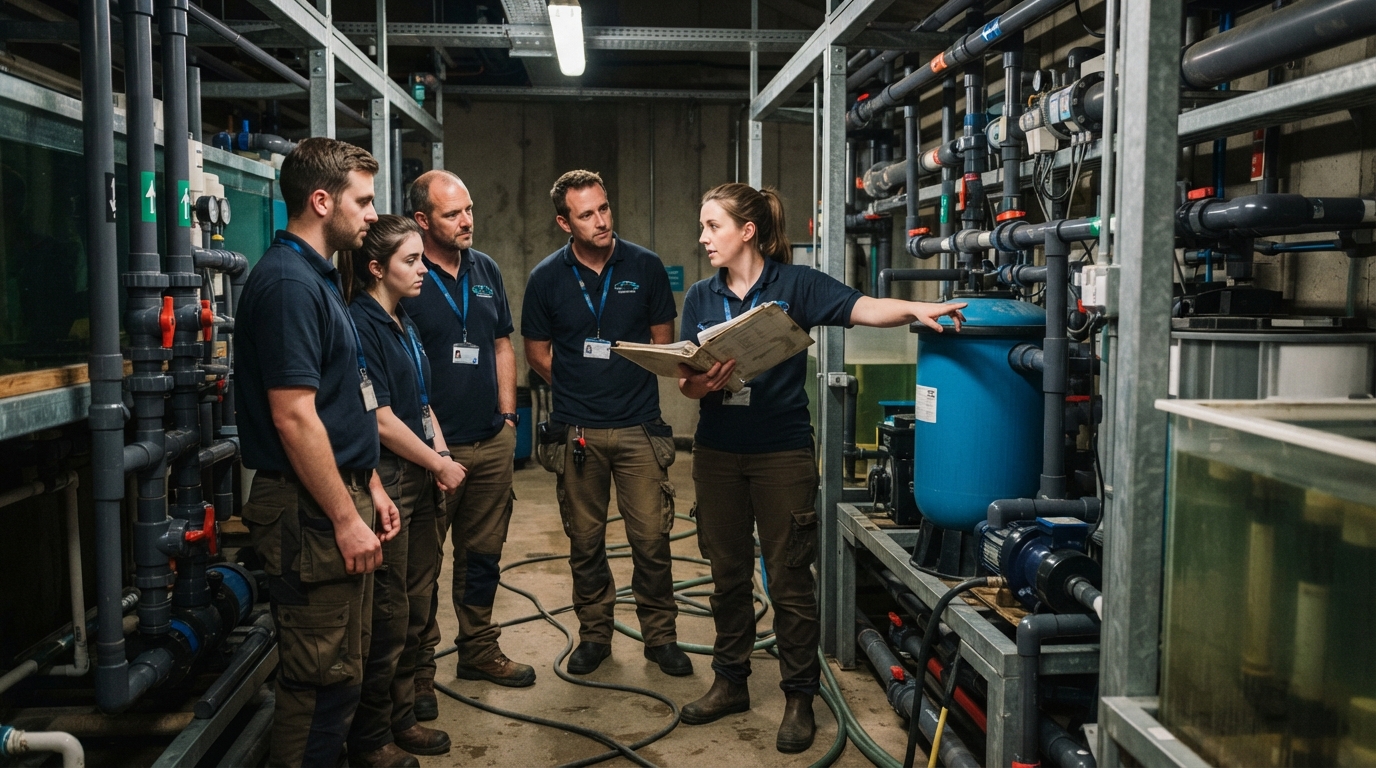
Sizing an aquarium life support system is not primarily an equipment-selection exercise — it is a set of engineering judgments about turnover rate and redundancy that, together, determine how quickly a system can respond to a problem and how resilient it is when a component fails. A peer-reviewed review of aquarium LSS design frames these two variables directly as life-safety decisions for the animal collection, not just mechanical specifications (Marine Technology Society Journal, Vol. 35, No. 1, 2001).
Turnover Rate: Balancing Speed and Species Needs
Turnover rate describes how many times per hour the full water volume of an exhibit passes through the treatment loop. Faster turnover generally means faster removal of waste and more consistently stable water chemistry — but it must be balanced against species-specific flow tolerances, since exhibit currents appropriate for a pelagic, fast-swimming species can be stressful or physically damaging for slower-moving or more delicate animals. The review identifies this balance as one of the central judgment calls in LSS design, since turnover targets cannot be set from a single universal formula but must be calibrated to the specific collection housed in each exhibit.
Sizing Biological Capacity to Match Turnover
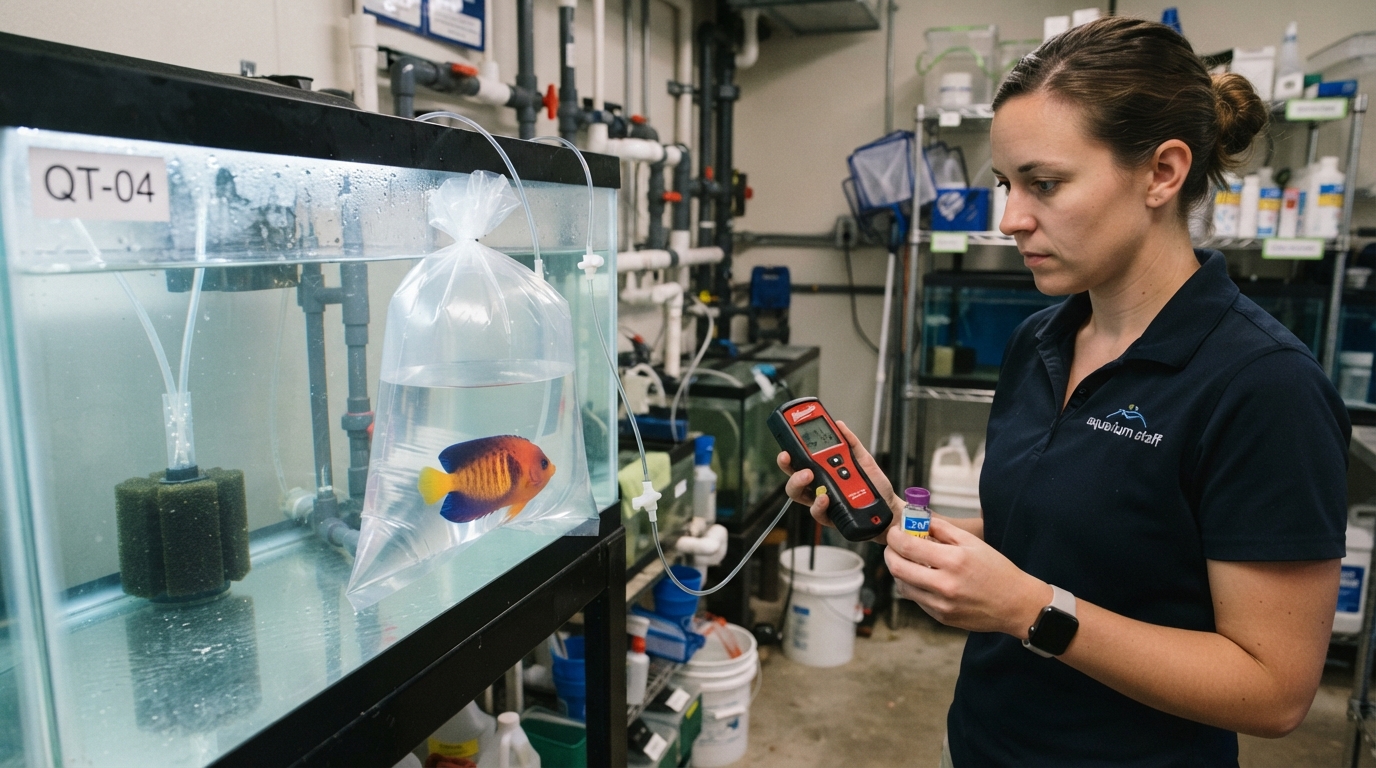
Turnover rate and biological filtration capacity must be engineered together, not independently. Faster turnover moves ammonia to the biofilter more quickly, which is beneficial for water quality stability, but only if the biofilter itself has enough nitrifying surface area to actually process that ammonia at the corresponding rate — a mismatch between turnover speed and biofilter capacity does not improve outcomes and can create inefficiency. Research on aquarium biofilter microbial communities reinforces why this sizing has to account for actual, measured nitrifying capacity: while a mature biofilter's core nitrifying population is generally stable, its size and performance still need to be verified for the specific system rather than assumed from a generic specification (PLOS One, "Temporal and Spatial Stability of Ammonia-Oxidizing Archaea and Bacteria in Aquarium Biofilters"). Dissolved oxygen delivery must scale alongside both, since a larger biological filtration load increases oxygen demand directly (more respiring nitrifying biomass consuming dissolved oxygen), while faster turnover changes how quickly that oxygen demand is met and distributed throughout the system rather than adding to the demand itself — a distinction well established in the aquaculture oxygen management literature that LSS engineers apply directly to exhibit-scale systems (University of Florida IFAS Extension, FA002: Dissolved Oxygen for Fish Production).
Redundancy: Engineering for Equipment Failure
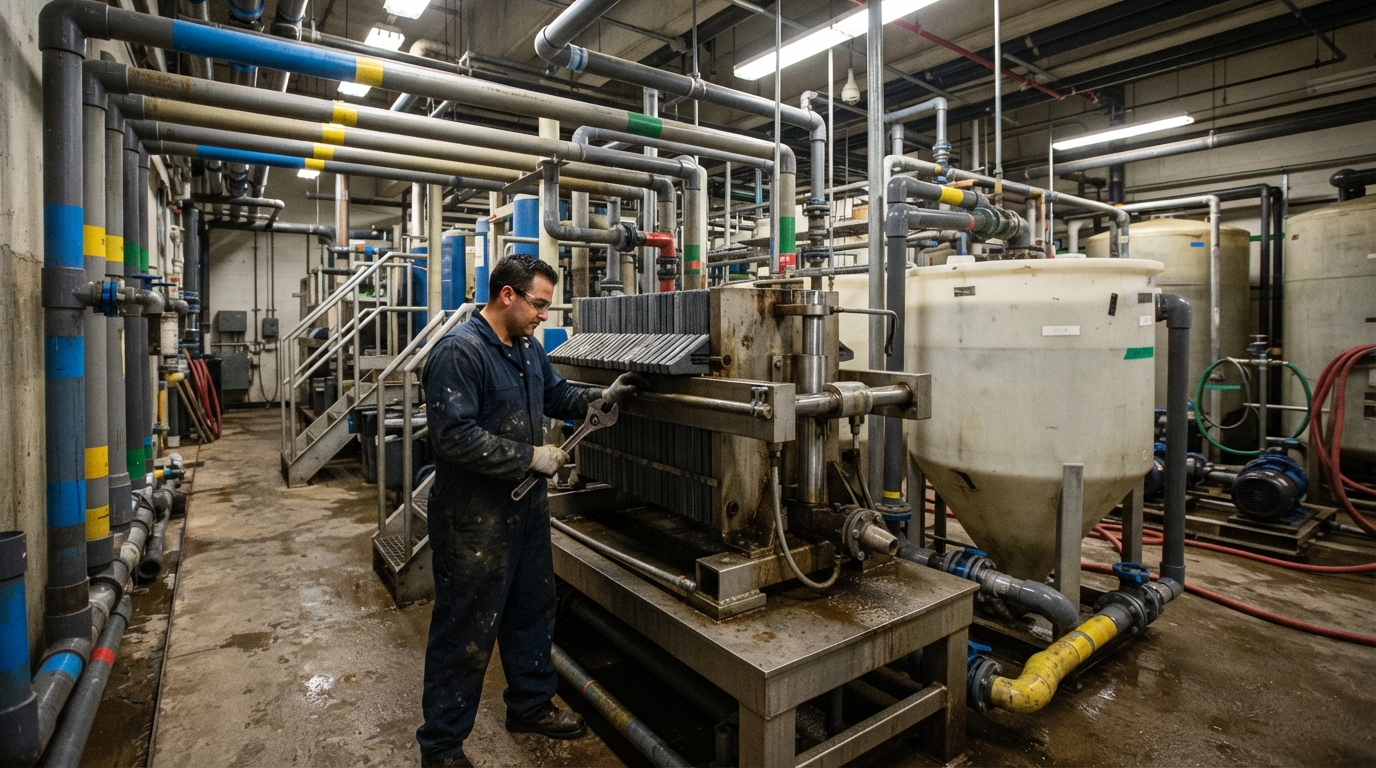
Because a public aquarium LSS supports a living, often irreplaceable collection and cannot simply be shut down for repairs the way many industrial systems can, redundancy is treated as a core design requirement rather than an optional upgrade. This typically means duplicating critical equipment — pumps, blowers, and backup power — so that a single point of failure does not become a life-support emergency for the exhibit. The review identifies redundancy planning, alongside turnover rate, as the area where the most significant engineering judgment in LSS design is actually exercised, since both oversizing (wasting capital and energy) and undersizing (risking the collection) are real failure modes on opposite ends of the same design decision.
Why These Decisions Cannot Be Made in Isolation
Turnover rate, biological capacity, oxygenation, and redundancy are not independent design choices — each constrains and is constrained by the others. A system engineered for fast turnover but inadequate biofiltration will not achieve stable water quality; a system with ample biological capacity but insufficient redundancy remains one equipment failure away from crisis. This interconnected nature is why comprehensive LSS design is approached as a single integrated engineering exercise, informed by species biology as much as by mechanical and hydraulic calculation (Merck Veterinary Manual, "Aquatic Life Support System Components").
ADEC engineers turnover, biological capacity and redundancy as one integrated LSS design — not separate purchases. Talk to our one-stop contracting team →
Learn moreIs a higher turnover rate always better for exhibit water quality?+
Not necessarily — turnover must be matched to species flow tolerance and to biological filtration capacity; excessive turnover without adequate biofiltration or with unsuitable current for the species housed does not improve outcomes and can create new problems.
Why is redundancy considered a design requirement rather than an optional feature in LSS engineering?+
Because a public aquarium LSS supports a living collection continuously and cannot be shut down for unplanned repairs without risk, critical equipment failure needs a built-in backup path rather than reactive emergency response after the fact.
Can an existing LSS be resized after an exhibit's collection changes significantly?+
In principle yes, but because turnover, biological capacity, oxygenation, and redundancy are interdependent, a significant change in collection generally requires re-evaluating the system as a whole rather than adjusting a single component in isolation.
- Aquarium Life Support System Design Entering the Twenty-first Century. Marine Technology Society Journal, Vol. 35, No. 1, 2001.
- Temporal and Spatial Stability of Ammonia-Oxidizing Archaea and Bacteria in Aquarium Biofilters. PLOS One.
- FA002: Dissolved Oxygen for Fish Production. University of Florida IFAS Extension.
- Aquatic Life Support System Components. Merck Veterinary Manual.
Written and reviewed by ADEC's in-house aquarium life support and recirculating aquaculture engineers. ADEC designs, builds and operates turnkey aquarium and RAS facilities across the GCC, and is a member of the European Union of Aquarium Curators (EUAC), EUOTA and the European Aquaculture Society (AquaEAS), with CE-certified OCEANTECH™ equipment.
Get new articles in your inbox
Occasional, science-based insights on aquarium LSS and RAS aquaculture. No spam.