What Is a Life Support System (LSS) in a Public Aquarium?
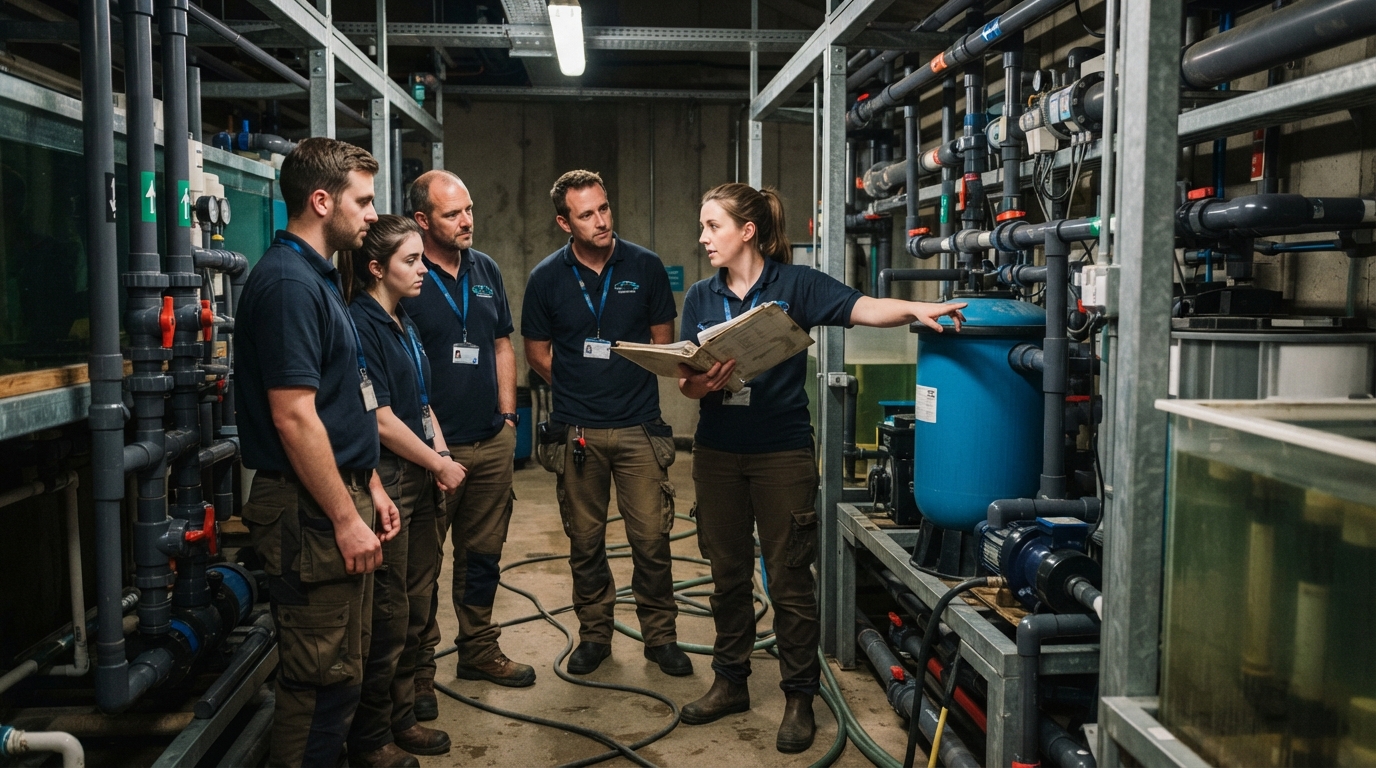
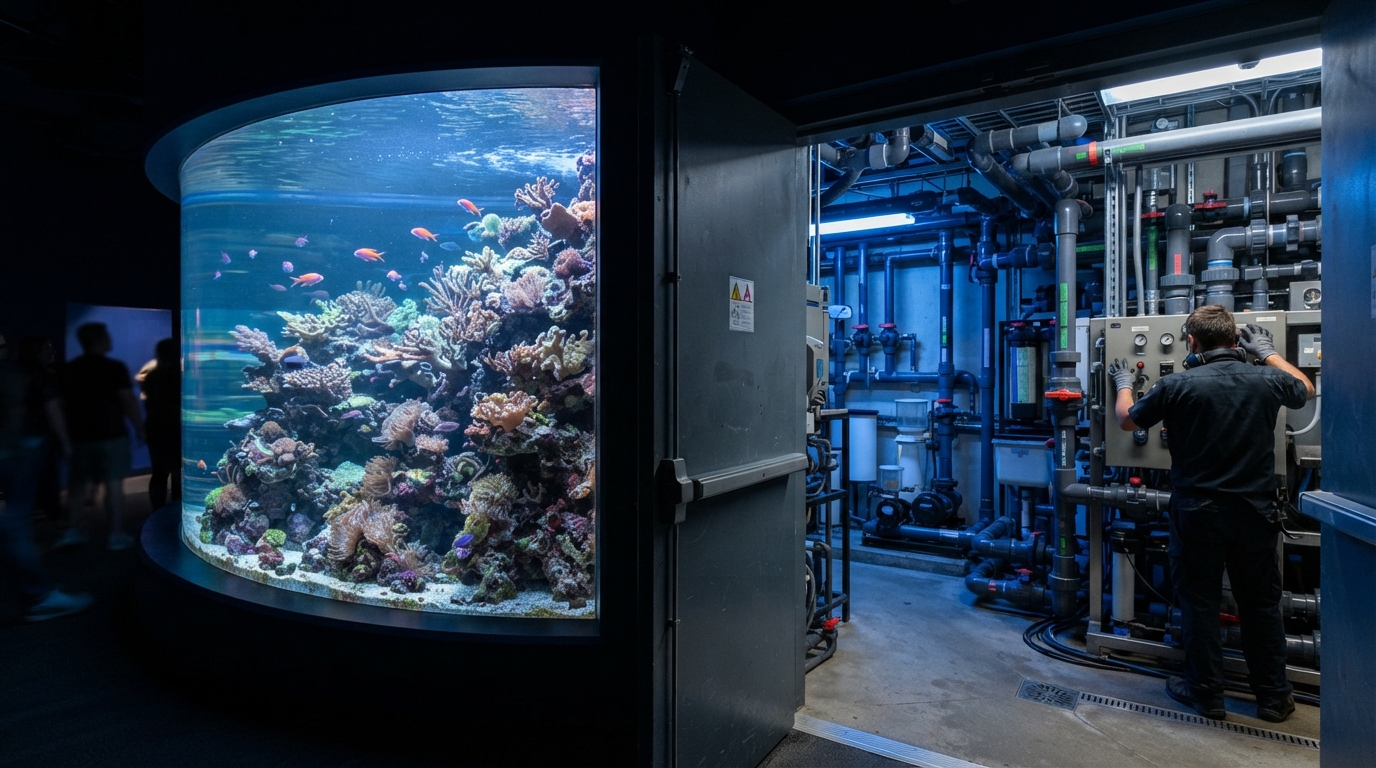
Visitors to a public aquarium see coral, fish, and flowing water. What they don't see is the Life Support System (LSS) — the engineered network of pumps, filters, sensors, and treatment stages running continuously behind every exhibit wall, working to hold water chemistry within the narrow range a living collection can survive in. A public aquarium is, in engineering terms, one of the most demanding closed water-treatment environments that exists: unlike a wastewater plant, an LSS cannot tolerate downtime, because the "effluent" it protects is a living, often irreplaceable collection of animals.
A 2001 review in the Marine Technology Society Journal on aquarium LSS design frames this directly: system engineering choices — filtration capacity, redundancy, and turnover rate — are life-safety decisions for the collection, not just mechanical specifications (Marine Technology Society Journal, Vol. 35, No. 1, 2001, "Aquarium Life Support System Design Entering the Twenty-first Century").
The Core Components of an LSS
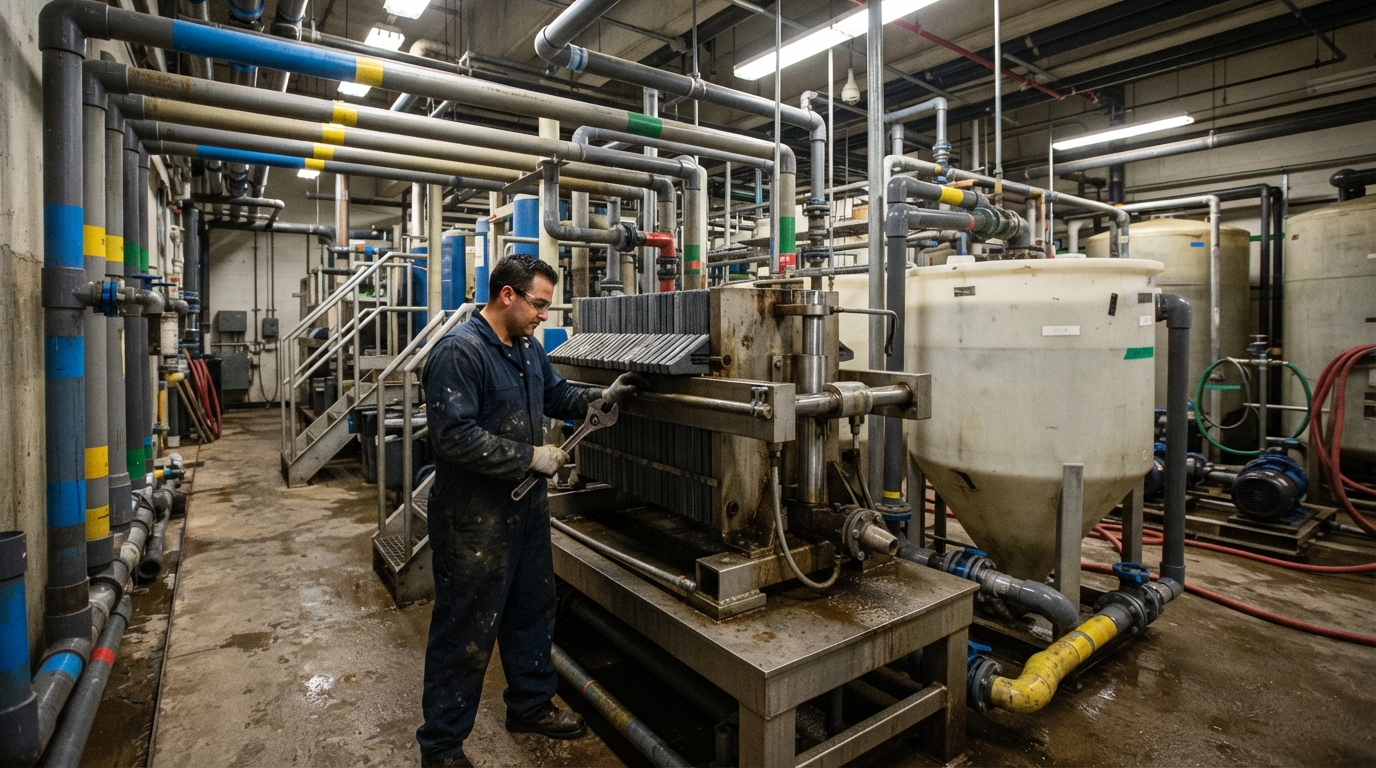
Although every facility is engineered around its own exhibits, species mix, and volume, most public aquarium LSS installations combine the same functional building blocks:
- Mechanical filtration — drum filters, sand filters, or bead filters remove suspended solids (uneaten food, waste, detritus) before they decompose and degrade water quality.
- Biological filtration — media beds colonized by nitrifying bacteria convert dissolved ammonia, excreted directly by fish and invertebrates, into progressively less toxic compounds (see below).
- Protein skimming (marine systems) — a foam-fractionation process that removes dissolved organic compounds before bacteria ever break them down, reducing the biological and chemical treatment load downstream.
- Disinfection — UV or ozone treatment controls pathogens, parasites, and free-floating microorganisms circulating through the system.
- Gas exchange and temperature control — dissolved oxygen and CO₂ are balanced, and water temperature is held to species-appropriate ranges, which can differ dramatically between a coldwater and a tropical reef exhibit within the same building.
- Source water treatment — reverse osmosis / deionization (RO/DI) is commonly used to strip incoming makeup water of the minerals and contaminants ordinary tap or well water carries, giving the LSS a stable, known starting point for chemistry.
Why Biological Filtration Is the Heart of the System
The same nitrogen chemistry that governs any closed aquatic system applies directly inside an LSS. Ammonia excreted by aquatic animals is toxic even at low concentrations, and its toxicity depends heavily on pH and temperature — the unionized form (NH₃) is markedly more dangerous than the ionized ammonium ion (NH₄⁺), meaning the same total ammonia reading can be far more hazardous in a warm, higher-pH reef tank than in a cooler, more acidic freshwater exhibit (University of Florida IFAS Extension, FA031: Ammonia in Aquatic Systems).
Biofiltration manages this through nitrification, a two-stage bacterial process: ammonia-oxidizing bacteria and archaea convert ammonia into nitrite, and nitrite-oxidizing bacteria then convert that nitrite into the far less toxic nitrate (Preena et al., 2021, Reviews in Aquaculture). While this research is most often published in an aquaculture production context, the underlying microbiology is identical to what happens inside an aquarium biofilter — which is why LSS designers borrow heavily from aquaculture engineering literature when sizing biological filtration for large exhibit volumes.
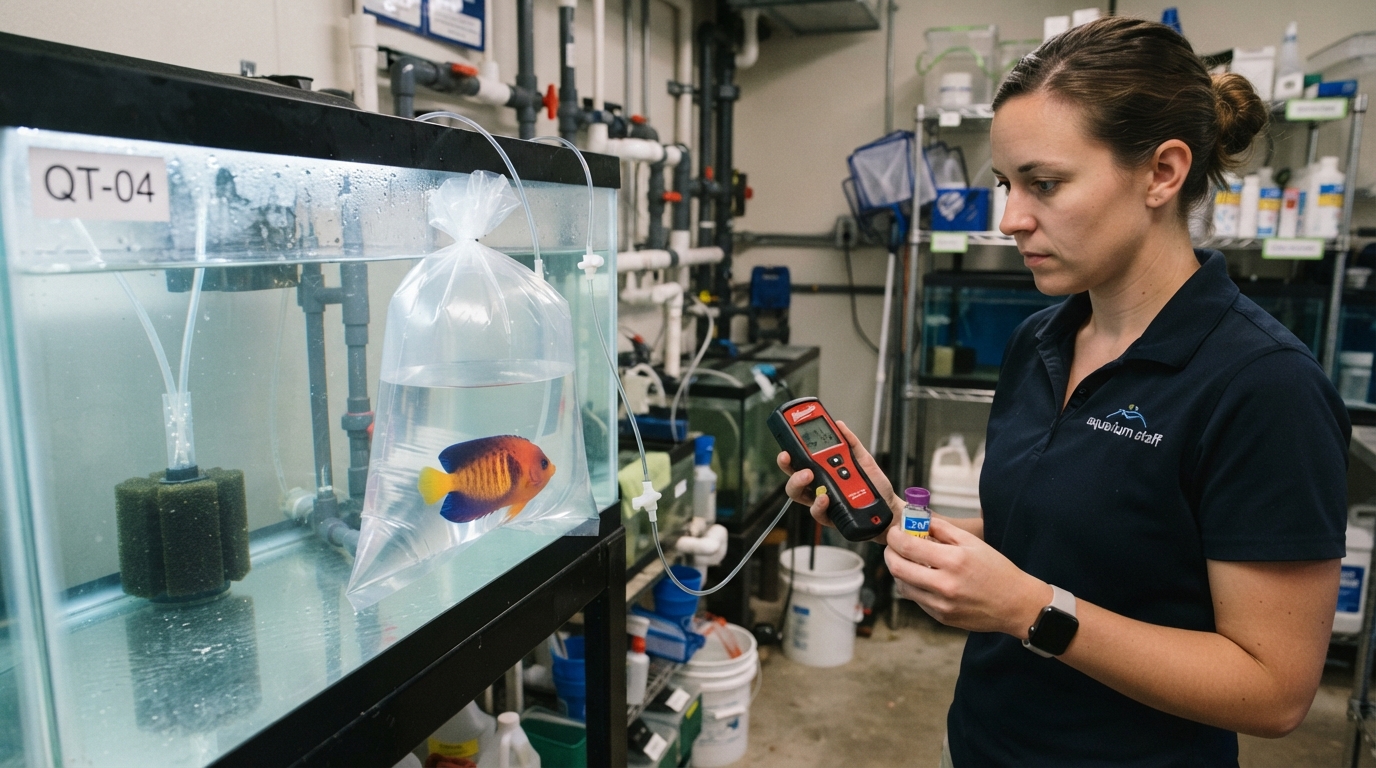
The Merck Veterinary Manual's reference chapter on aquatic life support systems reinforces the same point from a veterinary and animal-welfare perspective: consistent water chemistry — not just "clean-looking" water — is the foundation of aquatic animal health, and ammonia, nitrite, dissolved oxygen, pH, and temperature all require ongoing monitoring rather than one-time setup (Merck Veterinary Manual, Aquatic Life Support System Components).
Turnover Rate and Redundancy: Engineering for Failure
Two design concepts separate a well-engineered LSS from an undersized one:
- Turnover rate — how many times per hour the full exhibit volume is cycled through the treatment loop. Faster turnover generally means faster removal of waste and more stable chemistry, but it must be balanced against flow tolerances for the species on display (a slow-moving seahorse exhibit and a pelagic shark tank have very different flow requirements).
- Redundancy — because an LSS cannot simply be switched off for repairs the way an industrial process can, critical components (pumps, blowers, backup power) are typically duplicated so a single equipment failure does not become a life-support emergency for the collection.
The Marine Technology Society Journal review notes that these two variables — turnover and redundancy — are where most of the engineering judgment in LSS design actually lives, since oversizing wastes energy and capital, while undersizing risks the collection.
ADEC engineers and installs turnkey life support systems for public and private aquariums across the GCC. Explore our LSS capabilities →
Learn moreIs an aquarium LSS the same as a home aquarium filter?+
Only in principle, not in scale or engineering rigor. A public aquarium LSS applies the same core filtration science (mechanical, biological, chemical) as a home tank, but at industrial scale, with redundant equipment, continuous monitoring, and engineered turnover rates calculated for specific species and exhibit volumes.
Why do marine exhibits need protein skimming but freshwater exhibits usually don't?+
Protein skimming relies on the surface tension properties of saltwater to form stable foam that carries dissolved organics out of the system — a mechanism that doesn't work effectively in freshwater, where biological and mechanical filtration carry more of the treatment load instead.
How often does LSS equipment need to be replaced or serviced?+
This varies by component, but because an LSS runs continuously and supports a living collection, most facilities follow a preventive maintenance schedule rather than a run-to-failure approach — particularly for pumps, UV lamps, and life-safety redundancy systems.
- Aquarium Life Support System Design Entering the Twenty-first Century (2001). Marine Technology Society Journal, Vol. 35, No. 1.
- University of Florida IFAS Extension. FA031: Ammonia in Aquatic Systems.
- Preena, P.G., et al. (2021). Nitrification and denitrification in recirculating aquaculture systems: the processes and players. Reviews in Aquaculture, Wiley Online Library.
- Merck Veterinary Manual. Aquatic Life Support System Components.
Written and reviewed by ADEC's in-house aquarium life support and recirculating aquaculture engineers. ADEC designs, builds and operates turnkey aquarium and RAS facilities across the GCC, and is a member of the European Union of Aquarium Curators (EUAC), EUOTA and the European Aquaculture Society (AquaEAS), with CE-certified OCEANTECH™ equipment.
Get new articles in your inbox
Occasional, science-based insights on aquarium LSS and RAS aquaculture. No spam.