Transport Stress and Acclimation Science for New Aquarium Arrivals
Long before a newly arrived fish or invertebrate ever reaches a quarantine system, it has already been through the most physiologically demanding event of its recent life: the journey itself. Confinement, shifting water chemistry, and sudden environmental change trigger a measurable stress cascade that shapes survival for days afterward. This article looks at the physiology of transport stress and the evidence behind the acclimation protocols used to manage it on arrival.
The Hidden Cost of Transport: A Physiological Stress Cascade
Transport activates the same hypothalamic-pituitary-interrenal stress axis that governs any acute threat response in fish. In channel catfish (Ictalurus punctatus), transport produced a significant rise in serum cortisol, the primary stress hormone, followed by secondary increases in blood glucose, cholesterol, and triglycerides as the body mobilized energy reserves; antioxidant enzymes and hepatic heat-shock proteins (HSP70, HSP90) also rose, reflecting cellular-level damage control, with most markers normalizing only after 24–72 hours (Refaey & Li, 2018). In a study comparing transport-and-release methods in juvenile Atlantic salmon, cortisol was roughly five-fold higher than in untransported controls and remained elevated even four days after fish were placed into river enclosures, showing that the stress imposed by loading and hauling can persist well beyond the trip itself (Roberts et al., 2024).
Crowding, Confinement, and the Chemistry of a Closed System
Inside a transport bag or tote, fish are confined in a closed volume with no mechanical life support. Dissolved oxygen is consumed continuously while the only replenishment comes from whatever headspace gas was loaded at packing, which is why shippers fill bags with roughly half to two-thirds pure oxygen rather than air (Southern Regional Aquaculture Center, Stone & Parker). At the same time, respired ammonia accumulates in the water; because the proportion of highly toxic un-ionized ammonia rises with both pH and temperature, a sealed bag that warms or whose pH drifts upward during transit can become disproportionately more toxic even if total ammonia-nitrogen stays constant (Southern Regional Aquaculture Center, Stone & Parker). Respiration also raises dissolved carbon dioxide, which can reach narcotic levels, impair oxygen uptake at the gill, and lower pH as it accumulates (Washington State University Veterinary Extension, 2026). Loading density compounds these effects: in a controlled study of Chinook salmon, striped bass, and threadfin shad, doubling standard transport densities increased carbon dioxide accumulation, though survival stayed above 98% and cortisol, glucose, and lactate all peaked immediately post-transport before returning to baseline within 24 hours — evidence that water-quality management, not density alone, determines outcomes (Sutphin & Hueth, 2015).
Temperature and Osmotic Stress: Why Gradual Matching Matters
Fish are poikilotherms and cannot buffer themselves against abrupt temperature change, and extension guidance advises against transferring fish into water more than about 5°C colder or 2°C warmer than their transport water without a gradual step-down (Washington State University Veterinary Extension, 2026). Because warmer water holds less dissolved oxygen, any rise in transport-water temperature compounds the oxygen-depletion problem described above. Osmotic and ionic balance is similarly sensitive: in juvenile largemouth bass, exposure to elevated salinity produced significant increases in serum osmolality, sodium, chloride, and cortisol alongside measurable gill tissue changes, with gill Na⁺/K⁺-ATPase and Ca²⁺-Mg²⁺-ATPase activity peaking within 24 hours as the fish's ion-regulating machinery worked to compensate (Liu et al., 2025). Matching salinity and pH gradually, rather than transferring fish directly into water with different ionic composition, gives these regulatory systems time to adjust rather than forcing an abrupt osmotic correction.
Invertebrates Face Transport Stress Too
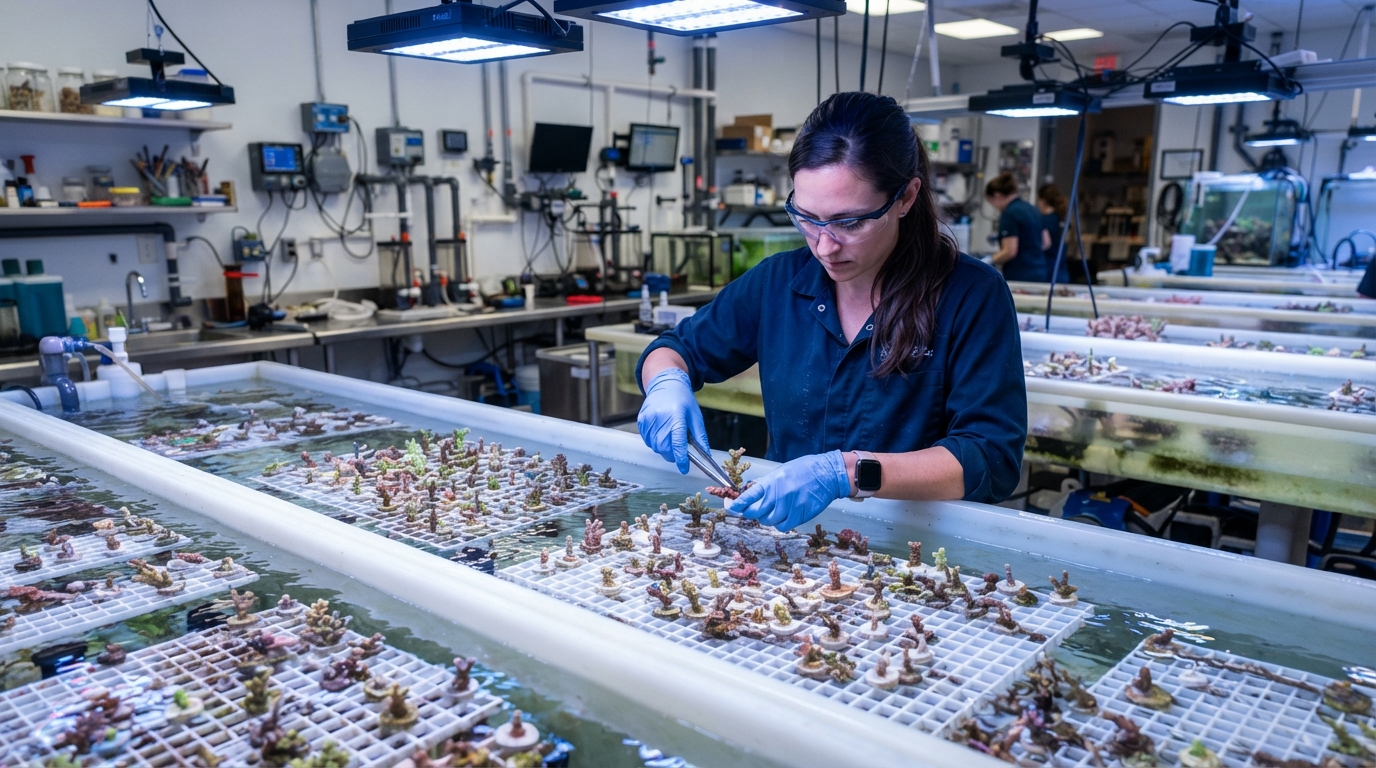
Transport physiology research has focused heavily on fish, but reef invertebrates show comparable vulnerability. In a study shipping two octocoral species over 48 hours, one species suffered depletion of catalase and overwhelmed antioxidant defenses, with total mortality within ten days of arrival, while a more resilient species successfully activated its antioxidant pathways and achieved 90% survival — though it still showed elevated lipid peroxidation, a marker of oxidative cell damage, three months later (Costa et al., 2021). The authors concluded that shipping tolerance is species-specific and that transport protocols should be tailored accordingly rather than treated as one-size-fits-all.
The Science Behind Acclimation Protocols
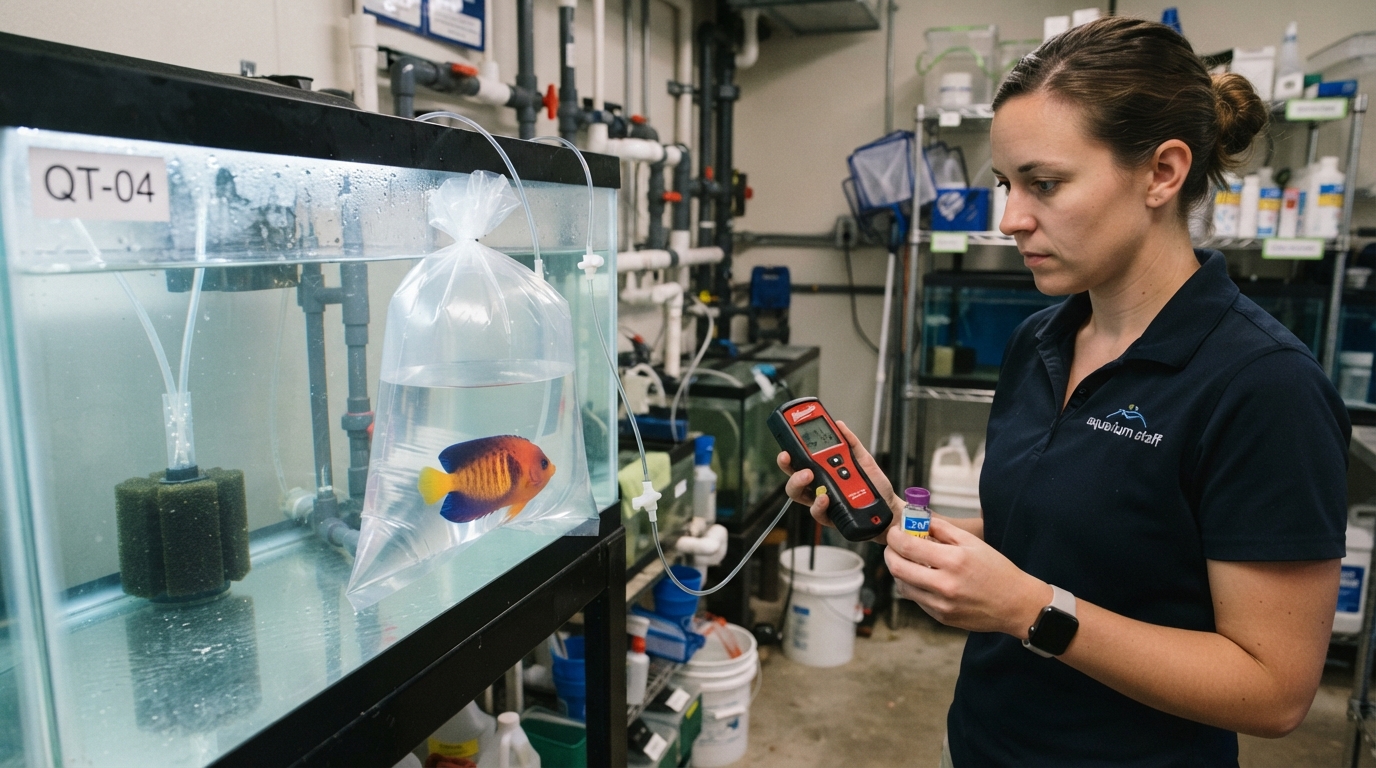
The physiological case for gradual acclimation is most direct in the salmon reintroduction study: fish given a multi-day "soft release" acclimation period in river enclosures showed significantly lower glucose and lactate than fish given an immediate "hard release," with lactate returning to near-baseline control levels, even though cortisol itself stayed elevated in both groups (Roberts et al., 2024). This points to a practical limit — acclimation measurably reduces secondary metabolic stress markers, but the primary cortisol response to capture and handling is not eliminated by acclimation alone. Extension guidance for receiving shipped fish translates this into practice: open containers in low light, equalize temperature by floating sealed bags in receiving water, then add receiving water to the transport container incrementally — a method commonly called drip acclimation — allowing up to 30 minutes or more for full adjustment, with close monitoring because rising pH in an ammonia-laden bag can suddenly increase toxicity as the water is diluted (Southern Regional Aquaculture Center, Stone & Parker; Washington State University Veterinary Extension, 2026).
Translating the Evidence into LSS Design
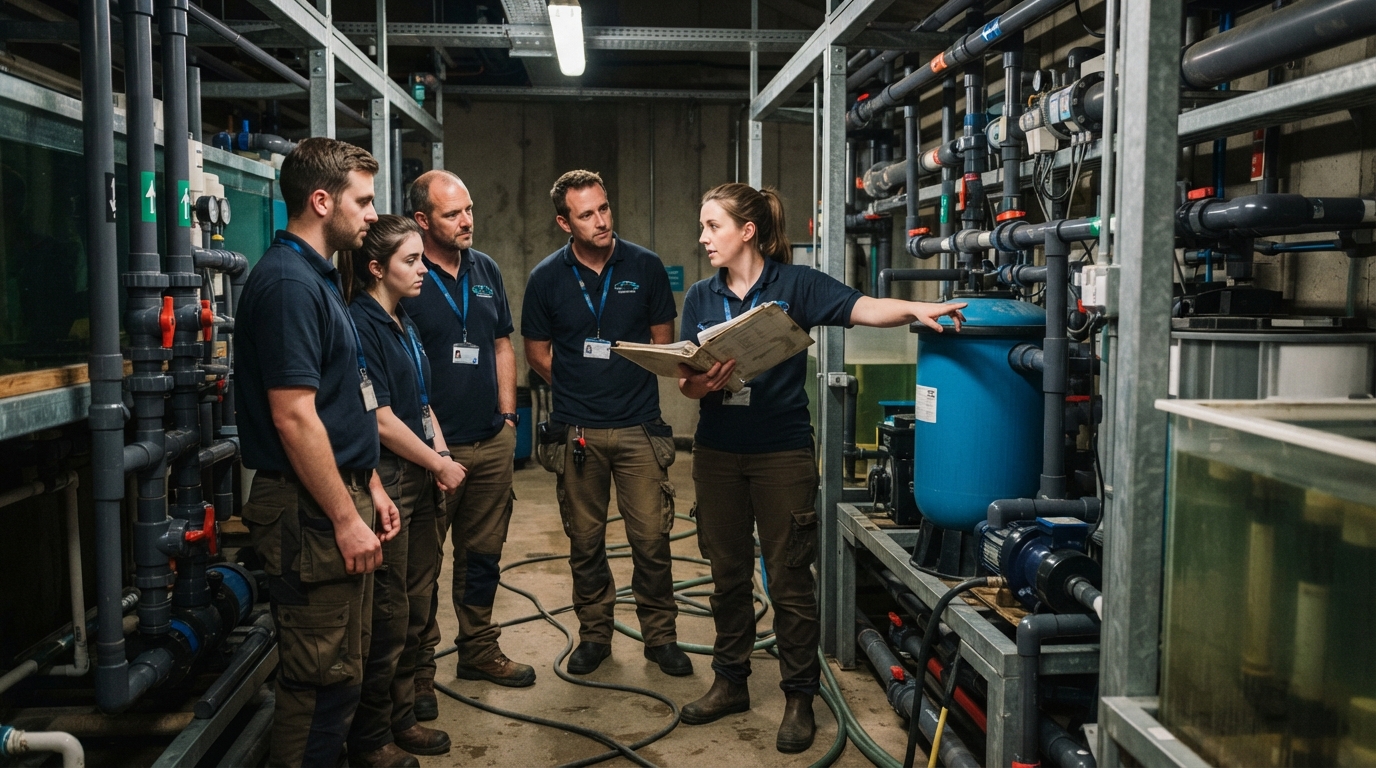
For life-support engineers, this physiology translates into concrete design requirements: dedicated acclimation or arrival tanks with independent temperature control, water chemistry matched to source conditions before any direct transfer, and sufficient turnover and aeration capacity to buffer the oxygen and ammonia loads new arrivals bring with them. Because recovery of secondary stress markers can take 24–72 hours and species-specific sensitivity varies widely, arrival systems should be sized for an observation-and-recovery period rather than immediate integration into the main system footprint.
Learn how properly engineered life support systems minimize stress on new arrivals from the moment they enter your facility.
Learn moreWhy does drip acclimation take so long for some species?+
Acclimation duration is tied to how quickly an animal's osmoregulatory and stress-hormone systems can adjust; studies measuring ion-transport enzyme activity and cortisol show these systems can take 24 hours or more to respond fully to a water-chemistry change, so protocols extending acclimation over 30 minutes to several hours allow that physiology time to catch up (Liu et al., 2025; Southern Regional Aquaculture Center, Stone & Parker).
Does a calm-looking fish mean the stress response is over?+
No. Behavioral calm can precede full physiological recovery; cortisol and related stress markers have been shown to remain elevated for days after transport even when animals appear outwardly settled (Roberts et al., 2024; Refaey & Li, 2018).
Are invertebrates like corals less sensitive to transport stress than fish?+
Not necessarily, and sensitivity varies sharply by species — one shipped octocoral species in a controlled study suffered complete mortality within ten days while a related species survived well, showing invertebrate transport tolerance cannot be generalized across taxa (Costa et al., 2021).
- Refaey, M.M. & Li, D. (2018). Transport Stress Changes Blood Biochemistry, Antioxidant Defense System, and Hepatic HSPs mRNA Expressions of Channel Catfish Ictalurus punctatus. Frontiers in Physiology, 9:1628.
- Anders, N., Eide, I., Lerfall, J., Roth, B., & Breen, M. (2020). Physiological and flesh quality consequences of pre-mortem crowding stress in Atlantic mackerel (Scomber scombrus). PLOS ONE, 15(2), e0228454.
- Roberts, D., Madliger, C.L., Mokdad, A.I., & Pitcher, T.E. (2024). Comparing the stress physiology of hard- and soft-released juvenile Atlantic Salmon after transportation for reintroduction. North American Journal of Fisheries Management, 44(6), 1268–1279.
- Costa, A.P.L., Silva, D.A.M., Rodrigues, A.C.M., et al. (2021). Species-specific oxidative stress responses and cellular energy allocation after coral shipping. Aquaculture Reports, 19.
- Liu, Y., Tian, J., Song, H., Zhu, T., Lei, C., Du, J., & Li, S. (2025). Osmoregulation and Physiological Response of Largemouth Bass (Micropterus salmoides) Juvenile to Different Salinity Stresses. International Journal of Molecular Sciences.
- Sutphin, Z.A. & Hueth, C.D. (2015). Effects of loading density during transport on physiological stress and survival of Sacramento–San Joaquin Delta fishes. U.S. Bureau of Reclamation, Technical Memorandum.
- Stone, N. & Parker, N. Shipping Fish in Boxes. Southern Regional Aquaculture Center, Mississippi State University, Publication No. 3903.
- Washington State University, Veterinary Extension (2026). Fish Transport: Basic Considerations.
Written and reviewed by ADEC's in-house aquarium life support and recirculating aquaculture engineers. ADEC designs, builds and operates turnkey aquarium and RAS facilities across the GCC, and is a member of the European Union of Aquarium Curators (EUAC), EUOTA and the European Aquaculture Society (AquaEAS), with CE-certified OCEANTECH™ equipment.
Get new articles in your inbox
Occasional, science-based insights on aquarium LSS and RAS aquaculture. No spam.