Staff Training & SOPs: The Human Factor in Aquarium Life Support
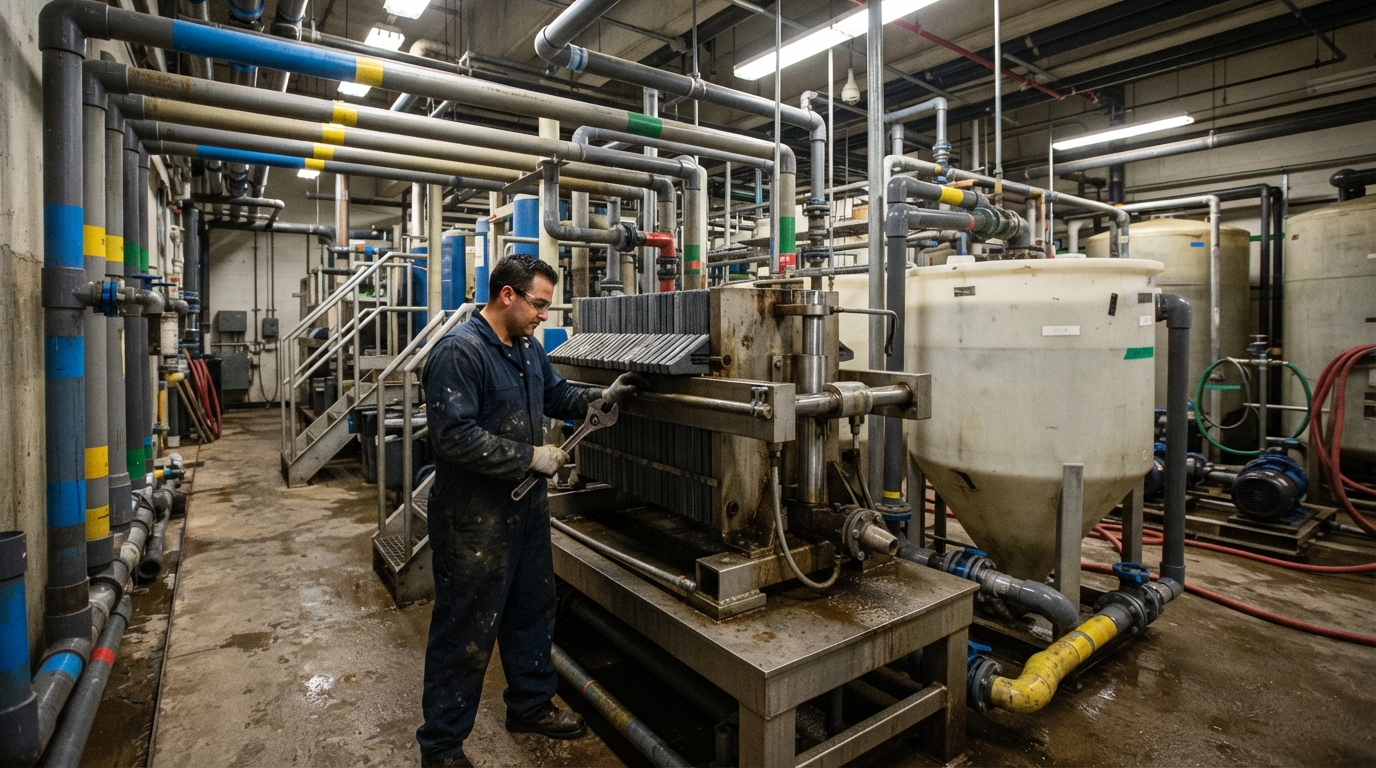
A life-support system can be engineered to every applicable standard and still fail on a Tuesday night shift because a valve was left in the wrong position or a handoff note omitted a critical detail. Decades of safety-science research across aviation, surgery, and process industries point to the same conclusion: in complex, continuously running systems, procedural and organizational factors are at least as consequential as hardware. This article reviews that evidence and considers, carefully and by analogy, what it implies for staff training, SOP design, and shift communication in aquarium life-support operations.
The Evidence Base Is Strongest Outside Aquarium Science
There is very little aquarium-specific published research quantifying how often life-support incidents trace to procedural versus equipment failure; this is a genuine gap in the literature. What does exist, directly on aquaculture operations, is a 2025 fault-tree analysis of worker-safety incident records, which found that organizational factors at the farm site (23.3%), facility/equipment factors (22.8%), and personnel factors (21.4%) were comparably weighted contributors, with "insufficient risk training" among the top secondary causes; the authors recommended written SOPs for high-risk routine tasks and multilingual training programs (Kim et al., 2025). That paper addresses occupational safety rather than animal life-support reliability specifically, but it is the closest aquaculture-sector analogue available, and it points the same direction as the broader high-consequence-industry literature discussed below.
What High-Consequence Industries Have Found About Procedure Design
Human-factors research in aviation, built on the Human Factors Analysis and Classification System (HFACS), found that aircrew or supervisory error was a contributing factor in roughly 68% of a large sample of U.S. commercial aviation accidents, with skill-based errors (slips and lapses during routine, well-practiced tasks) the single most common category (Shappell et al., 2006). That finding is notable precisely because skill-based errors occur during familiar, low-novelty tasks — the same category of work that dominates routine life-support monitoring and maintenance. In parallel, an analysis of chemical-plant incidents investigated by the U.S. Chemical Safety Board found that operating-procedure and mechanical-integrity deficiencies appeared disproportionately among lower-severity, more frequent incidents, even though design and maintenance factors dominated the smaller number of catastrophic events (Wang et al., 2021) — a pattern consistent with the idea that procedural gaps drive the everyday incidents an operation actually experiences most often, even where they are not the leading cause of worst-case failures.
Checklists as a Cognitive Aid, Not a Bureaucratic Formality
The clearest experimental evidence on procedure design comes from surgery. The WHO Surgical Safety Checklist, tested across eight hospitals internationally, was associated with a drop in major inpatient complications from 11% to 7% and in inpatient death following major operations from 1.5% to 0.8% (Haynes et al., 2009). A widely cited explanation for why checklists work is cognitive, not administrative: under stress, fatigue, or interruption, working memory for sequential steps degrades, and checklists offload that burden by externalizing sequence and providing a forcing function to catch omissions before they become incidents (Hales & Pronovost, 2006). A 2024 narrative review of 74 studies similarly concluded that checklists reduce care variation and support team communication, while cautioning that their benefit depends heavily on genuine staff buy-in rather than rote compliance (Aoudi Chance et al., 2024).
Shift Handoff Is a Documented, Recurring Failure Point
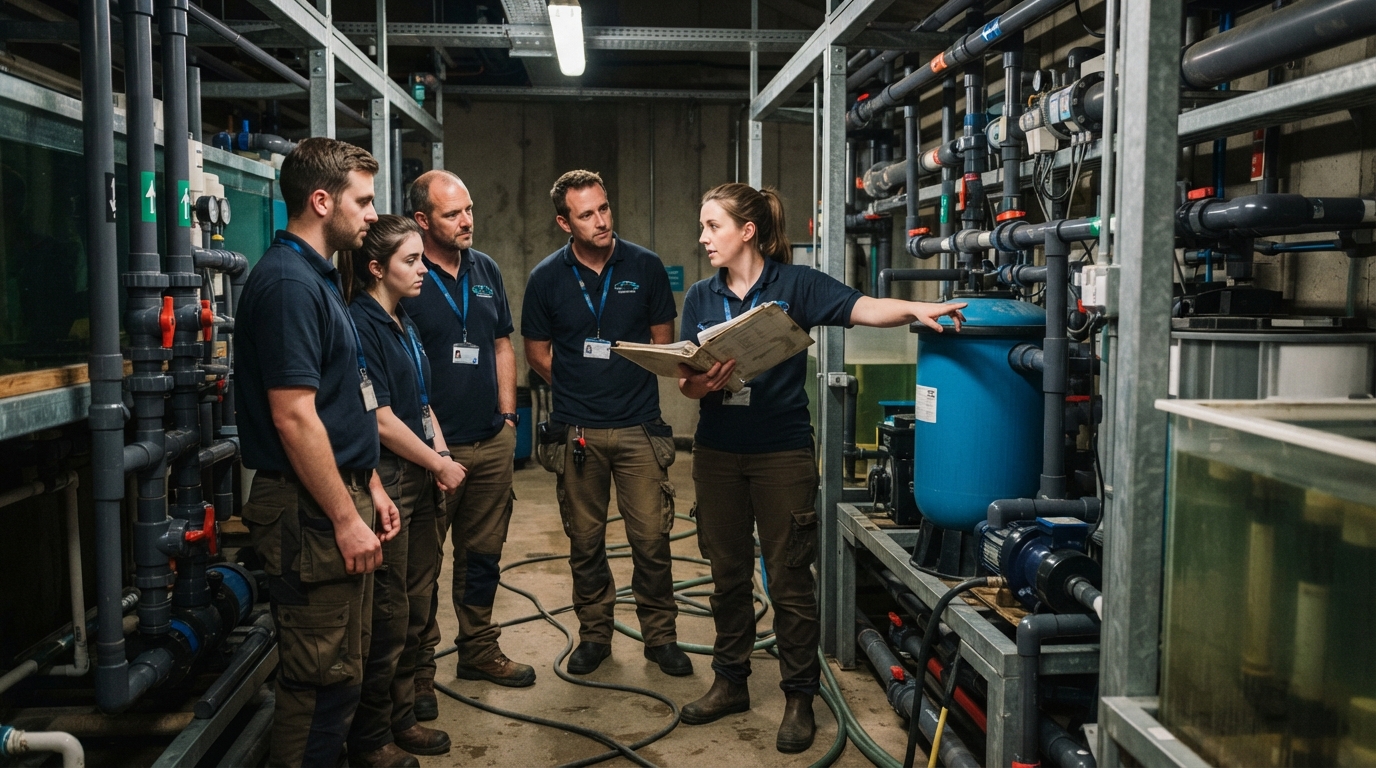
Aquarium life support runs continuously across shifts, which makes handoff quality directly relevant. In a nine-hospital study, implementing a structured handoff protocol (I-PASS) was associated with a 23% reduction in medical error rates and a 30% reduction in preventable adverse events, with no increase in handoff duration (Starmer et al., 2014). The mechanism is structural: a fixed, verbalized sequence (patient/system status, pending issues, contingency plans) rather than an open-ended conversation reduces the chance that an outgoing operator's unspoken assumption becomes the incoming operator's blind spot.
Extending This, by Analogy, to Aquarium Life Support
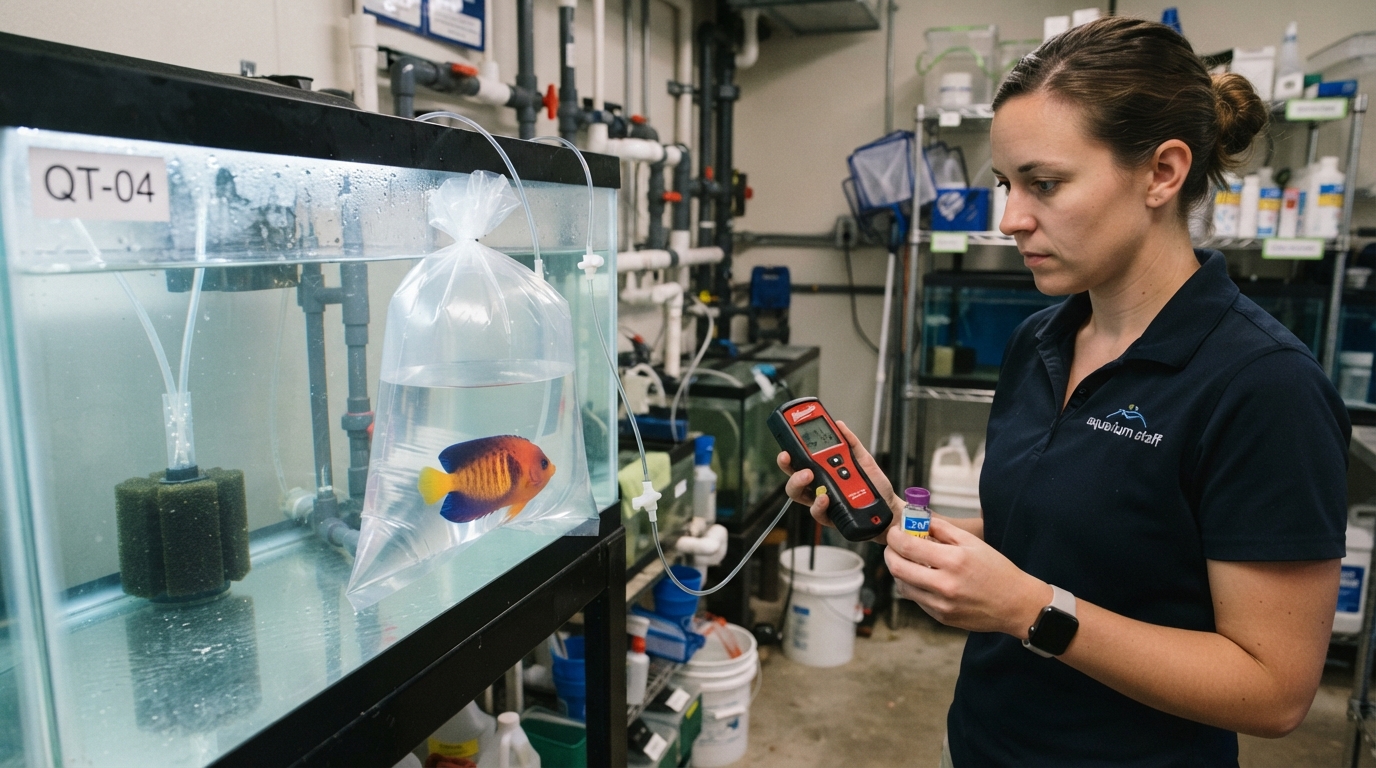
None of the studies above were conducted on aquarium life-support systems, and this article does not claim they were. The reasonable inference, stated explicitly, is that aquarium LSS shares the structural features — continuous operation, shift-based staffing, routine tasks performed under time pressure, and severe consequences from small omissions — that make checklists and structured handoffs effective elsewhere. Sector-specific guidance for zoos and aquariums already points in a compatible direction: BIAZA's health and safety guidelines call for documented, task-specific procedures, training refreshed for infrequently used skills, pre-agreed emergency signals and escalation routes, and formal incident-reporting systems (BIAZA, 2020). Operators should treat the healthcare and aviation findings as a rationale for adopting similar tools — written SOPs for routine water-quality checks and equipment rounds, a structured handoff script covering system status and open issues, and a clear escalation ladder for alarms — rather than as proof that any specific numerical improvement will transfer to an aquarium setting.
Need help translating safety-science best practice into documented SOPs and escalation protocols for your life-support operation? Talk to ADEC Dubai's engineering team.
Learn moreDoes checklist use slow down routine life-support rounds?+
In the hospital handoff study, adopting a structured protocol produced no significant increase in time spent (Starmer et al., 2014); the aviation and surgical literature likewise frames checklists as time-neutral tools that reorganize existing steps rather than add new ones.
Is human error really the main cause of life-support incidents, or is equipment failure more important?+
The honest answer, drawn from adjacent high-consequence industries, is that both matter and their relative weight depends on severity: one process-safety analysis found procedural and mechanical-integrity factors concentrated in frequent, lower-severity incidents, while design and maintenance dominated rare catastrophic ones (Wang et al., 2021) — so procedure quality likely matters most for the everyday incidents an operation actually experiences.
What is the minimum an aquarium facility should document as an SOP?+
BIAZA's guidance for zoos and aquariums recommends documenting task-specific procedures informed by a written risk assessment, training requirements including refreshers for infrequently used skills, and pre-agreed emergency and escalation procedures (BIAZA, 2020).
- Haynes, A.B., Weiser, T.G., Berry, W.R., et al. (2009). A Surgical Safety Checklist to Reduce Morbidity and Mortality in a Global Population. New England Journal of Medicine, 360, 491–499.
- Hales, B.M. & Pronovost, P.J. (2006). The checklist—a tool for error management and performance improvement. Journal of Critical Care, 21(3), 231–235.
- Starmer, A.J., Spector, N.D., Srivastava, R., et al. (2014). Changes in Medical Errors after Implementation of a Handoff Program. New England Journal of Medicine, 371(19), 1803–1812.
- Shappell, S., Detwiler, C., Holcomb, K., Hackworth, C., Boquet, A., & Wiegmann, D. (2006). Human Error and Commercial Aviation Accidents: A Comprehensive, Fine-Grained Analysis Using HFACS (DOT/FAA/AM-06/18). Federal Aviation Administration, Office of Aerospace Medicine.
- Wang, Y., Henriksen, T., Deo, M., & Mentzer, R.A. (2021). Factors contributing to US chemical plant process safety incidents from 2010 to 2020. Journal of Loss Prevention in the Process Industries, 71, 104512.
- Kim, S.-H., Lee, S.-H., Ryu, K.-J., & Lee, Y.-W. (2025). Improving Aquaculture Worker Safety: A Data-Driven FTA Approach with Policy Implications. Fishes, 10(6), 271.
- British and Irish Association of Zoos and Aquariums (BIAZA). (2020). Health and Safety Guidelines for Zoos and Aquariums.
- Aoudi Chance, E., Dia, F., & Sardi Abdoul, I. (2024). The effectiveness of checklists and error reporting systems in enhancing patient safety and reducing medical errors in hospital settings: A narrative review. International Journal of Nursing Sciences, 11(3), 387–398.
Written and reviewed by ADEC's in-house aquarium life support and recirculating aquaculture engineers. ADEC designs, builds and operates turnkey aquarium and RAS facilities across the GCC, and is a member of the European Union of Aquarium Curators (EUAC), EUOTA and the European Aquaculture Society (AquaEAS), with CE-certified OCEANTECH™ equipment.
Get new articles in your inbox
Occasional, science-based insights on aquarium LSS and RAS aquaculture. No spam.