Solids Removal in RAS: Drum Filters and Particle Dynamics
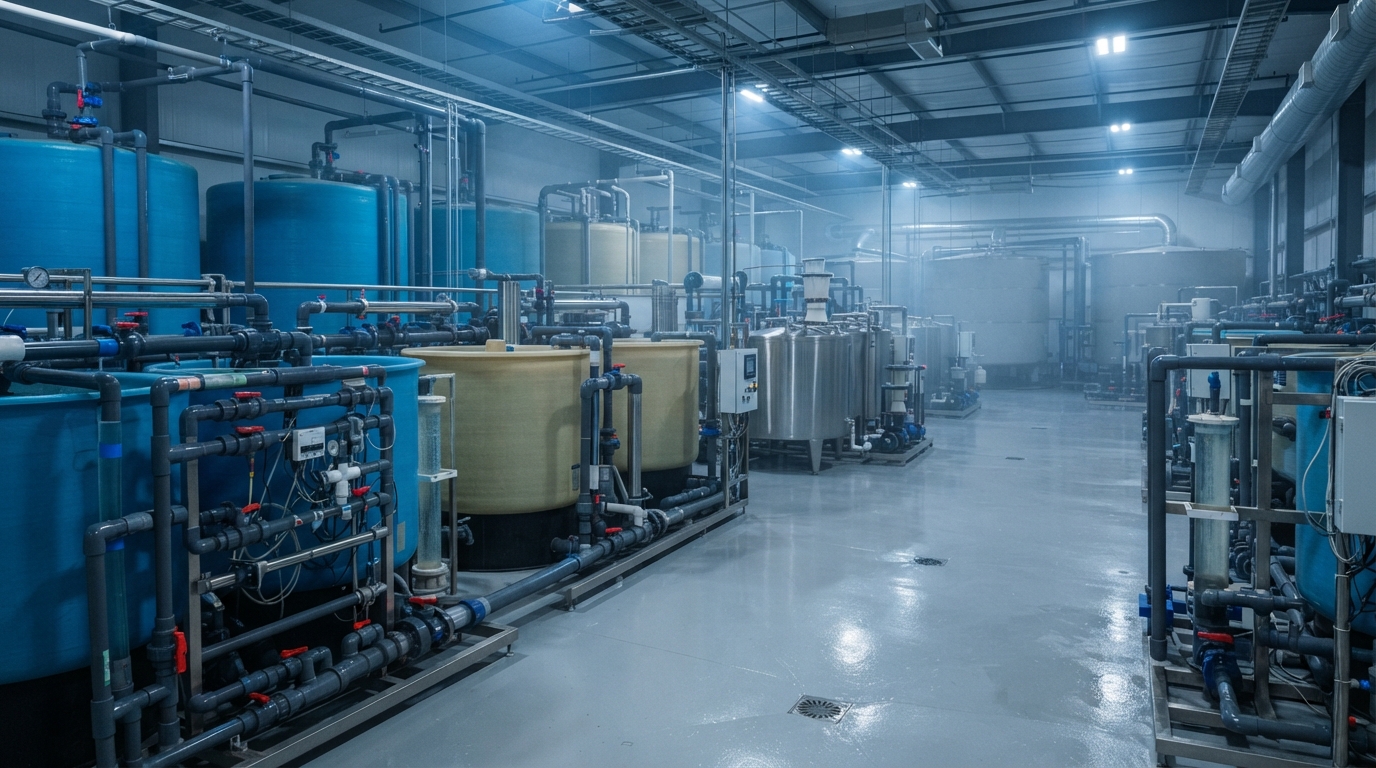
Before water reaches a RAS biofilter, it must pass through mechanical filtration — and getting this stage right matters more than it might appear. Uncaptured solids don't just cloud water; as heterotrophic bacteria break down uneaten feed and fecal matter, they consume dissolved oxygen doing it, meaningfully raising the system's biochemical oxygen demand (BOD) rather than adding much directly to the ammonia load — ammonia in RAS is overwhelmingly excreted directly across fish gills, not released by solids decomposition (Springer, Journal of Comparative Physiology B, "Ammonia excretion by the fish gill: discoveries and ideas that shaped our current understanding"). Uncaptured solids can also physically foul biofilter media, reducing its effective surface area, and research on fluidized sand biofilters treating aquaculture effluent has measured this combined ammonia, BOD, and suspended solids removal directly, confirming BOD and solids load are tracked as related but distinct treatment targets (ScienceDirect, "Fluidized sand biofilters used to remove ammonia, biochemical oxygen demand, total coliform bacteria, and suspended solids from an intensive aquaculture effluent"). Solids removal is where RAS engineering meets particle physics.
Not All Solids Are the Same Size
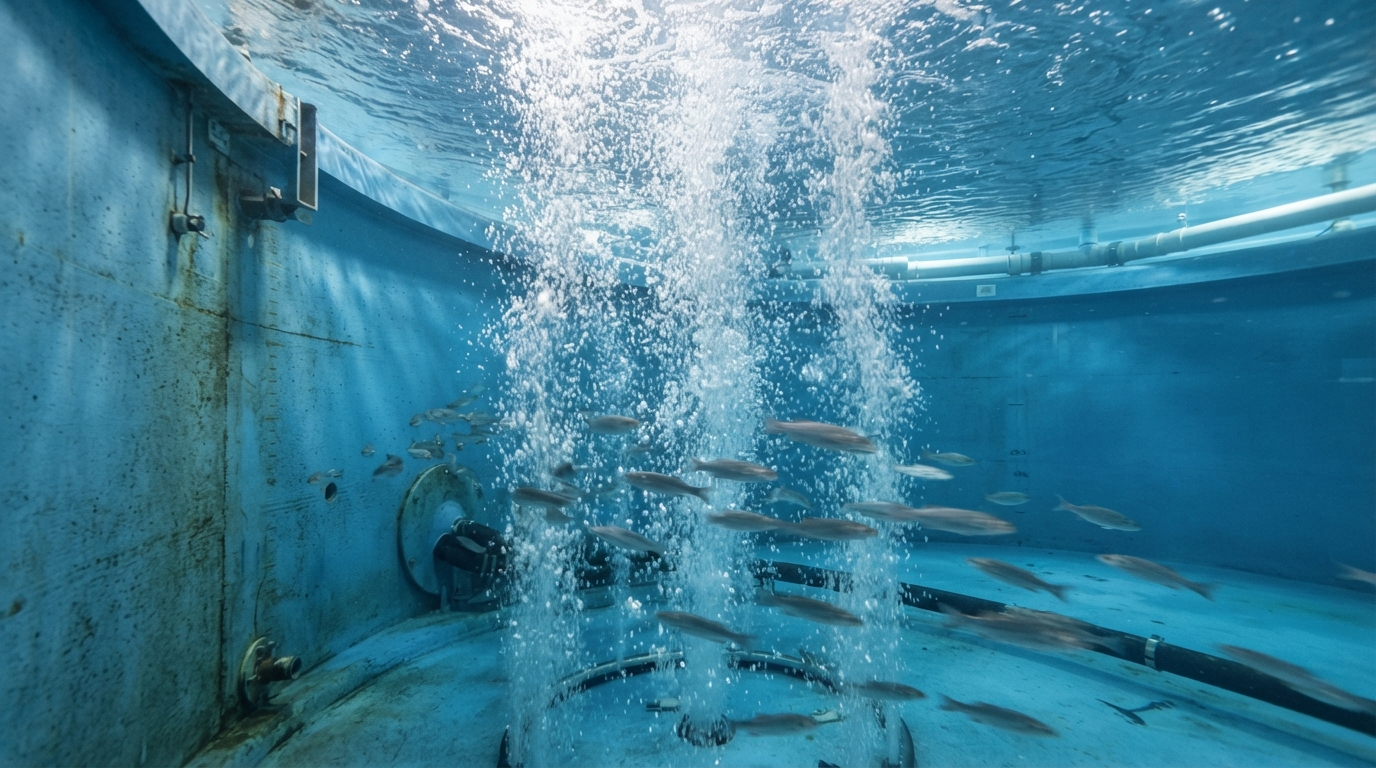
Suspended solids in culture water span a wide particle size distribution, and different filtration technologies capture different size ranges with very different efficiency. Research analyzing micro-particles in a commercial Atlantic salmon RAS found that a large share of the total particle count consists of fine material well below the capture threshold of standard mechanical filters (ScienceDirect, "Micro-particles in recirculating aquaculture systems: particle size analysis of culture water from a commercial Atlantic salmon site"). A related study tracking daily micro-particle distribution confirmed that particle load and size distribution fluctuate meaningfully over the course of a day, tied to feeding events (ScienceDirect, "Daily micro particle distribution of an experimental recirculating aquaculture system").
How Micro-Screen Drum Filters Work
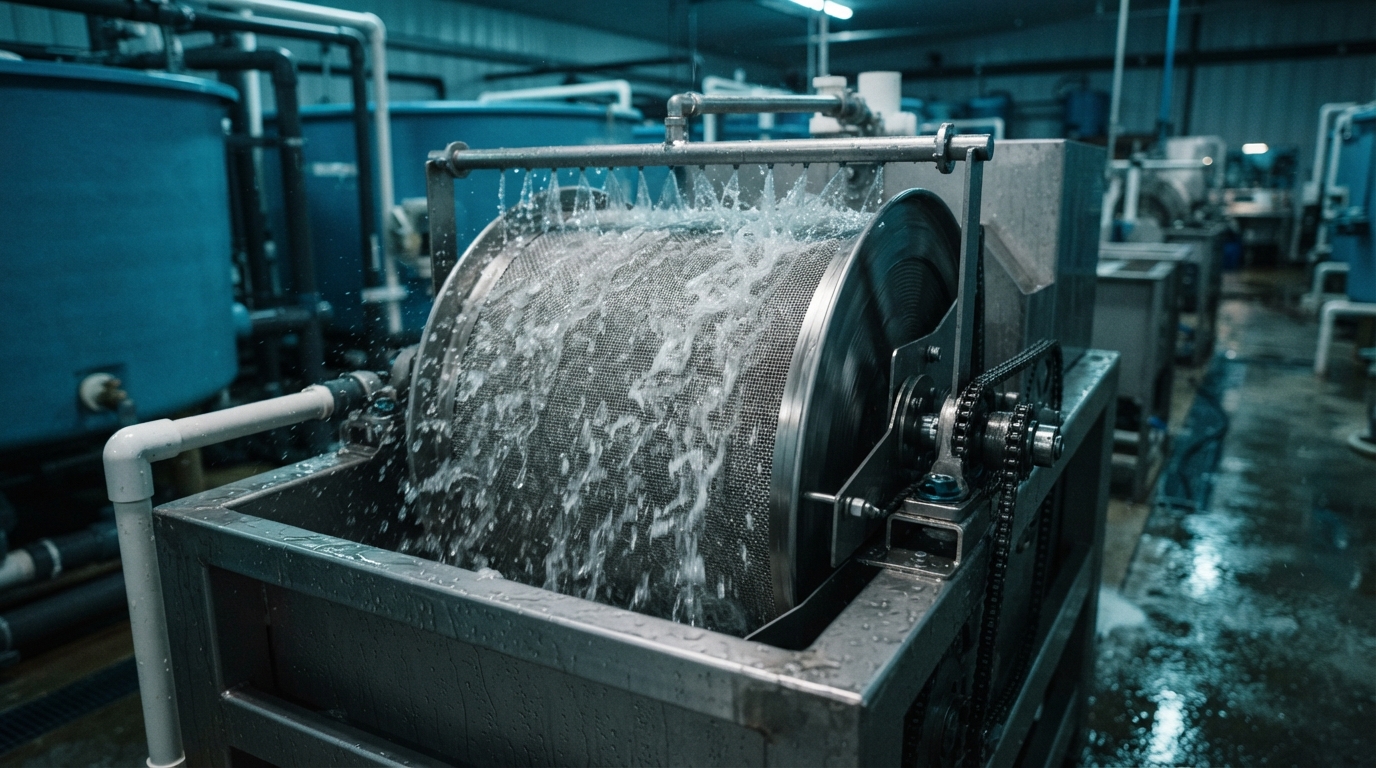
Drum filters use a rotating cylindrical screen to capture solids while a backwash spray continuously clears the screen surface. Research found that screen mesh size, drum surface area, and flow rate must be matched specifically to the particle size distribution and solids loading of the system (ScienceDirect, "Factors influencing optimal micro-screen drum filter selection for recirculating aquaculture systems"). This matches sieve analysis research directly measuring solids removal efficiency of different water treatment components (ScienceDirect, "Particle sieve analysis for determining solids removal efficiency of water treatment components in a recirculating aquaculture system").
Settling and Particle Behavior
Settling basins that rely on gravity separation remain common for larger, denser particles. Research measuring settling velocity and particle-size characteristics of solids from fish in a marine prototype RAS found that settling behavior varies substantially by species and diet (ScienceDirect, "Settling velocity and particle size bioengineering parameters"). Broader academic engineering research reinforces that mechanical and gravity-based methods are often used in combination (Benha University, "Solids Removal in a Recirculating Aquaculture System").
Why This Stage Protects Everything Downstream
Solids left uncaptured don't disappear — they either settle in low-flow zones, creating anaerobic pockets, or continue downstream to foul biofilter media and disinfection equipment.
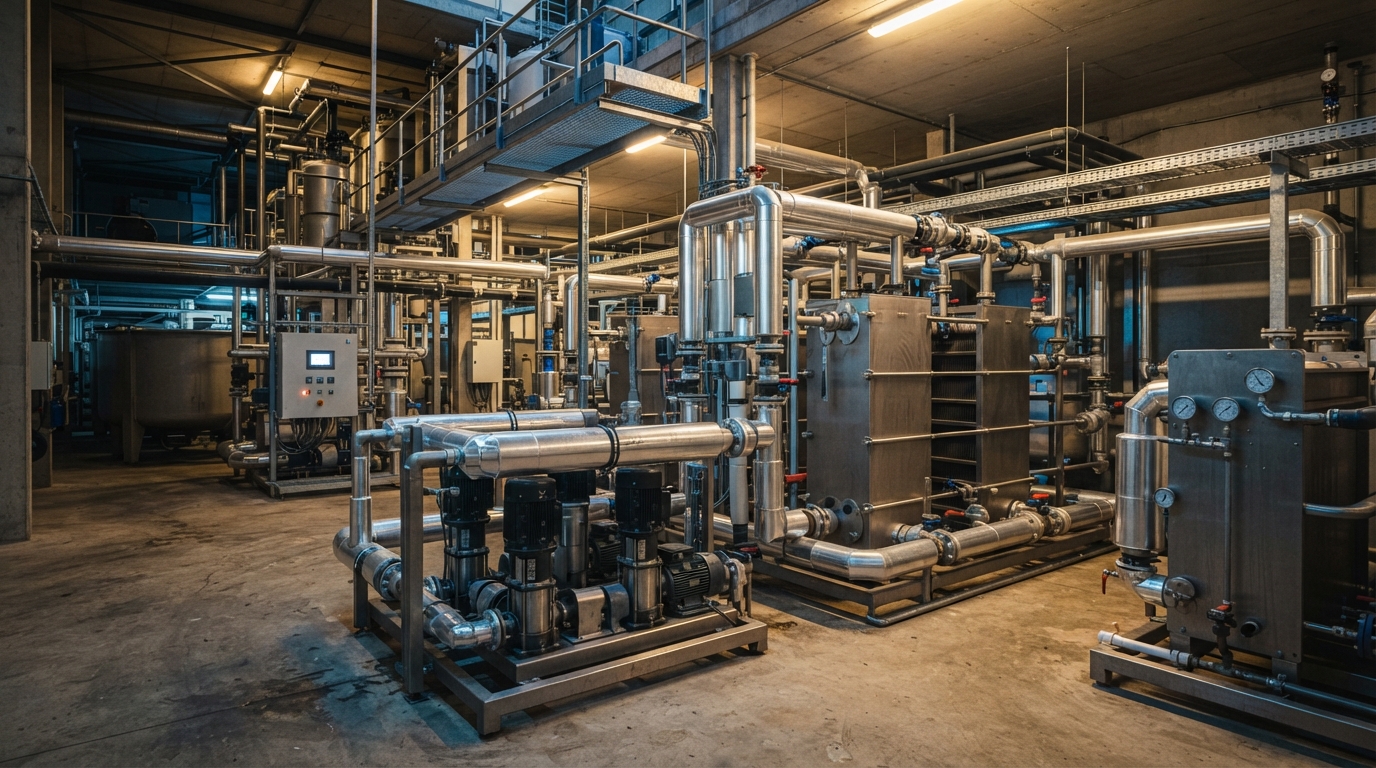
ADEC specifies mechanical filtration sized around your species' actual particle load, not generic drum filter defaults. Talk to our RAS team →
Learn moreCan one filtration technology remove all solids from RAS water?+
No single technology captures the full particle size range efficiently. Most commercial systems combine primary mechanical filtration with secondary or polishing steps.
Why do drum filters need to be sized for peak feeding times, not daily averages?+
Because solids loading spikes sharply around feeding events, a filter sized only for average daily load can be overwhelmed during and immediately after feeding.
Does fish species affect solids removal system design?+
Yes. Settling behavior — including density and settling velocity — varies by species and diet, which is why mechanical filtration systems are engineered around the specific production species.
- Micro-particles in recirculating aquaculture systems: particle size analysis of culture water from a commercial Atlantic salmon site. ScienceDirect.
- Daily micro particle distribution of an experimental recirculating aquaculture system—A case study. ScienceDirect.
- Factors influencing optimal micro-screen drum filter selection for recirculating aquaculture systems. ScienceDirect.
- Particle sieve analysis for determining solids removal efficiency of water treatment components in a recirculating aquaculture system. ScienceDirect.
- Settling velocity and particle size bioengineering parameters gathered from solids generated in a marine prototype recirculating aquaculture system. ScienceDirect.
- Solids Removal in a Recirculating Aquaculture System. Benha University, Faculty of Agriculture.
- Ammonia excretion by the fish gill: discoveries and ideas that shaped our current understanding. Journal of Comparative Physiology B, Springer.
- Fluidized sand biofilters used to remove ammonia, biochemical oxygen demand, total coliform bacteria, and suspended solids from an intensive aquaculture effluent. ScienceDirect.
Written and reviewed by ADEC's in-house aquarium life support and recirculating aquaculture engineers. ADEC designs, builds and operates turnkey aquarium and RAS facilities across the GCC, and is a member of the European Union of Aquarium Curators (EUAC), EUOTA and the European Aquaculture Society (AquaEAS), with CE-certified OCEANTECH™ equipment.
Get new articles in your inbox
Occasional, science-based insights on aquarium LSS and RAS aquaculture. No spam.