Fish Welfare and Stocking Density in RAS: The Science
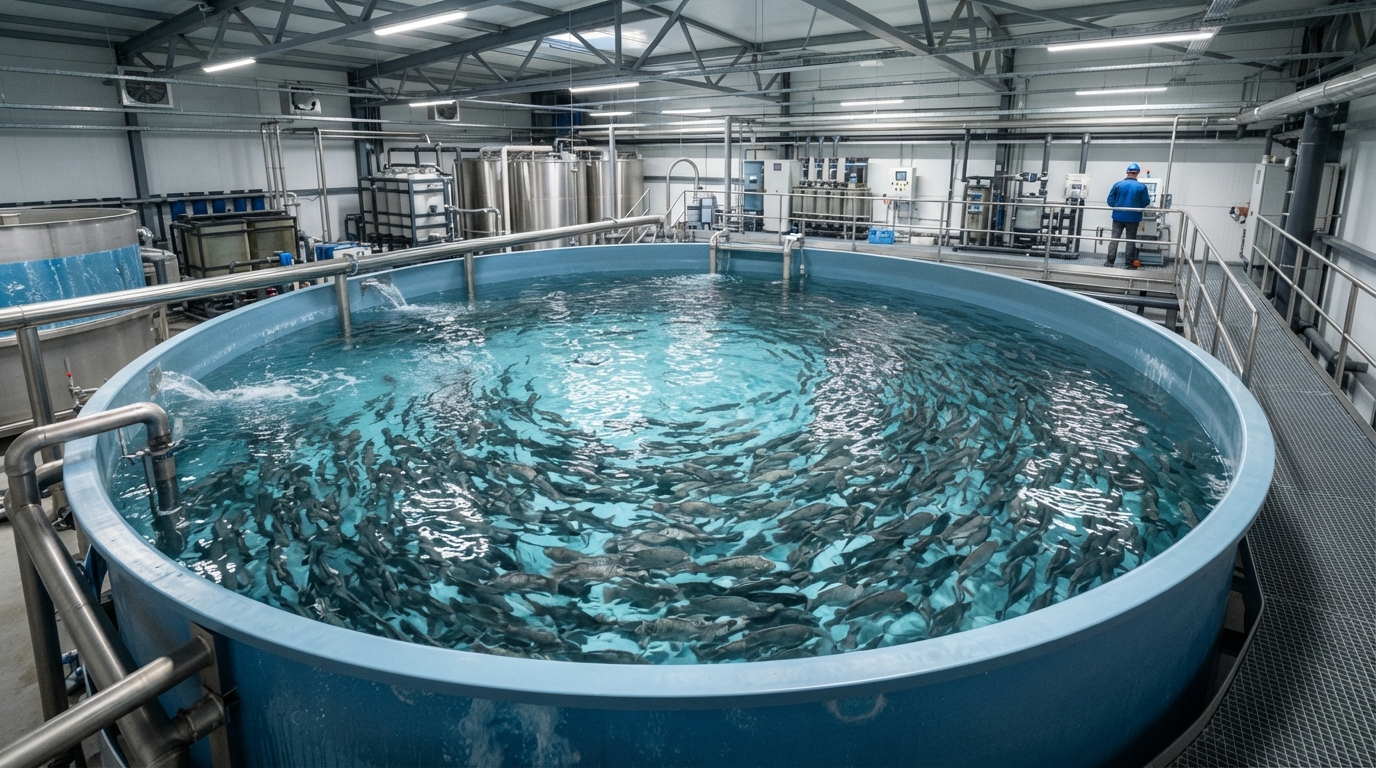
Stocking density — how much fish biomass is held per unit of water volume — is one of the most consequential decisions in RAS operation, and one of the most frequently misunderstood. Higher density is often assumed to mean higher output, but the peer-reviewed literature paints a more nuanced picture: density interacts with water quality, behavior, and physiology in ways that can just as easily suppress production as increase it.
Density Is a Welfare Variable, Not Just a Capacity Number
A critical review from the Technical University of Denmark frames RAS fish welfare explicitly around system design constraints, arguing that welfare in RAS cannot be assessed by water quality parameters alone — behavioral and physiological indicators of stress must be considered alongside stocking density (DTU Research Database, "Recirculating aquaculture systems and fish welfare"). A comprehensive review of stocking density's influence on fish and crustacean behavior, growth performance, and immunity concludes that density effects are species-specific and frequently nonlinear (ResearchGate, "A review on recirculating aquaculture system: Influence of stocking density").
Evidence From Controlled Studies
Direct experimental evidence reinforces this pattern. A study on juvenile olive flounder in a RAS found measurable effects of stocking density on both growth performance and hematological (blood) parameters (PMC, "Does Stocking Density Affect Growth Performance and Hematological Parameters of Juvenile Olive Flounder in a Recirculating Aquaculture System?"). Research on largemouth bass reared in coupled aquaponic systems found that stocking density affected not only growth and feeding behavior but also flesh quality (MDPI, "Impact of Stocking Density on Growth, Feeding Behavior, and Flesh Quality of Largemouth Bass in Coupled Aquaponic Systems").
Density Also Affects System Performance, Not Just Fish
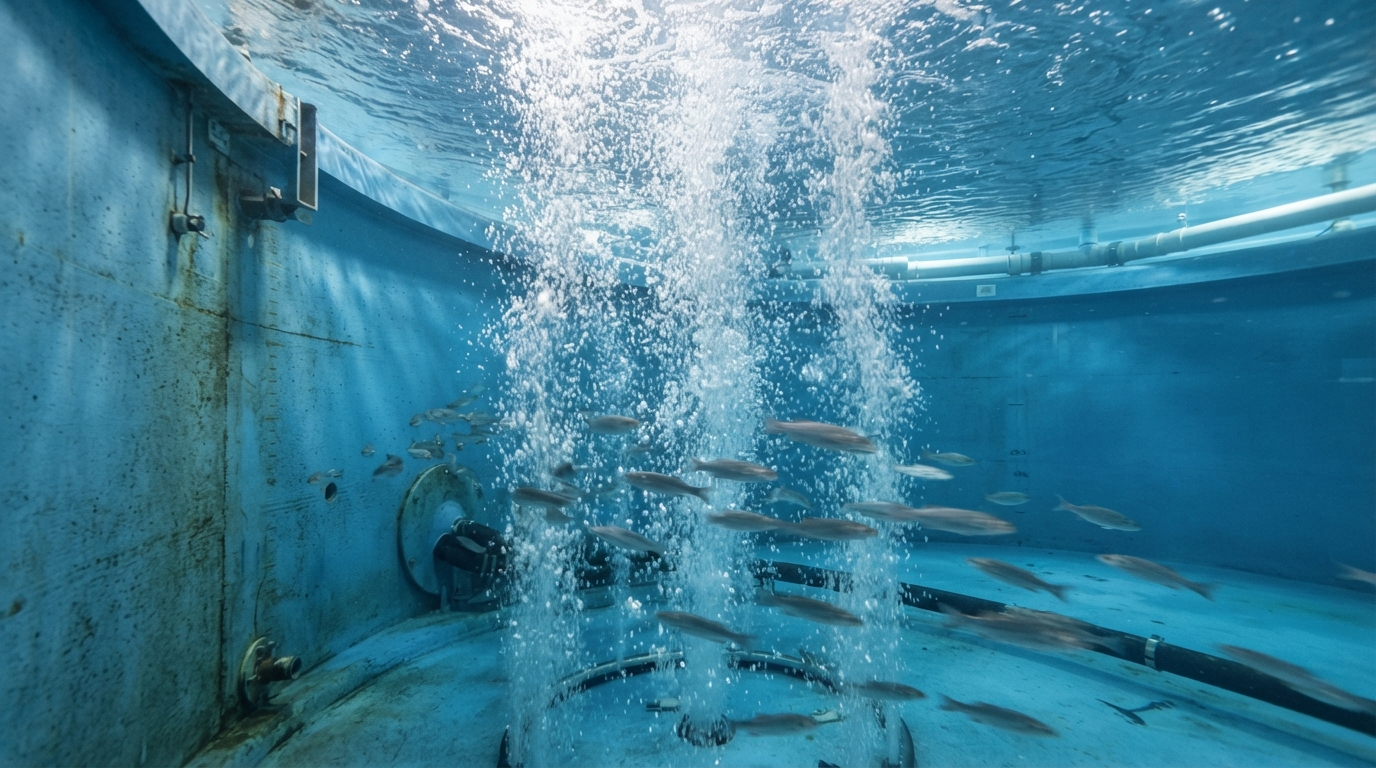
Research examining largemouth bass at different densities found measurable impacts on the self-cleaning performance of circular aquaculture tanks — meaning density interacts with tank hydraulics and solids removal efficiency (ScienceDirect, "Impact of stocking density of largemouth bass on the self-cleaning performance of a circular aquaculture tank").
Why Optimal Density Is a Design Output, Not an Input
Because water quality tolerance, behavioral stress thresholds, and mechanical system performance all interact with density differently by species, the peer-reviewed literature does not support a single universal 'optimal density' figure. Appropriate stocking density emerges from working backward from the specific species' documented tolerances, the system's oxygenation and biofiltration capacity, and tank hydraulic design.
ADEC designs RAS tank systems and stocking plans around species-specific welfare research, not generic density targets. Learn why RAS →
Learn moreIs there an ideal stocking density that works across all RAS species?+
No. Published research consistently shows density effects are species-specific.
Can stocking density be increased safely if water quality parameters stay within range?+
Not necessarily. Behavioral and physiological stress can occur at elevated densities even when standard water chemistry measurements remain within acceptable ranges.
Does higher stocking density always increase total production?+
No. Because density can suppress growth rate, increase stress-related mortality risk, and reduce product quality, higher density does not automatically translate into higher net output.
- Recirculating aquaculture systems and fish welfare: A critical overview of constraints and opportunities. DTU Research Database.
- A review on recirculating aquaculture system: Influence of stocking density on fish and crustacean behavior, growth performance, and immunity. ResearchGate.
- Does Stocking Density Affect Growth Performance and Hematological Parameters of Juvenile Olive Flounder Paralichthys olivaceus in a Recirculating Aquaculture System? PMC.
- Impact of Stocking Density on Growth, Feeding Behavior, and Flesh Quality of Largemouth Bass (Micropterus salmoides) in Coupled Aquaponic Systems. Fishes, MDPI.
- Impact of stocking density of largemouth bass on the self-cleaning performance of a circular aquaculture tank. ScienceDirect.
Written and reviewed by ADEC's in-house aquarium life support and recirculating aquaculture engineers. ADEC designs, builds and operates turnkey aquarium and RAS facilities across the GCC, and is a member of the European Union of Aquarium Curators (EUAC), EUOTA and the European Aquaculture Society (AquaEAS), with CE-certified OCEANTECH™ equipment.
Get new articles in your inbox
Occasional, science-based insights on aquarium LSS and RAS aquaculture. No spam.