RO/DI Water Treatment for Marine Aquariums Explained
Every downstream water quality target in a marine aquarium LSS assumes a known, controlled starting point — and that starting point is source water treatment. Reverse osmosis and deionization (RO/DI) exist to strip incoming makeup water of the contaminants that tap, well, or municipal water almost always carries, giving the rest of the LSS a clean baseline to work from rather than an unpredictable one.
How Reverse Osmosis Actually Works
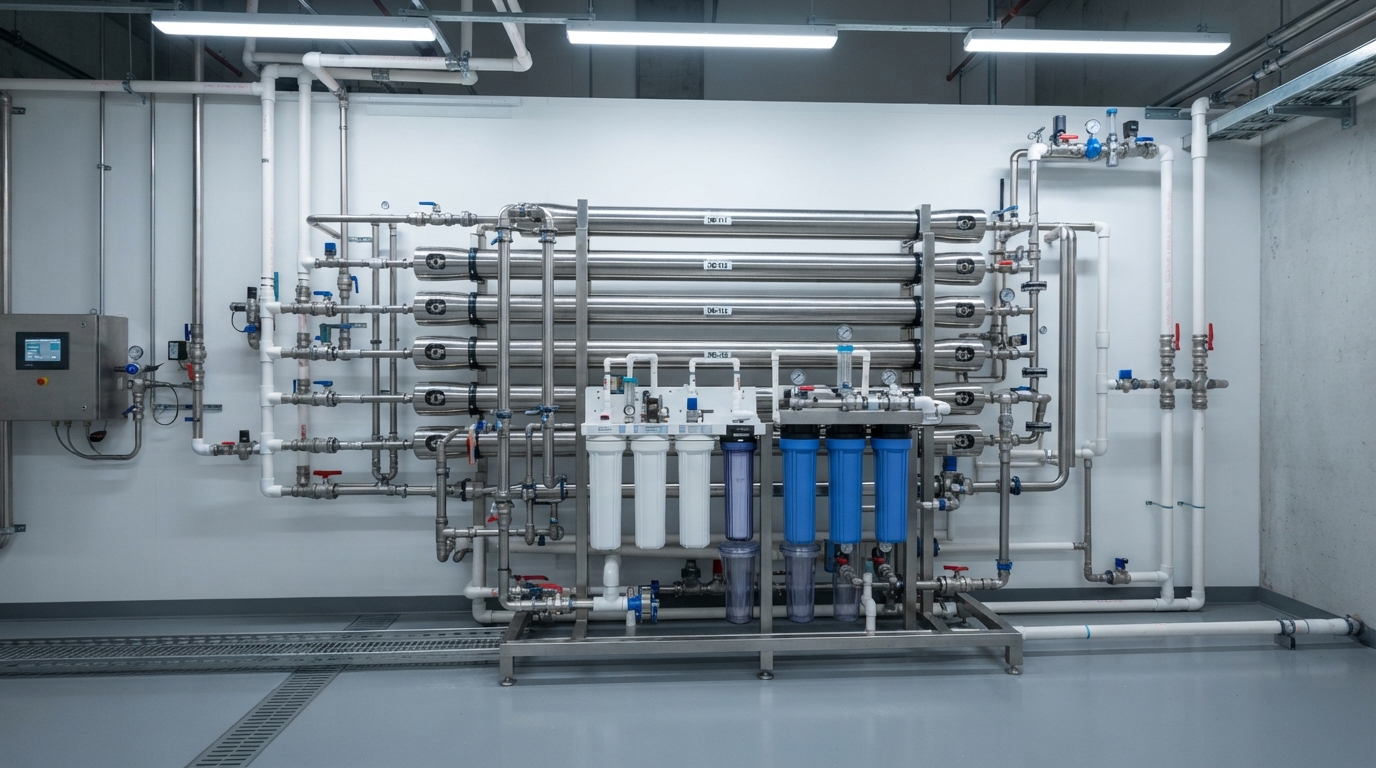
Reverse osmosis forces water under pressure through a semi-permeable membrane with pores fine enough to block dissolved salts, minerals, and many organic contaminants while allowing purified water molecules through. The U.S. Environmental Protection Agency's overview of drinking water treatment technologies describes reverse osmosis as one of the most effective single technologies available for removing a broad range of dissolved contaminants, precisely because it works through physical membrane filtration at the molecular scale rather than targeting specific contaminants chemically. The EPA's WaterSense program guidance on point-of-use reverse osmosis systems further notes that RO performance depends on membrane condition, incoming water pressure, and pre-filtration — meaning system maintenance directly affects how completely contaminants are actually removed.
Why Deionization Is Added After RO
Reverse osmosis alone typically removes the large majority of dissolved solids, but not all of them — a small fraction of dissolved ions can pass through even a well-functioning membrane. Deionization uses ion-exchange resin to capture the remaining charged particles RO does not remove, which is why marine aquarium source water treatment is typically specified as combined RO/DI rather than RO alone: the deionization stage is a polishing step that pushes water purity closer to zero measurable dissolved solids, a target that matters disproportionately for marine and reef systems.
Why This Precision Matters More in Marine Systems
Untreated tap water commonly carries phosphate, silicate, nitrate, and trace metals, along with chlorine or chloramine added for municipal disinfection — none of which are compatible with a stable reef or marine fish exhibit. Phosphate and silicate in particular are known drivers of nuisance algae growth, meaning even trace levels introduced continuously through makeup water can undermine water clarity and coral health despite otherwise well-managed filtration. Chlorine and chloramine, meanwhile, are directly toxic to the nitrifying bacteria that sustain biological filtration, which is why source water must be treated before it ever reaches a biofilter, not just before it reaches livestock directly.
Source Water Treatment as Foundation, Not an Afterthought
Because every other LSS component — biofiltration, protein skimming, disinfection — is calibrated around assumptions of a known, controlled water chemistry starting point, inconsistent or untreated source water introduces variability that no downstream treatment stage is designed to fully correct. This is why RO/DI treatment is typically specified early in LSS design, sized to the facility's makeup water demand, rather than treated as a minor input detail.
ADEC specifies RO/DI source water treatment sized to your facility's full makeup water demand. Explore our LSS engineering →
Learn moreIs tap water ever acceptable for topping off a marine aquarium?+
Generally not for reef or sensitive marine systems — even trace phosphate, silicate, or chlorine/chloramine levels in typical tap water can measurably affect water chemistry and biological filtration over time, which is why RO/DI treatment is standard practice at both hobbyist and commercial exhibit scale.
Does reverse osmosis remove 100% of dissolved contaminants?+
No — RO membranes are highly effective but not absolute, which is why deionization is typically added afterward to capture the remaining dissolved ions RO does not fully remove.
How often does RO/DI equipment need maintenance?+
Membrane and resin performance degrade over time and with use, so both components require monitoring and periodic replacement — EPA guidance specifically notes that RO system performance depends on maintaining membrane condition, not just initial installation.
Written and reviewed by ADEC's in-house aquarium life support and recirculating aquaculture engineers. ADEC designs, builds and operates turnkey aquarium and RAS facilities across the GCC, and is a member of the European Union of Aquarium Curators (EUAC), EUOTA and the European Aquaculture Society (AquaEAS), with CE-certified OCEANTECH™ equipment.
Get new articles in your inbox
Occasional, science-based insights on aquarium LSS and RAS aquaculture. No spam.