The Economics of Quarantine Capacity in Public Aquariums
Quarantine engineering tells a facility how to isolate a tank; it does not tell a facility how many tanks to isolate. That second question is a capacity-planning and financial decision, driven by how fast a collection turns over and how much an undersized quarantine system costs when it fails. This article looks at quarantine as a throughput and risk-management problem rather than a plumbing one.
Quarantine Capacity Is a Function of Turnover, Not Just Collection Size
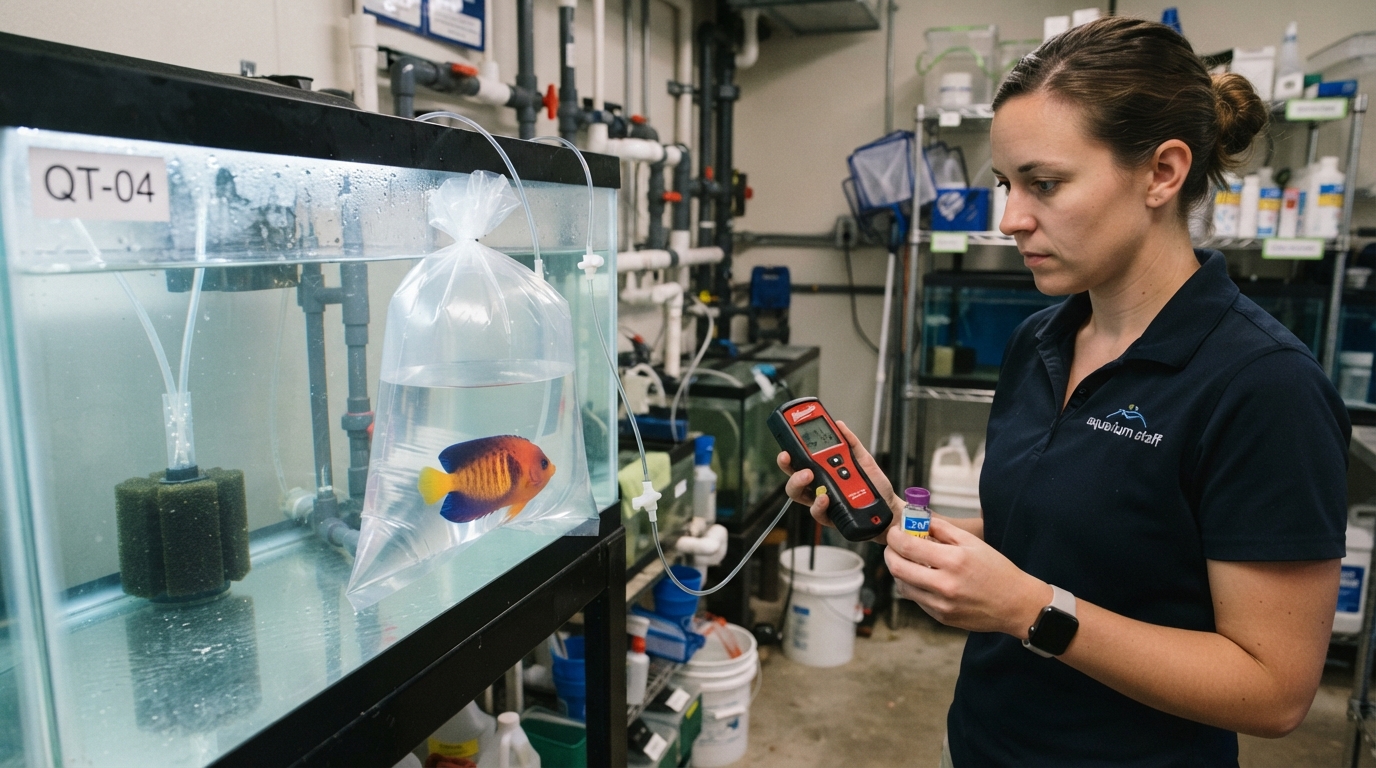
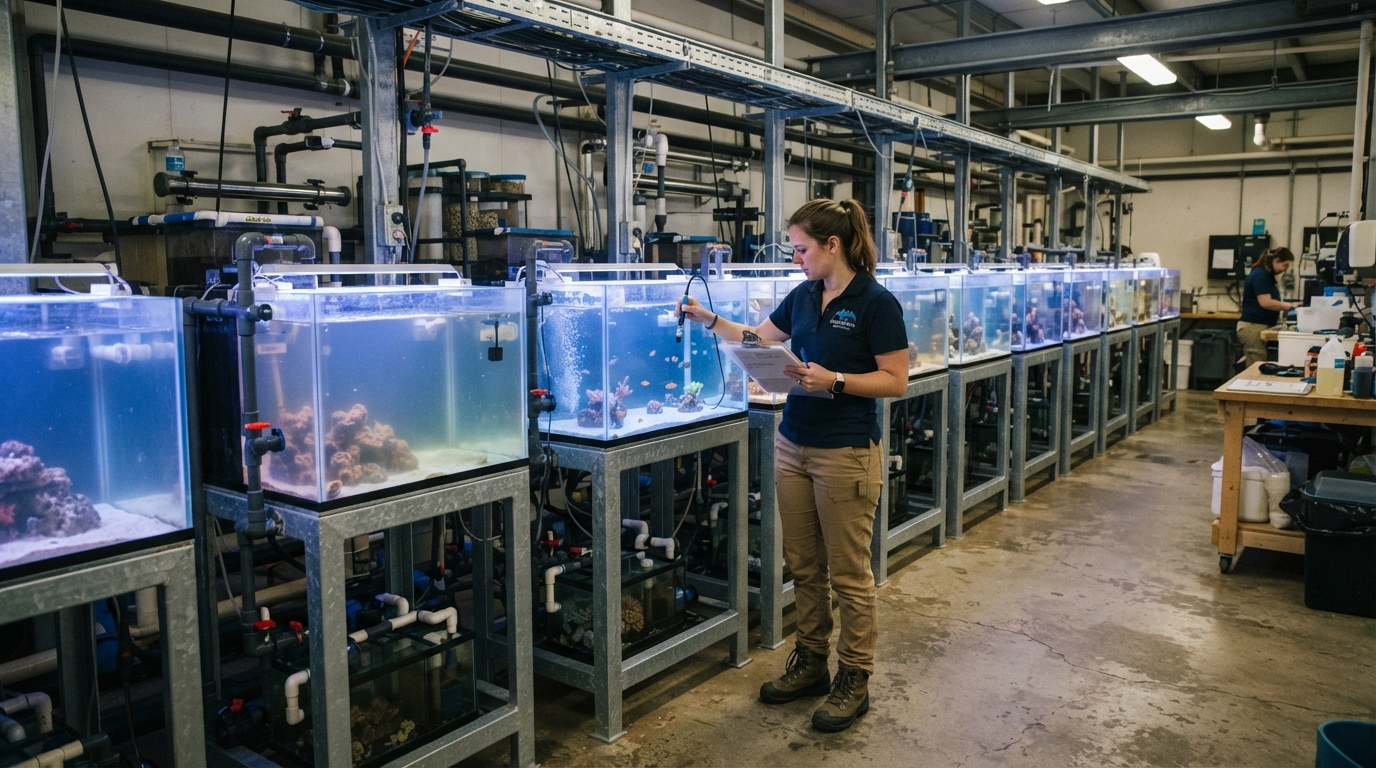
A quarantine system's useful output is not tank volume — it is completed quarantine cycles per year. The Southern Regional Aquaculture Center's guidance on recirculating-system biosecurity recommends an isolation period of roughly 30 to 60 days for incoming broodstock before mixing with resident stock (Yanong, "Biosecurity in Aquaculture, Part 2: Recirculating Aquaculture Systems"). Applied as a planning figure, a 45-day average cycle allows roughly eight turns per quarantine berth per year; a facility's required quarantine capacity is therefore closer to (expected annual accessions ÷ turns per berth) than to any fixed fraction of display volume. Collections with a high acquisition rate — active exhibit rotation, frequent husbandry loans, breeding-program exchanges — need proportionally more quarantine berths than a static, low-turnover collection of the same display size, even though the two facilities could look identical on an exhibit floor plan.
The Documented Cost of Getting This Wrong
The economic literature on aquatic animal disease gives a sense of scale for what inadequate biosecurity capacity is worth avoiding. A 2023 review in the Journal of the World Aquaculture Society cites conservative estimates that roughly 10 percent of all cultured aquatic animals are lost globally each year to infectious disease, a loss exceeding 10 billion USD annually, and explicitly names insufficient quarantine infrastructure as one of the structural gaps that erodes biosecurity effectiveness (Subasinghe et al., "Biosecurity: Reducing the Burden of Disease"). A 2025 systematic review in Reviews in Aquaculture, screening peer-reviewed economic-impact studies, found annual disease-related costs on the order of 6 billion USD and noted that rigorous quantification of prevention benefits remains the exception, not the rule, in the literature (Maezono et al., "The Current State of Knowledge of the Economic Impact of Diseases in Global Aquaculture"). At operational scale, a seven-year case study of commercial catfish farms in Alabama measured direct disease-related losses at 11.1 million USD per year across the surveyed operations — about 9.5 percent of total food-size catfish sales in the state (Abdelrahman et al., "Epidemiology and Economic Impact of Disease-Related Losses on Commercial Catfish Farms"). None of these figures are aquarium-specific, but they establish that uncontained disease events are a routinely large fraction of production value in aquatic-animal operations generally, which is the same cost category a public aquarium is protecting its display collection against.
Risk-Based Quarantine Duration as a Capacity Lever
Because quarantine throughput is driven by cycle length, shortening that cycle without raising disease risk is itself a capacity strategy. A retrospective five-year review of quarantine outcomes at San Diego Zoo found that a risk-based approach — adjusting isolation length and testing to the individual animal's health history, species and source rather than applying a single fixed duration to every accession — could reduce unnecessary holding time without an accompanying increase in post-release health events (Wallace et al., "Lessons From a Retrospective Analysis of a 5-Yr Period of Quarantine at San Diego Zoo"). A follow-up paper argued more broadly for replacing blanket quarantine timelines with formal risk analysis as the field's default (Pye et al., "Risk Analysis: Changing the Quarantine Paradigm?"). A retrospective comparison of standard and risk-based quarantine management for avian acquisitions over a five-year period reported comparable morbidity and mortality outcomes between the two approaches (McLean, Schook and Pye, "Comparison Between Standard Zoo Quarantine Practices and Risk-Based Management of Animal Transfers"). For an aquarium operator, the practical implication is that a documented, veterinarian-reviewed risk-scoring process can increase effective quarantine throughput from the same physical footprint — the same lever commercial producers already use to decide which inputs even enter a herd (Yanong, SRAC Publication No. 4707/4708 series).
Prevention Cost Versus Outbreak Cost as a Planning Input
Extension guidance aimed at production facilities frames the comparison in blunt terms: preventive measures, including dedicated quarantine equipment and space, are inexpensive relative to the losses that follow a disease event reaching production stock, including the cost of mandatory depopulation (Dvorak, "Biosecurity for Aquaculture Facilities in the North Central Region"). The same asymmetry applies when the asset at risk is a display collection rather than a saleable crop: the replacement cost, animal-welfare cost and acquisition lead time lost when a pathogen reaches an exhibit system are rarely offset by whatever was saved by under-building quarantine. Because that asymmetry is well documented in the production literature even where aquarium-specific cost data is thin, it is a reasonable basis for sizing quarantine capacity to the upper end of projected accession volume rather than the average.
Staffing and Review Cycles Are Part of Capacity
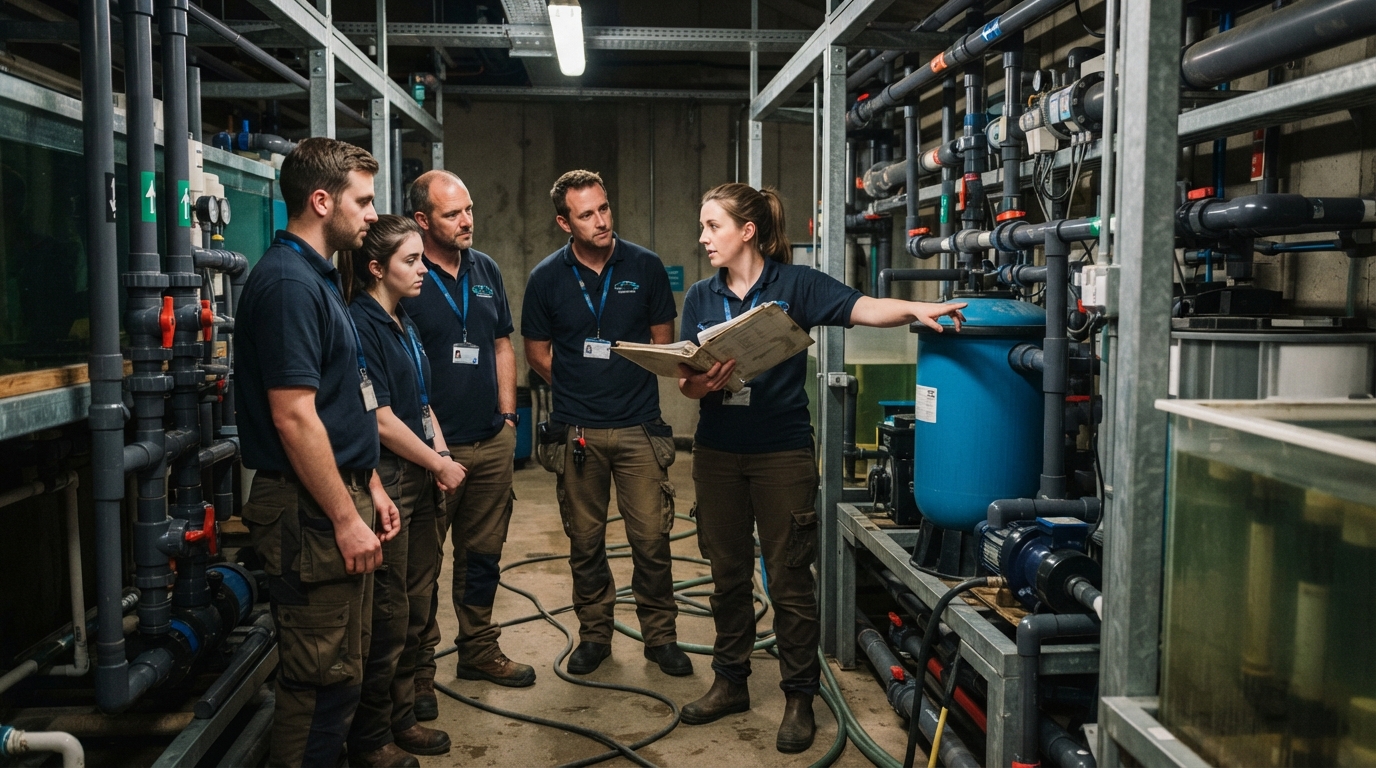
Physical tank count is only one constraint on throughput. Each quarantine cycle also consumes veterinary review time, diagnostic turnaround and dedicated husbandry labor under all-in/all-out protocols that keep quarantine batches from cross-contaminating (Yanong, SRAC Publication No. 4708). A facility that adds quarantine tanks without adding the staffing and laboratory capacity to clear those tanks on schedule will still bottleneck at the same acquisition rate it had before, just with more idle infrastructure. Capacity planning should therefore size tanks, staff time and diagnostic turnaround together, not tanks alone.
Planning a new quarantine wing or right-sizing one against your acquisition pipeline? Talk to ADEC Dubai's life-support engineering team about capacity-matched quarantine design.
Learn moreHow many quarantine berths does a public aquarium need?+
There is no fixed industry ratio; the number should be derived from expected annual accessions divided by the number of quarantine cycles a berth can complete per year at the facility's chosen isolation duration, informed by extension guidance on isolation length (Yanong, SRAC Publication No. 4708).
Does risk-based quarantine mean shorter quarantine for every animal?+
No — risk-based protocols adjust duration and testing intensity up or down based on documented health history, species and source, rather than defaulting every accession to the same fixed period (Pye et al., 2018; Wallace et al., 2016).
Is the cost of a disease outbreak reaching the display collection well documented for aquariums specifically?+
Not as precisely as for commercial aquaculture. The clearest quantitative cost data comes from production settings such as catfish farming (Abdelrahman et al., 2023) and global aquaculture reviews (Subasinghe et al., 2023; Maezono et al., 2025); aquarium operators should treat these as scale references rather than direct cost equivalents.
- Subasinghe, R., Alday-Sanz, V., Bondad-Reantaso, M.G., Jie, H., Shinn, A.P., & Sorgeloos, P. Biosecurity: Reducing the Burden of Disease. Journal of the World Aquaculture Society, 54(2), 397–426 (2023).
- Maezono, M., Nielsen, R., Buchmann, K., & Nielsen, M. The Current State of Knowledge of the Economic Impact of Diseases in Global Aquaculture. Reviews in Aquaculture, 17(3), e70039 (2025).
- Abdelrahman, H.A., Hemstreet, W.G., Roy, L.A., Hanson, T.R., Beck, B.H., & Kelly, A.M. Epidemiology and Economic Impact of Disease-Related Losses on Commercial Catfish Farms. Aquaculture, 566, 739206 (2023).
- Pye, G.W., Adkesson, M.J., Guthrie, A., Clayton, L.A., & Janssen, D.L. Risk Analysis: Changing the Quarantine Paradigm? Journal of Zoo and Wildlife Medicine, 49(3), 513–519 (2018).
- Wallace, C., Marinkovich, M., Morris, P.J., Rideout, B., & Pye, G.W. Lessons From a Retrospective Analysis of a 5-Yr Period of Quarantine at San Diego Zoo. Journal of Zoo and Wildlife Medicine, 47(1), 291–296 (2016).
- McLean, K.M., Schook, M.W., & Pye, G.W. Comparison Between Standard Zoo Quarantine Practices and Risk-Based Management of Animal Transfers. Journal of Zoo and Wildlife Medicine, 51(4) (2021).
- Yanong, R.P.E. Biosecurity in Aquaculture, Part 2: Recirculating Aquaculture Systems. SRAC Publication No. 4708 (2012).
- Dvorak, G. Biosecurity for Aquaculture Facilities in the North Central Region. NCRAC Fact Sheet No. 115 (2009).
Written and reviewed by ADEC's in-house aquarium life support and recirculating aquaculture engineers. ADEC designs, builds and operates turnkey aquarium and RAS facilities across the GCC, and is a member of the European Union of Aquarium Curators (EUAC), EUOTA and the European Aquaculture Society (AquaEAS), with CE-certified OCEANTECH™ equipment.
Get new articles in your inbox
Occasional, science-based insights on aquarium LSS and RAS aquaculture. No spam.