Back-of-House Laboratories in Public Aquariums: Why Diagnostics Matter
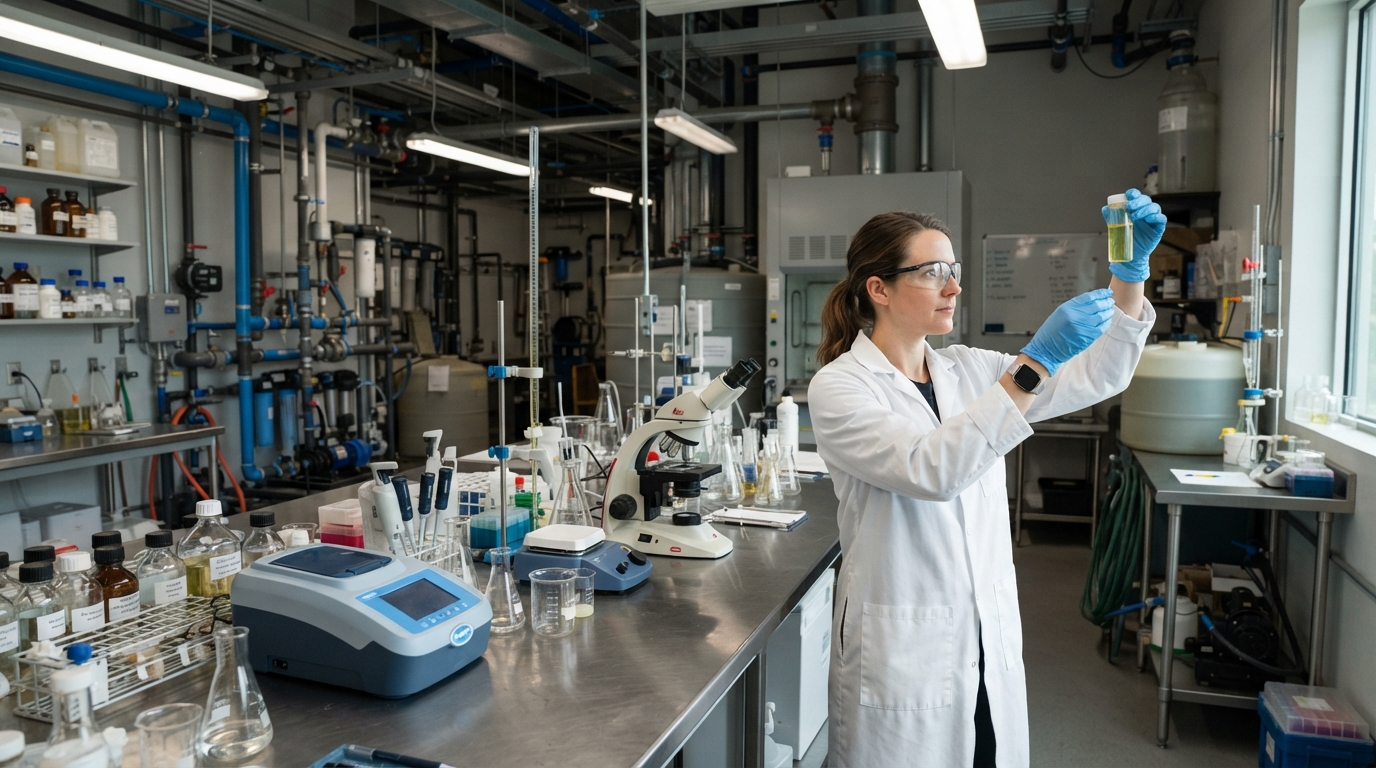
Behind every healthy exhibit is a bench most visitors never see: a back-of-house laboratory running titrations, scanning wet mounts under a microscope, and logging water chemistry results before the morning feed. For collections holding sensitive or valuable species, the ability to generate diagnostic data in minutes rather than days is not a convenience — it is a core part of animal husbandry. This article looks at why public aquariums build and staff their own diagnostic capability, and what that capability typically does day to day.
Why Keep Diagnostics In-House
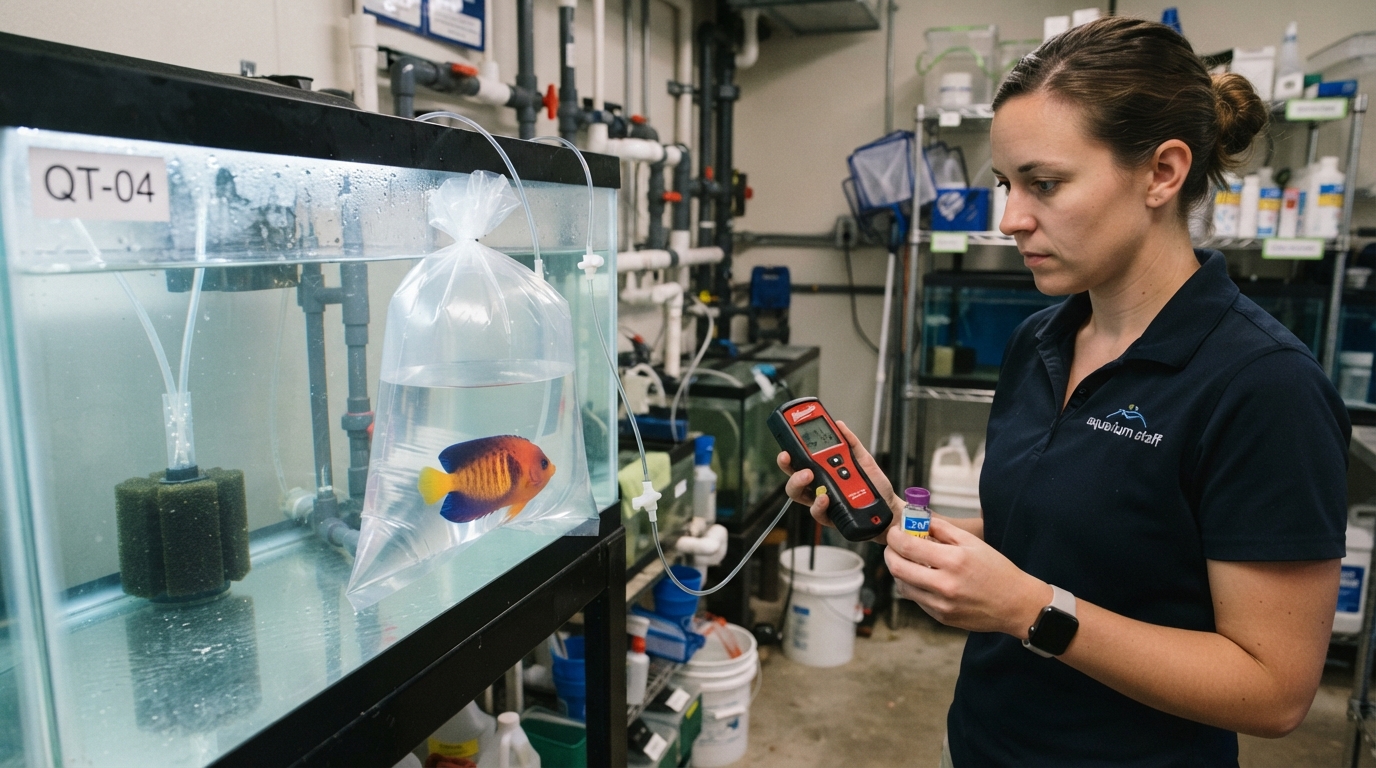
Water quality in a closed system can change quickly, and the tolerance window for many species is narrow. Un-ionized ammonia becomes damaging to fish tissue above roughly 0.05 mg/L, and nitrite is toxic to sensitive species at concentrations as low as 0.10 mg/L (Ask IFAS, "Ammonia in Aquatic Systems"). A recirculating system's ammonia and pH should be checked daily, since a malfunction can push these parameters into a lethal range within hours (Southern Regional Aquaculture Center, "Recirculation Aquaculture Tank Production Systems"). An outside contract laboratory, even a responsive one, cannot return same-day results on that kind of schedule; an in-house lab can test, act, and retest before a problem becomes a mortality event.
The same logic applies to disease work. Clinical pathology guidance for aquarium fish stresses that diagnosis depends on fresh material: fish decompose quickly, and saprophytic organisms multiply rapidly in dead tissue, so gill, skin, and fin samples need to be collected and examined promptly rather than shipped out and held (Merck Veterinary Manual, "Management of Aquarium Fish"). A facility with its own microscope and a trained technician on-site can make that diagnosis the same hour clinical signs appear.
Water Chemistry: The Daily Workload
Most back-of-house lab time goes to routine water chemistry rather than disease work. Standard Methods for the Examination of Water and Wastewater — the joint reference published by the American Public Health Association, the American Water Works Association, and the Water Environment Federation — sets out the titrimetric and spectrophotometric procedures that underlie common tests for alkalinity, dissolved oxygen, ammonia, and nitrite, and is the de facto technical standard cited by regulators and researchers alike (APHA/AWWA/WEF, Standard Methods for the Examination of Water and Wastewater, 24th ed.). Ammonia testing illustrates why method choice matters: the Nessler method can give falsely elevated readings after recent formalin treatment, while the salicylate method is unaffected by that interference and performs better in seawater — a distinction that matters constantly in a marine collection but would be easy to miss if testing were outsourced and infrequent (Ask IFAS, "Ammonia in Aquatic Systems"). Because conditions can shift between scheduled lab days, extension guidance recommends testing ammonia at least weekly under normal conditions and immediately whenever fish behavior or feeding response changes (Ask IFAS, "Ammonia in Aquatic Systems").
Microbiology and Parasitology at the Bench
Below the water-chemistry bench, most back-of-house labs also run basic microbiology and parasitology. Wet-mount microscopy of skin mucus, fin, and gill biopsies is described as the primary and often sufficient method for diagnosing common ectoparasites: ciliates such as Ichthyophthirius multifiliis and trichodinids are readily visible at 40–100x magnification on a fresh preparation (Merck Veterinary Manual, "Parasitic Diseases of Fish"). For harder cases, histologic evaluation of fixed tissue extends what wet mounts alone can resolve. Culture work for bacterial pathogens is slower by nature — some fastidious organisms take weeks to grow out — which is itself an argument for having culture capability on-site, since every day lost to shipping a sample is a day added to an already slow test (MacAulay et al., "Moving towards improved surveillance and earlier diagnosis of aquatic pathogens," Reviews in Aquaculture).
Where Molecular Diagnostics Fit
A growing number of aquarium and aquaculture health programs supplement microscopy and culture with molecular tools. Real-time PCR is well suited to screening relatively large numbers of samples and can detect pathogen nucleic acid directly from tissue, but international aquatic animal health guidance cautions that PCR is prone to both false positives and false negatives and recommends confirming significant results with culture or another independent method where feasible (World Organisation for Animal Health, Aquatic Animal Health Standards Commission, Manual of Diagnostic Tests for Aquatic Animals, Section 2.3). Reviews of emerging diagnostics note that classical methods remain slow by comparison — histopathological confirmation of some bacterial infections takes two to seven days, and culture of slow-growing organisms such as Renibacterium salmoninarum can take two to nineteen weeks — which is why facilities that add molecular capability generally keep it alongside, rather than instead of, routine microscopy and culture (MacAulay et al., Reviews in Aquaculture).
Integrating the Lab with Husbandry Decisions
The practical payoff of keeping diagnostics close to the animals is tighter feedback between data and decisions. A husbandry team that can see a nitrite spike the same morning it occurs can adjust feeding or flow before fish show stress; a veterinary team that can get a wet-mount result in the time it takes to walk from the exhibit to the lab can start treatment during the same visit. Guidance on aquarium fish case management explicitly ties diagnosis to history-taking and direct system evaluation — submitting water samples alongside necropsy material rather than relying on clinical signs alone (Merck Veterinary Manual, "Management of Aquarium Fish"). That integration is harder to achieve when the only lab available is an outside contractor with its own queue and turnaround time.
ADEC Dubai designs and integrates the life support infrastructure that keeps back-of-house water-quality programs running reliably, from sampling points to monitoring data flows.
Learn moreWhy can't a public aquarium just send water samples to an outside lab?+
Outside labs can certainly run confirmatory or specialized tests, but routine parameters like ammonia and pH need daily or weekly monitoring, and a malfunction can push toxic parameters to dangerous levels within hours, faster than most contract lab turnaround allows (Southern Regional Aquaculture Center, "Recirculation Aquaculture Tank Production Systems"; Ask IFAS, "Ammonia in Aquatic Systems").
What equipment does a typical back-of-house aquarium lab use?+
Core equipment generally includes titration and spectrophotometric setups for water chemistry following Standard Methods procedures, plus a light microscope for wet-mount parasitology and basic microbiology culture supplies; some larger programs add PCR capability for molecular screening (APHA/AWWA/WEF, Standard Methods; Merck Veterinary Manual, "Parasitic Diseases of Fish"; MacAulay et al., Reviews in Aquaculture).
Does molecular (PCR) testing replace microscopy and culture?+
No. PCR is valuable for rapid, high-volume screening, but aquatic animal health guidance notes it can produce false positives and negatives, so results are generally confirmed with culture or another method, and classical microscopy remains the primary tool for diagnosing most visible parasites (World Organisation for Animal Health, Manual of Diagnostic Tests for Aquatic Animals; Merck Veterinary Manual, "Parasitic Diseases of Fish").
- Ask IFAS (University of Florida/IFAS Extension), Ammonia in Aquatic Systems (FA031).
- Southern Regional Aquaculture Center / North Central Regional Aquaculture Center, Recirculating Aquaculture Tank Production Systems: Management of Recirculating Systems (SRAC Publication No. 452).
- Merck Veterinary Manual, Management of Aquarium Fish.
- Merck Veterinary Manual, Parasitic Diseases of Fish.
- APHA/AWWA/WEF, Standard Methods for the Examination of Water and Wastewater, 24th ed.
- MacAulay, S., Ellison, A. R., Kille, P., and Cable, J., Moving towards improved surveillance and earlier diagnosis of aquatic pathogens. Reviews in Aquaculture, 14(4), 1813–1829 (2022).
- World Organisation for Animal Health (WOAH/OIE), Manual of Diagnostic Tests for Aquatic Animals, Section 2.3.0.
Written and reviewed by ADEC's in-house aquarium life support and recirculating aquaculture engineers. ADEC designs, builds and operates turnkey aquarium and RAS facilities across the GCC, and is a member of the European Union of Aquarium Curators (EUAC), EUOTA and the European Aquaculture Society (AquaEAS), with CE-certified OCEANTECH™ equipment.
Get new articles in your inbox
Occasional, science-based insights on aquarium LSS and RAS aquaculture. No spam.