The Nitrogen Cycle in RAS: Ammonia, Nitrite and Nitrate
Every recirculating aquaculture system runs on a hidden biological engine: the nitrogen cycle. Fish continuously excrete nitrogenous waste, and unlike an open pond or flow-through farm where waste is diluted and carried away, a RAS must process that waste internally, again and again, before any of it can safely leave the system. Understanding how each nitrogen compound behaves — and why each one is dangerous in a different way — is what separates a stable RAS from a system in constant crisis.
Stage One: Ammonia, the Most Urgent Threat
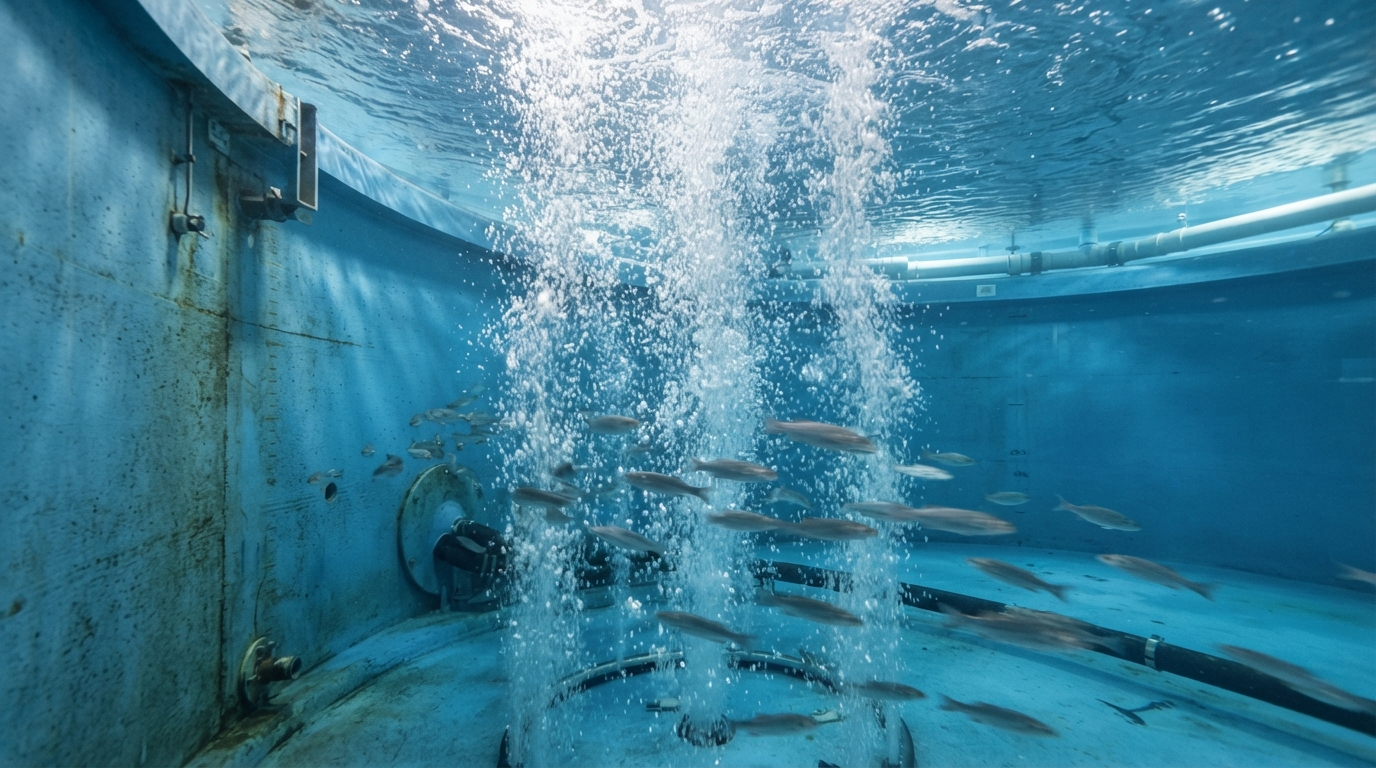
Fish excrete ammonia directly through their gills as the primary byproduct of protein metabolism (Springer, Journal of Comparative Physiology B, "Ammonia excretion by the fish gill: discoveries and ideas that shaped our current understanding") — this direct branchial excretion, not solids decomposition, is overwhelmingly the dominant ammonia source in RAS. Uneaten feed and solid waste, while a real water-quality concern, contribute comparatively little additional ammonia; their main effect as they decompose is raising biochemical oxygen demand (BOD) as heterotrophic bacteria consume dissolved oxygen breaking them down (a topic covered in depth in a companion article on RAS solids removal). Ammonia toxicity is strongly pH- and temperature-dependent: it exists in water as a chemical equilibrium between unionized ammonia (NH₃), which is highly toxic and can cross gill membranes freely, and ionized ammonium (NH₄⁺), which is far less dangerous — together measured and reported as Total Ammonia Nitrogen (TAN). As pH and temperature rise, the equilibrium shifts toward the more toxic NH₃ form, while rising salinity has a smaller, opposite effect, slightly reducing the un-ionized fraction — meaning a warm, higher-pH marine system can become dangerous at total ammonia levels that would be tolerable in cooler, more acidic water (University of Florida IFAS Extension, FA031: Ammonia in Aquatic Systems).
Stage Two: Nitrite and "Brown Blood Disease"
Ammonia-oxidizing bacteria and archaea convert ammonia into nitrite (NO₂⁻) — but nitrite is not a safe intermediate. Nitrite crosses fish gills into the bloodstream and oxidizes hemoglobin's iron from its normal ferrous (Fe²⁺) state to the ferric (Fe³⁺) state, converting it into methemoglobin — a form that cannot carry oxygen. The resulting condition, sometimes called "brown blood disease" for the color it gives fish blood, is well documented across species: a peer-reviewed review in the veterinary journal Veterinarni Medicina traces how nitrite disrupts oxygen transport, ionic regulation, and immune function in fish (Svobodová et al., "Nitrite influence on fish: a review," Veterinarni Medicina). Laboratory studies confirm the mechanism directly, including acute nitrite toxicity and methemoglobinemia documented in juvenile milkfish (Aquaculture journal, ScienceDirect) and broader physiological disruption across aquatic species (ScienceDirect, "Nitrite disrupts multiple physiological functions in aquatic animals").
Interestingly, nitrite toxicity is not fixed — it can be mitigated. Research from the U.S. Geological Survey demonstrated that chloride ions competitively inhibit nitrite uptake at the fish gill, meaning maintaining adequate chloride levels is a practical, science-based tool for reducing nitrite toxicity risk in freshwater RAS (USGS, "Chloride inhibition of nitrite-induced methemoglobinemia in channel catfish").
Stage Three: Nitrate, the "Safe" Endpoint (With Limits)
Nitrite-oxidizing bacteria complete the cycle by converting nitrite into nitrate (NO₃⁻), which is dramatically less acutely toxic than ammonia or nitrite. This is why nitrate is generally treated as the terminal, manageable output of biofiltration — diluted through periodic makeup water exchange rather than requiring emergency intervention. However, "less toxic" does not mean harmless: chronic exposure to elevated nitrate has been linked to reduced growth and other sublethal effects in some species, which is why advanced RAS designs increasingly add a fourth stage, denitrification, to convert nitrate further into harmless nitrogen gas rather than relying on dilution alone.
Why This Matters for System Design
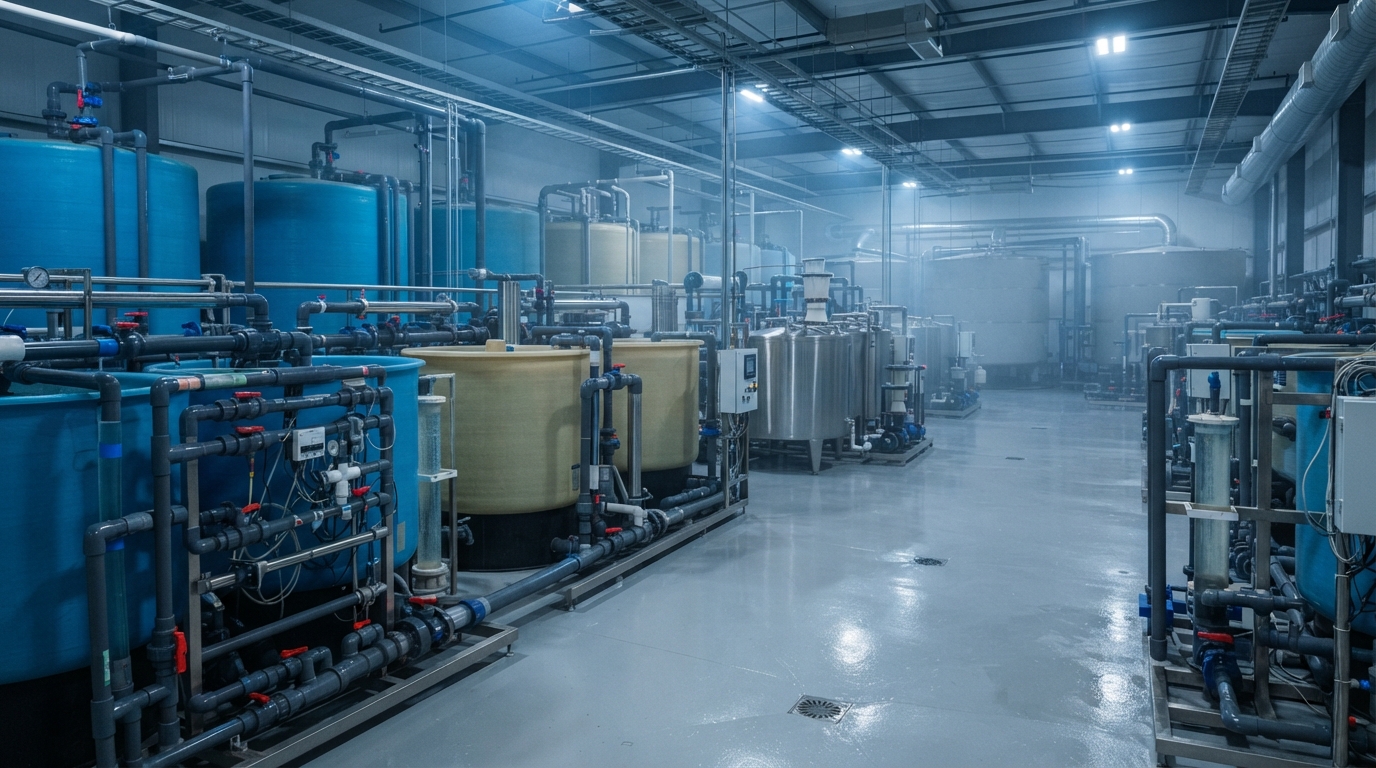
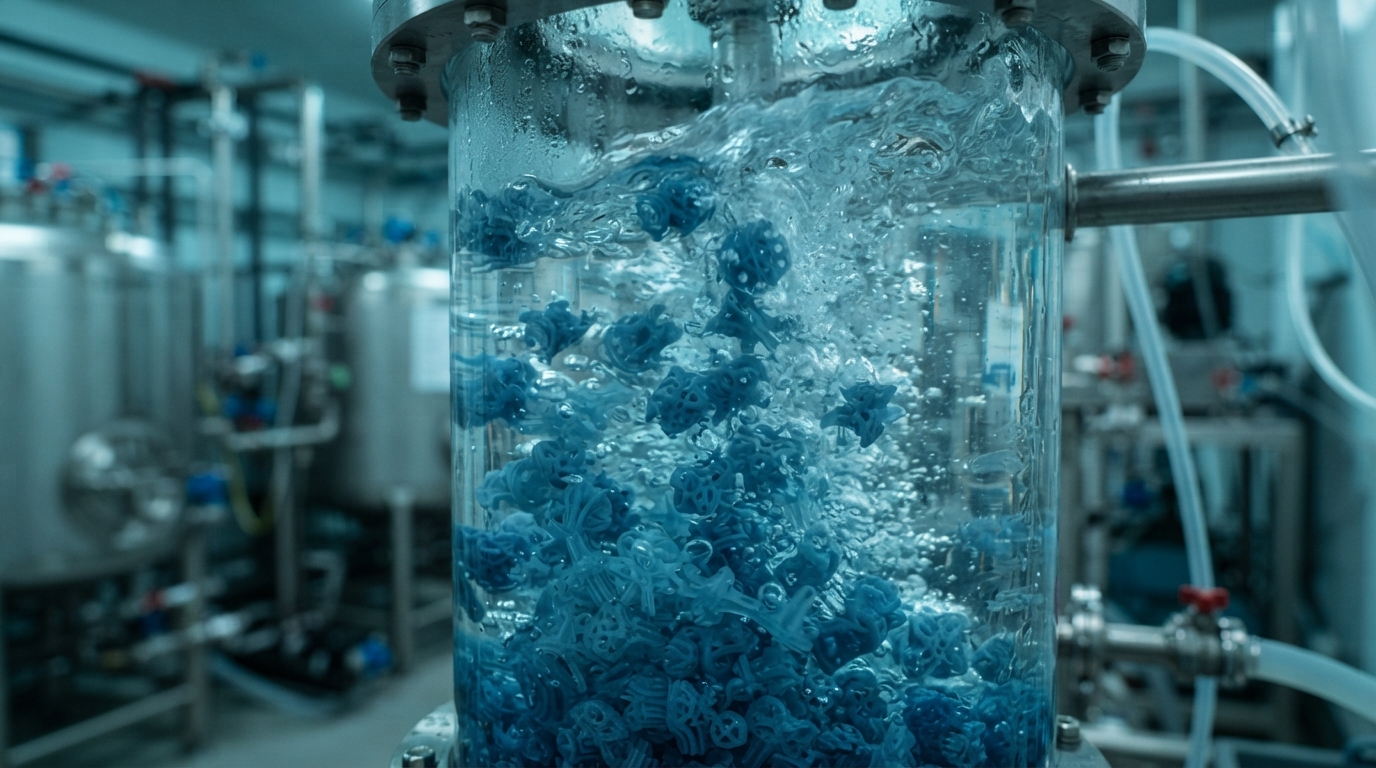
A RAS biofilter is not a single piece of equipment — it is a living, multi-organism microbial ecosystem performing sequential chemistry in real time, and each stage has a different tolerance for disruption. Nitrification itself is also a real ongoing draw on the system: it consumes dissolved oxygen and steadily depletes alkalinity as it proceeds, which is why a well-run RAS actively tracks and replenishes alkalinity rather than treating it as a one-time setup parameter — left unmanaged, that depletion drives pH downward, which in turn slows nitrification further. A biofilter shock (from a disinfectant residue, an oxygen crash, or a sudden feed increase) does not affect ammonia, nitrite, and nitrate uniformly; ammonia-oxidizers and nitrite-oxidizers are different organisms with different sensitivities, which is why nitrite spikes are a classic symptom of a biofilter under stress even when ammonia itself appears controlled (Preena et al., 2021, Reviews in Aquaculture).
ADEC engineers RAS biofiltration sized around the full nitrogen cycle — not just ammonia removal. Talk to our RAS engineering team →
Learn moreWhich is more dangerous: ammonia, nitrite, or nitrate?+
Ammonia acts fastest and is lethal at the lowest concentrations, particularly at high pH and temperature. Nitrite is a slower-acting but still serious threat because it directly impairs oxygen transport in blood. Nitrate is the least acutely toxic of the three but can still cause chronic harm at sustained high concentrations.
Can a RAS operator test for all three compounds?+
Yes, and doing so routinely is standard practice — ammonia, nitrite, and nitrate are each measured with well-established colorimetric or electrochemical test methods, and tracking all three (not just one) is necessary because a biofilter can be effectively converting ammonia while still accumulating nitrite.
Why does a new RAS often see a nitrite spike a few weeks after startup?+
This is a well-documented pattern in biofilter maturation: ammonia-oxidizing organisms typically establish and stabilize faster than nitrite-oxidizing organisms, creating a temporary window where ammonia is being converted but nitrite has nowhere to go yet — the classic 'new tank syndrome' seen at both aquarium and commercial RAS scale.
- University of Florida IFAS Extension. FA031: Ammonia in Aquatic Systems.
- Svobodová, Z., et al. Nitrite influence on fish: a review. Veterinarni Medicina, 50 (11): 461–471.
- Acute nitrite toxicity and methemoglobinemia in juvenile milkfish (Chanos chanos). Aquaculture, ScienceDirect.
- Nitrite disrupts multiple physiological functions in aquatic animals. ScienceDirect.
- USGS. Chloride inhibition of nitrite-induced methemoglobinemia in channel catfish (Ictalurus punctatus).
- Preena, P.G., et al. (2021). Nitrification and denitrification in recirculating aquaculture systems: the processes and players. Reviews in Aquaculture, Wiley Online Library.
- Ammonia excretion by the fish gill: discoveries and ideas that shaped our current understanding. Journal of Comparative Physiology B, Springer.
- Effects of alkalinity on ammonia removal, carbon dioxide stripping, and system pH in semi-commercial scale water recirculating aquaculture systems operated with moving bed bioreactors. Aquacultural Engineering, ScienceDirect.
Written and reviewed by ADEC's in-house aquarium life support and recirculating aquaculture engineers. ADEC designs, builds and operates turnkey aquarium and RAS facilities across the GCC, and is a member of the European Union of Aquarium Curators (EUAC), EUOTA and the European Aquaculture Society (AquaEAS), with CE-certified OCEANTECH™ equipment.
Get new articles in your inbox
Occasional, science-based insights on aquarium LSS and RAS aquaculture. No spam.