Life Support Engineering for Jellyfish, Cephalopods & Soft-Bodied Invertebrates
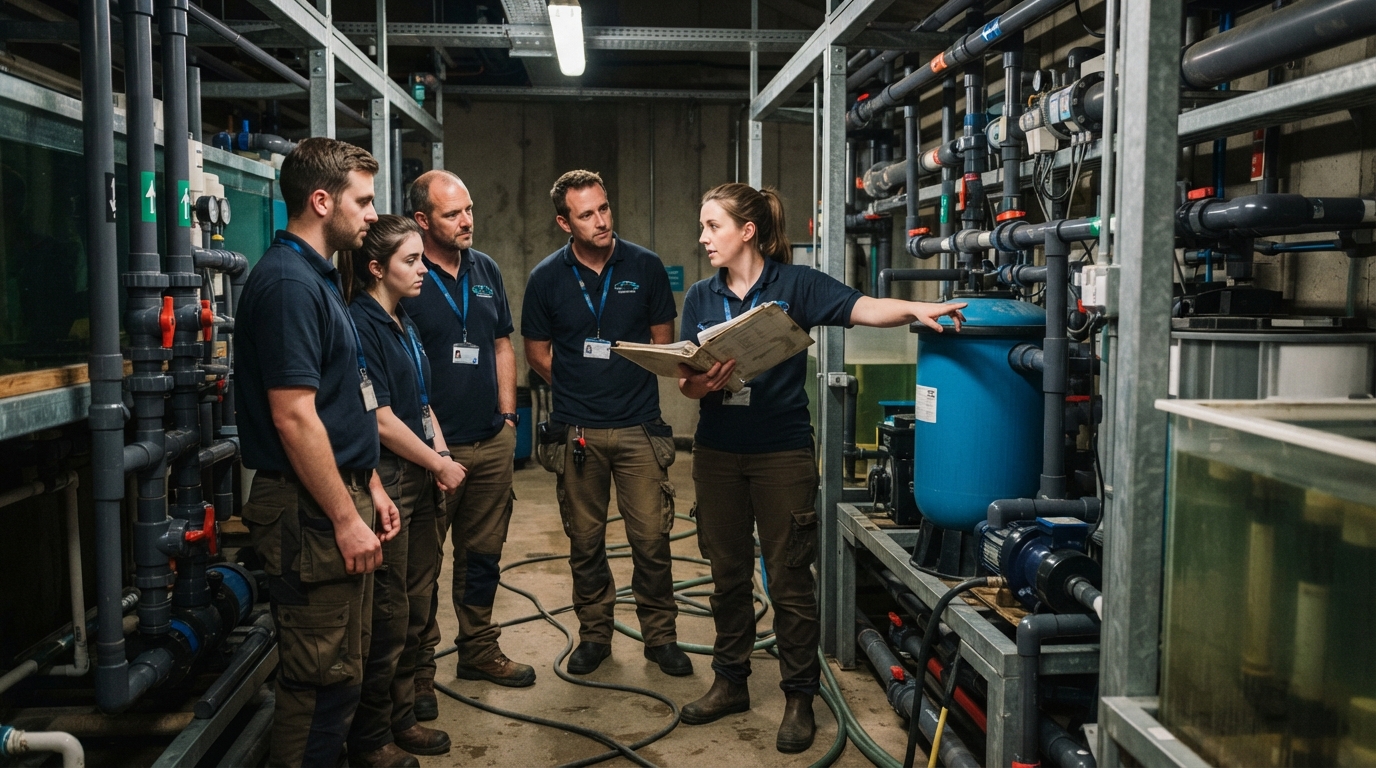
Standard aquarium life support systems (LSS) are built around the physiology of finfish: moderate flow, standard impeller pumps, and broad-spectrum medications. Jellyfish, cephalopods, and many soft-bodied invertebrates do not tolerate that baseline — their anatomy and chemistry force engineers to rethink hydrodynamics, materials, and water treatment at the design stage rather than retrofit around failures.
Why Delicate Taxa Break the Rules of Standard Fish LSS
Fish-focused LSS design optimizes for turnover, biofiltration capacity, and mechanical robustness, with flow and plumbing sized around animals that have scales, fins, and a hydrodynamically forgiving body plan. Jellyfish lack a rigid skeleton and can be torn or trapped by the same flow regimes and intake screens that are harmless to fish, while cephalopods are soft-bodied, highly mobile problem-solvers capable of exploiting any gap in containment (Wood and Anderson, 2004). Many other invertebrates — anemones, soft corals, larvae, and other delicate forms — are similarly vulnerable to mechanical shear and to chemical treatments formulated with fish, not invertebrates, as the target organism. Treating these taxa as "difficult fish" rather than as a distinct engineering problem is the most common root cause of chronic losses in exhibits holding them.
Jellyfish and Cnidarians: Hydrodynamics as the Primary Life Support Variable
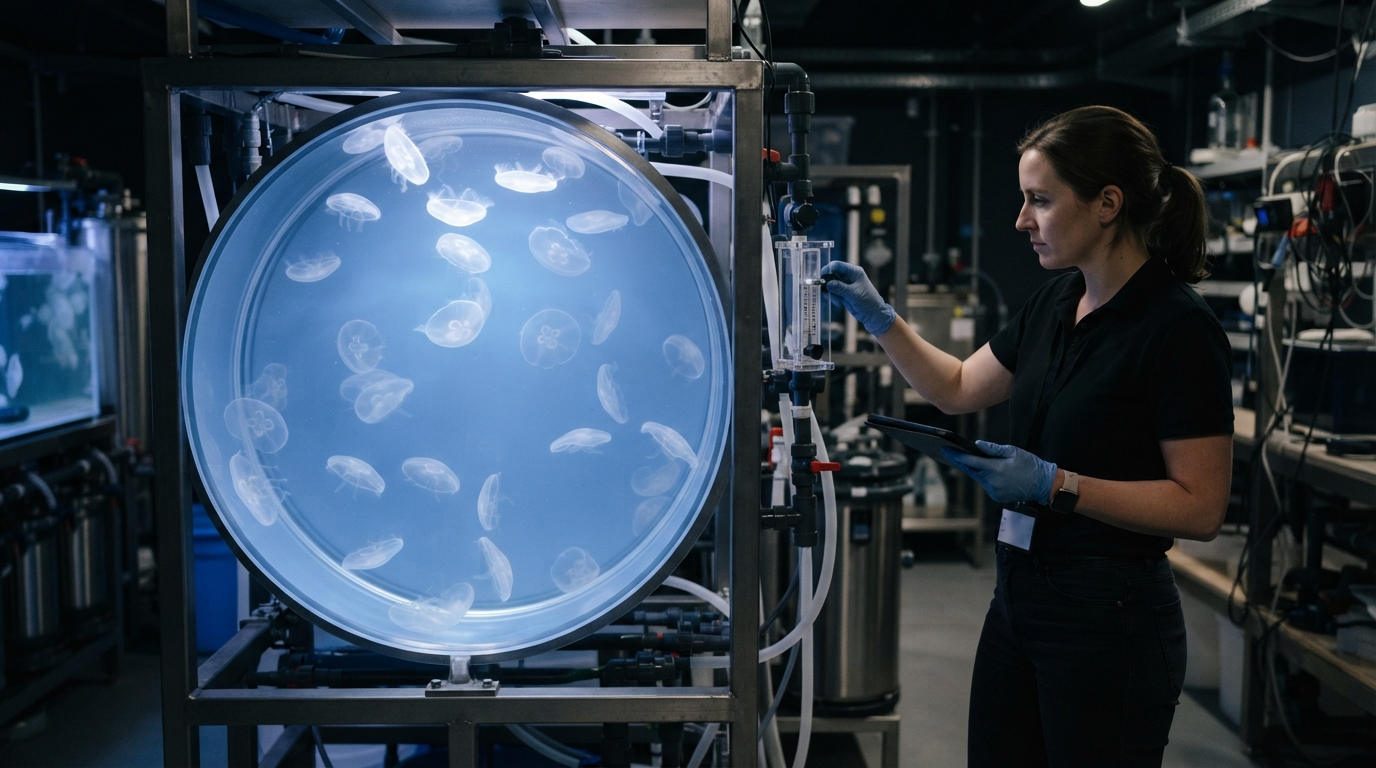
For scyphozoan and other pelagic jellyfish, flow hydrodynamics function as a life support parameter in their own right, not merely a water-quality delivery mechanism. Culture and exhibit systems commonly use kreisel or pseudo-kreisel tanks: circular or curved-corner vessels with separated inlet/outlet chambers and gently diffused inflow that generate a continuous, low-shear circular current. This keeps animals suspended away from walls and intake points without the velocity gradients and dead zones that cause medusae to pile against surfaces or beat against hard corners (Ballesteros et al., 2022; Purcell, Baxter and Fuentes, 2013). A fine mesh screen is placed between the main chamber and the drain/pump return specifically so that jellyfish and their larval stages cannot be drawn into the intake, since an unscreened pump or impeller can lacerate or shred their tissue; mesh aperture is scaled to animal size and is designed to be swapped without disturbing the specimens (Ballesteros et al., 2022). Water quality still matters independently of flow: a clinical review of captive Chrysaora medusae found that umbrellar ulcerative lesions were associated with pH, nitrite, and temperature excursions outside species-appropriate ranges, with secondary bacterial and protozoal colonization following that chemical stress rather than causing it (Rosell et al., 2021). In practice this means jellyfish LSS must combine low-shear, dead-zone-free hydrodynamics with tighter water-chemistry tolerances than most fish systems require.
Cephalopods: Narrow Water-Chemistry Margins and Behavioral Containment
Octopuses, cuttlefish, and squid tolerate a narrower range of water chemistry than most display fish and are unusually sensitive to dissolved metals. Consensus guidelines developed for cephalopod care state that copper and copper alloys should be excluded entirely from any system holding cephalopods, that dissolved oxygen should be kept close to saturation without supersaturating the water (which can trap bubbles in gill mucus), and that cephalopods tolerate low pH poorly because of its effect on oxygen transport in the blood (Fiorito et al., 2015). A British and Irish Association of Zoos and Aquariums husbandry manual for the giant Pacific octopus reinforces this, specifying near-zero ammonia, nitrite at or below 0.3 mg/L, 85–104% oxygen saturation, and non-corrosive materials such as titanium in place of copper-bearing heat exchangers and chillers (Slater and Buttling, 2011). Beyond chemistry, cephalopods are powerful, exploratory animals that actively test enclosure integrity; a multi-institution survey of octopus escapes identified deteriorating water quality, hunger, and nighttime activity as common triggers, and concluded that fully sealing a system — lids, clamps, and blocked plumbing penetrations — is the only reliable containment strategy (Wood and Anderson, 2004). Enrichment is not optional welfare decoration either: octopuses held with structural and cognitive enrichment show calmer behavior patterns and substantially better growth than those in bare tanks (Casalini et al., 2023), which has direct implications for sizing dens, substrate, and manipulable objects into the exhibit footprint from the outset.
Soft-Bodied Invertebrates: Mechanical Shear and Chemical Treatment Risk
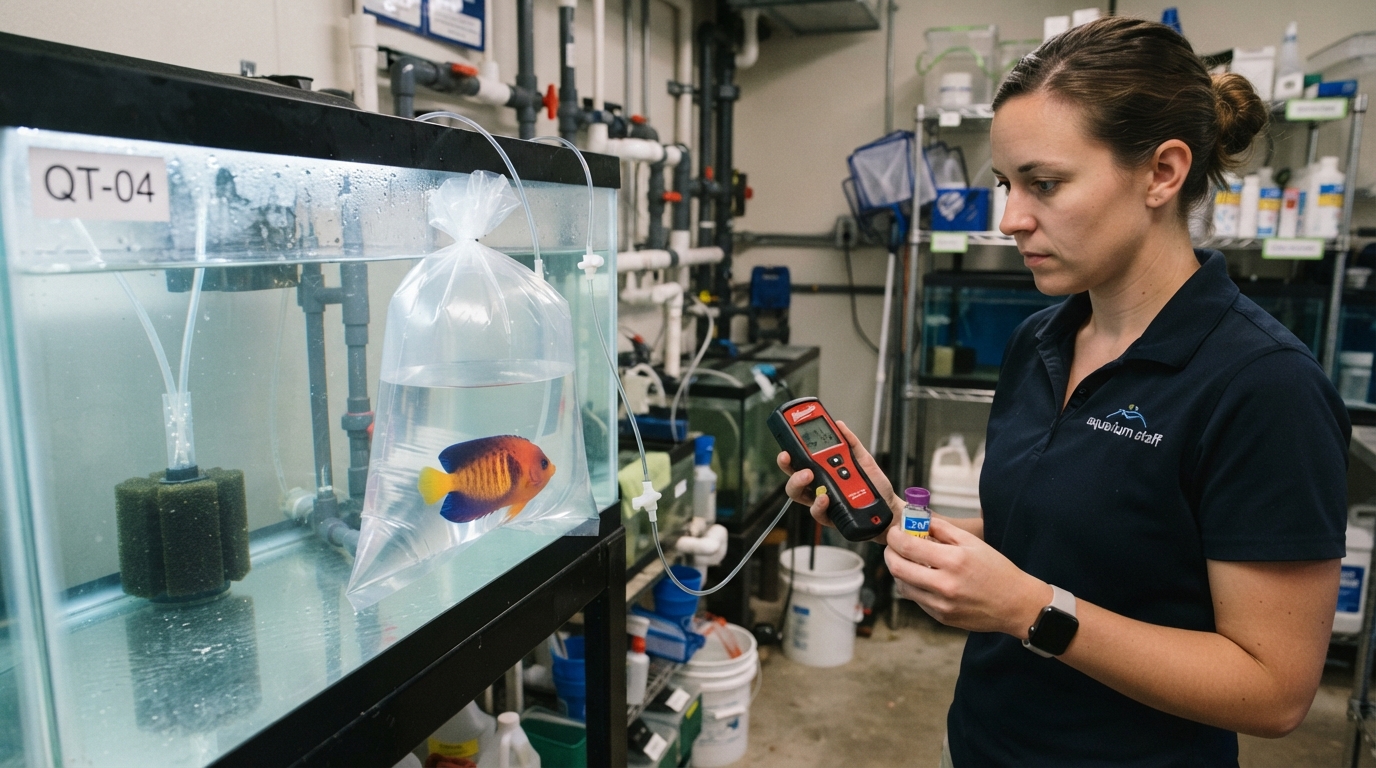
Larvae, soft corals, anemones, and other soft-bodied invertebrates lack a protective outer layer and are vulnerable to the pressure fluctuations and shear generated by standard pumps. A 2026 study evaluating diaphragm-pump transfer of coral larvae found that early-stage larvae were more susceptible to flow-related mortality and locomotor impairment than later, fully developed larvae, and recommended delaying pumped transfer until larvae reach competency (Waters et al., 2026). The same principle — that soft tissue tolerates turbulence far less well than a scaled or shelled animal — applies broadly to how return flow, skimmers, and pump intakes should be engineered around invertebrate-dominated exhibits. Chemically, copper-based medications used routinely to treat fish parasites are a well-documented hazard to invertebrates: government water-quality guideline derivations show that marine crustaceans, corals, and anemones can show sublethal effects at copper concentrations as low as 10 µg/L, several orders of magnitude below levels tolerated by many marine fish (ANZG, 2000). Any system sharing water between fish requiring copper treatment and invertebrate collections therefore needs physical separation, dedicated quarantine loops, or copper-removal filtration as a structural feature, not an after-the-fact fix.
Engineering Implications for LSS Design
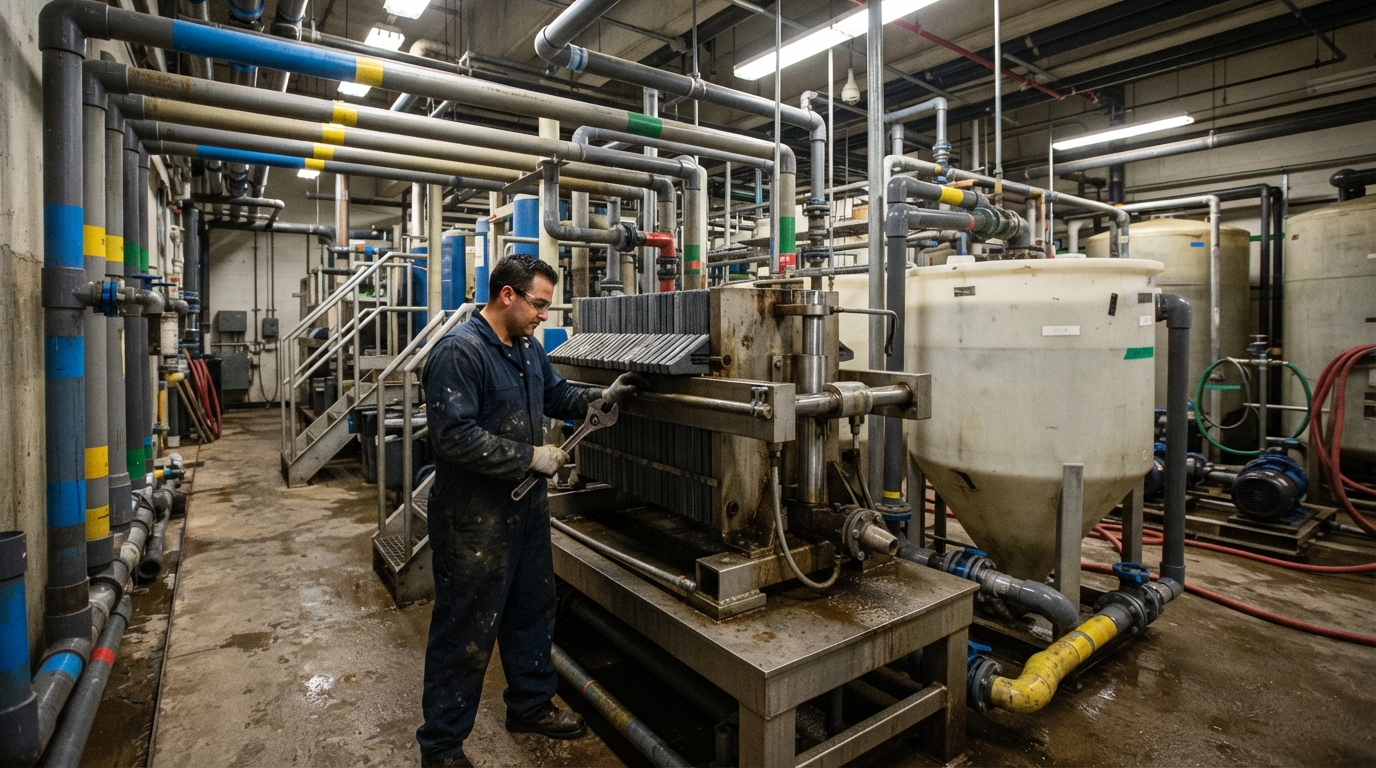
Taken together, these taxa push LSS design toward low-shear circulation (kreisel/pseudo-kreisel geometry, diffused spray bars, screened intakes), copper-free or titanium plumbing and heat exchange, tighter ammonia/nitrite/pH/dissolved-oxygen tolerances than typical fish-only systems, physically isolated medication and quarantine loops, and containment hardware engineered for animals that actively probe for gaps. These are facility-level decisions — tank geometry, material selection, and plumbing topology — that are far cheaper to specify before construction than to retrofit into an operating system.
Talk to ADEC Dubai about life support engineering purpose-built for jellyfish, cephalopod, and invertebrate exhibits.
Learn moreWhy can't jellyfish be kept in a standard fish tank with normal filtration?+
Jellyfish lack a rigid body and can be injured or killed by the flow dead-zones and unscreened pump intakes that are harmless to fish, which is why kreisel-style tanks with diffused, circular flow and fine mesh screens are used instead (Ballesteros et al., 2022).
Is copper medication ever safe to use near cephalopods or soft corals?+
No — cephalopod care guidelines call for copper and copper alloys to be excluded entirely from systems holding them (Fiorito et al., 2015), and government guideline derivations show marine invertebrates can show sublethal copper effects at concentrations far below those tolerated by fish (ANZG, 2000).
Do octopuses really need enrichment, or is that just a welfare nicety?+
Research on Octopus vulgaris in recirculating aquaculture found that enriched environments reduced aggressive behavior and significantly improved growth compared with barren tanks, indicating enrichment affects measurable physiological outcomes, not just behavior (Casalini et al., 2023).
- Ballesteros, A., Siles, P., Jourdan, E. and Gili, J.-M. (2022). Versatile aquarium for jellyfish: A rearing system for the biomass production of early life stages in flow-through or closed systems. Frontiers in Marine Science, 9, 942094.
- Purcell, J.E., Baxter, E.J. and Fuentes, V.L. (2013). Jellyfish as products and problems of aquaculture. In: Advances in Aquaculture Hatchery Technology. Woodhead Publishing, pp. 404–430.
- Rosell, J. et al. (2021). Pathological findings and husbandry management in captive Chrysaora spp. medusae affected by umbrellar ulcerative lesions. Journal of Invertebrate Pathology, 183, 107599.
- Fiorito, G., Affuso, A., Basil, J., et al. (2015). Guidelines for the care and welfare of cephalopods in research. Laboratory Animals, 49(2 suppl), 1–90.
- Slater, M. and Buttling, O. (2011). Giant Pacific Octopus Husbandry Manual. BIAZA.
- Wood, J.B. and Anderson, R.C. (2004). Interspecific evaluation of octopus escape behavior. Journal of Applied Animal Welfare Science, 7(2), 95–106.
- Casalini, A., Gentile, L., Emmanuele, P., et al. (2023). Effects of environmental enrichment on the behavior of Octopus vulgaris in a recirculating aquaculture system. Animals, 13(11), 1862.
- Waters, C., Gouezo, M., Harrison, P.L. and Doropoulos, C. (2026). Evaluating pump-assisted larval transfer for scaling coral larval restoration interventions. PLOS ONE, 21(4), e0346728.
- ANZG (2000). Default Guideline Values: Copper. Australian Government Department of Climate Change, Energy, the Environment and Water.
Written and reviewed by ADEC's in-house aquarium life support and recirculating aquaculture engineers. ADEC designs, builds and operates turnkey aquarium and RAS facilities across the GCC, and is a member of the European Union of Aquarium Curators (EUAC), EUOTA and the European Aquaculture Society (AquaEAS), with CE-certified OCEANTECH™ equipment.
Get new articles in your inbox
Occasional, science-based insights on aquarium LSS and RAS aquaculture. No spam.